


A pioneer in Omani solar module manufacturing
December 29, 2025 Oman
Oman 


Julanda Al Balushi, CEO of Sheida Solar, talks to The Energy Year about why Sheida Group entered solar manufacturing, the market’s response to the company’s commercial launch and how Oman’s in-country value (ICV) programme has affected its position. Sheida Solar manufactures solar PV panels in Oman.
What motivated Sheida Group to enter solar manufacturing, and what has been your focus?
Sheida Group has been active since 1996, primarily in general trading, oil and gas services, and F&B [food and beverages]. While our foundation was in oil and gas, in 2019, we made a bold strategic pivot towards renewables.
We wanted to do more than just provide services. We aimed to be Oman’s first solar PV module manufacturer. At the time, regional production was limited to a few players in the UAE, Bahrain and Saudi Arabia, so we saw a clear gap in the market.
We partnered with Ecoprogetti from Italy to develop our factory. Covid-19 halted our timeline just as the agreement was being finalised, delaying progress until late 2021. However, that delay allowed us to refine our strategy with minimal financial exposure. By mid-2024, our production line was completed and tested. We officially launched commercial operations in January 2025, and we are proud to be part of Oman’s energy transition.
What has been the market’s response?
The response has been mixed. On the one hand, we capitalised on our first-mover advantage as Oman’s only solar PV module manufacturer. On the other hand, the influx of low-cost Chinese modules globally has heavily disrupted pricing.
While the USA and India have implemented anti-dumping measures, the GCC region has not, leading to price erosion that impacts all regional manufacturers. Our initial model assumed a selling price of USD 0.15-0.18 per watt, but prices dropped to USD 0.07-0.09 just as we went commercial, and they now hover around USD 0.095.
This makes it challenging to compete, particularly without subsidies or protective policies. Local manufacturing is appreciated, but cost is still the primary factor in tenders. When similar components are available at 30-40% less, price usually prevails.
How do Oman’s ICV policies affect your position in public tenders?
The new ICV policies are beginning to work in our favour, especially as most large-scale solar projects in Oman are government-backed. By Q2 2025, we noticed a growing preference for local components due to these policies. That said, we’re not relying solely on ICV.
We expect market conditions to improve with solar PV prices forecasted to rise above USD 0.10 per watt by Q3, making our operations more sustainable. While ICV mandates 30% local content, meeting that threshold remains challenging for manufacturers.
What were your key considerations in choosing Ecoprogetti as your technology partner?
Partnering with Ecoprogetti was one of our best decisions. Their production lines are quality-focused, with more than nine testing points for incoming and outgoing materials. The entire setup is connected by VPN to their Italian headquarters, enabling real-time support, monitoring and frequent upgrades regardless of warranty status.
We originally ordered a 5-busbar line in 2019, which produced 365-W modules. Through continuous upgrades, we have scaled up to 585 W and anticipate reaching 615 W soon with a small upcoming investment.
How have you structured your manufacturing expansion plan?
We structured the project in three phases. Phase one was essentially a pilot with an 80-100 MW annual capacity, aimed at de-risking and understanding the local market. Phase two will scale capacity to 250 MW, and phase three to 500 MW. At that point, we will introduce modules of 700 W, along with advanced technologies such as back contact and heterojunction.
Phase two preparation begins this August and will take six to seven months. Designs and equipment plans are already finalised with our supplier. We expect to begin commercial production in Q2 2026. Phase two upgrades will cause only a brief operational disruption of one to two weeks. We also plan to release modules of 720 W and higher, supported by our in-house R&D team.
How does market segmentation affect your business?
Our current setup addresses the utility, industrial and residential segments. While the residential market is still in its infancy, with growth projected in modern cities, industrial demand is surging. Utility scale is our main focus for phase three.
To support this, we are launching Sheida Emerald next month, a new services arm offering installation, EPC and maintenance. This will allow us to bid directly for projects and overcome pricing barriers encountered when working through third-party contractors. The two companies together will provide a comprehensive, one-stop solar solution.
We have also partnered with robotics firms for automated cleaning systems, and collaborate with an Indian R&D lab for product development. We are working with battery and inverter manufacturers to provide OEM solutions under our own brand.
How has your export strategy evolved?
Interestingly, our first sale was an export to Africa. We’re now working on a nearly 2-MW deal in Tanzania. Our exports currently exceed domestic sales, which was not our original plan. Due to domestic pricing challenges, we found stronger demand abroad from buyers who value non-Chinese suppliers and are more open to new entrants.
Exports are now a central pillar of our growth strategy, not just for Sheida Solar as a manufacturer but also for Sheida Emerald’s EPC and IPP projects.
How does Sheida Solar contribute to Oman’s energy transition?
We’re committed to more than sales. We aim to raise awareness and educate the public on solar energy. Despite increasing attention, many still lack an understanding of renewables and how to adopt them. Challenges include low electricity prices and complex regulations, which deter adoption.
Our marketing strategy focuses on awareness campaigns and offering a one-stop shop for consultancy, feasibility studies and implementation. For households with low bills, we advise waiting due to long ROIs, but as tariffs rise, solar will become more viable. Our role is to guide clients with transparent, informed recommendations.
What is your long-term vision for Sheida Solar?
Over the next decade, we aim to become a leading regional player in the solar industry, scaling production and expanding across markets. Our roadmap includes technological innovation, market share growth and a robust export footprint. We see ourselves playing a pivotal role in Oman’s renewable energy sector, both industrially and technologically.
Read our latest insights on:
More content from Oman





Quality seismic decisions for Angola
INTERVIEW
Latest news and features




Latest Reports


The Energy Year Oman 2026
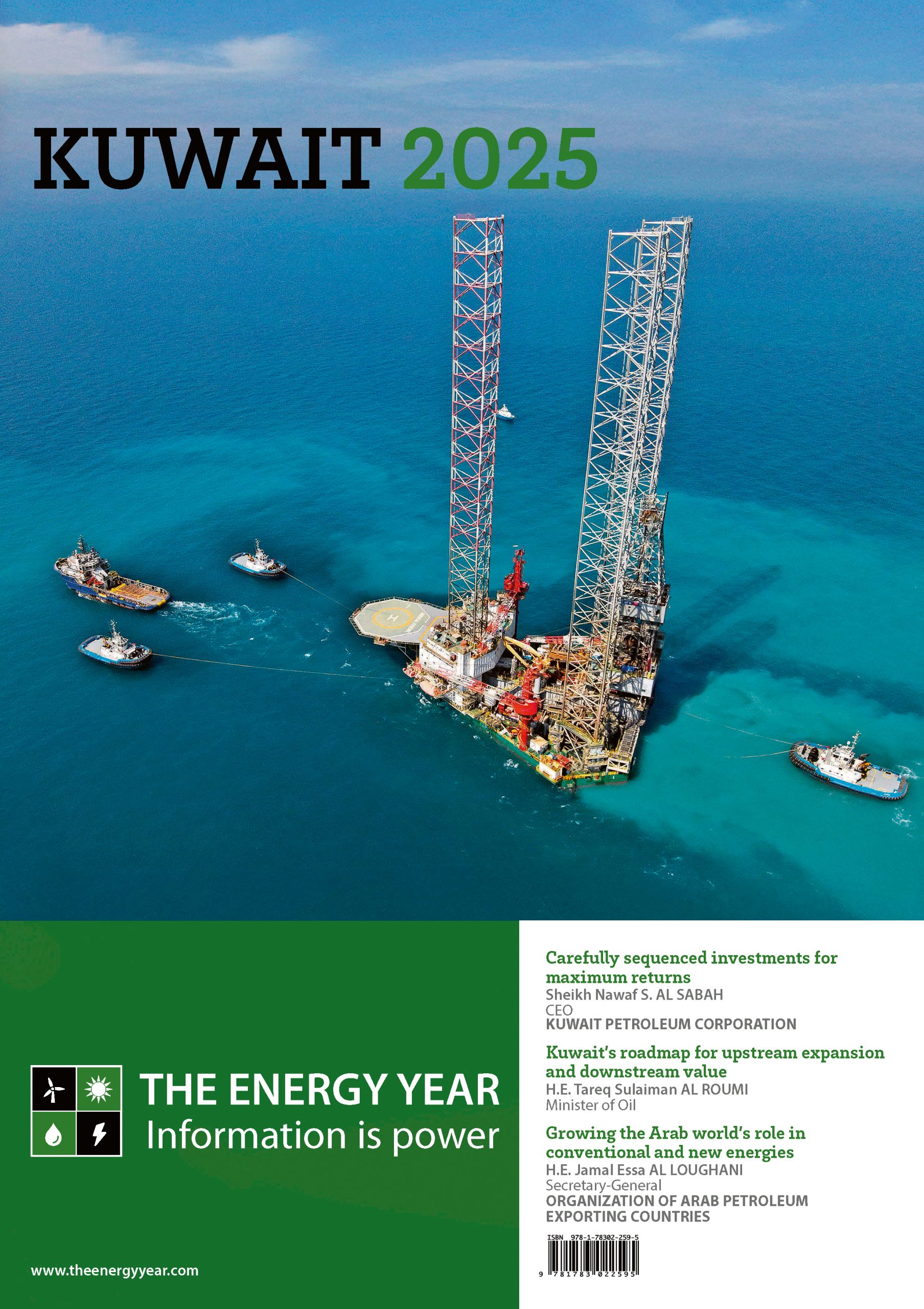
The Energy Year Kuwait 2025
The Energy Year Angola 2025

The Energy Year Nigeria 2025
The Energy Year Saudi Arabia 2025
The Energy Year UAE 2025

