
A strategic outlet for Kuwaiti and Omani crude
January 29, 2026 Oman
Oman 


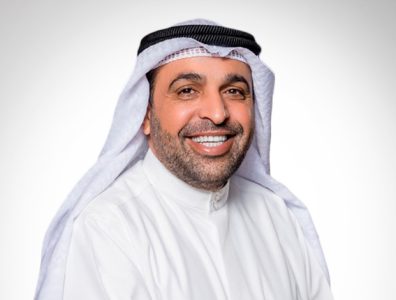
Abdullah Al Ajmi, CEO of OQ8, talks to The Energy Year about planning for diverse crude intake to maximise refining margins and the privileged access that Duqm offers to reach international refined products markets. OQ8 is a 230,000-bpd refinery 50-50 owned by OQ and Kuwait Petroleum International (KPI).
OQ8 has been operating for more than a year now. How is it supporting the energy systems of Oman and Kuwait?
We are very proud to have reached this stage. The project was completed without hiccups, and the transition from commissioning to stable operations took less than 10 months. Such smooth and quick completion is unprecedented, in my experience.
OQ8 is a state-of-the-art refinery that is critical for both Oman and Kuwait. It acts as a strategic outlet for crude, as our location outside the Strait of Hormuz and unaffected by Gulf tensions is a significant advantage for access to global markets.
We have increased our capacity from 230,000 bpd to 253,000 bpd, which has improved our margins at a time of volatility in global product markets. Supply chain stability, logistical flexibility and geopolitical insulation give OQ8 a unique position in the region’s refining landscape.
What are the benefits of having OQ and KPI as your main shareholders?
This project is a result of the strong ties between Oman and Kuwait. KPI, as the JV participant on behalf of Kuwait Petroleum Corporation, plays a central role in Kuwait’s international refining strategy. Initially, this project was being considered with the UAE, but Kuwait took the opportunity and moved forward with Oman.
Having both OQ and KPI means we bring together different strengths in technology, financing, logistics and human resources. We are aligned on strategy and long-term vision, and are collaborating on plans for our next phase of development, which include a reformer unit to upgrade low-value naphtha product into gasoline components.
How has global volatility shaped OQ8’s commercial decisions recently?
We track global markets closely and adapt fast. For example, when diesel and naphtha margins rose, we diversified our feedstock strategy and started targeting lower-cost crudes that are rich in heavy components that can be converted to middle distillates. This increased our yield of high-value products, especially diesel and naphtha.
Crude flexibility is one of our long-term strategies, and we have the capacity to handle more than 10 types of crude, having considered more than 40 in total. This allows us to respond to changes in price and availability without disrupting our operations.
Switching among oil types is not easy. When we process heavier or more complex crudes, we need to make many technical adjustments inside the refinery to reconfigure units and change operating parameters. But the payoff is worth it. Some crudes offer up to USD 8 per barrel in margin advantage.
We have already processed Basra Heavy from Iraq, Al Kout from Kuwait, Al Shaheen from Qatar, Umm Lulu from the UAE and other grades from Saudi Arabia. We are focusing on long-term, reliable supply rather than spot cargoes, as supply stability allows us to plan and maintain profitability.
How does OQ8 manage trading and exports?
Our shareholders, OQ and KPI, each have a 50% share and manage the offtake. OQ8 refines the crude, handles logistics and prepares applications for offtakers, and OQ Trading sells the products internationally.
This structure ensures all operations are aligned. OQ8 and OQ Trading serve as the international faces of the OQ Group, and our products are priced and traded competitively in global markets.
Due to Duqm’s location outside the Strait of Hormuz, traders and offtakers are keen to sign long-term deals with us. We are negotiating some now. Plus, freight savings are significant – a typical cargo from Duqm can reach destination a few days faster than from other Gulf ports. Our reach has extended to Brazil, where we delivered a diesel cargo of approximately 100,000 tonnes.
Are you seeking new investors or partners to join the Duqm ecosystem?
The next big step is the reformer unit to upgrade naphtha into high-octane gasoline components such as reformate. We are at the FEED stage, with both Omani and Kuwaiti stakeholders evaluating whether to build it as an element integrated into the refinery.
Other opportunities include sulphur and coke, and we have an MoU with a cement plant in Duqm that plans to use our coke by 2028. We are always on the lookout for projects that help us extract value from our output and byproducts and contribute to the industrial ecosystem.
OQ8 already consumes a significant amount of hydrogen. How do you expect your hydrogen usage to evolve?
At the moment, we consume around 500 tonnes per day of hydrogen. Most of it is produced from fossil fuel sources and consumed immediately. Our demand is stable, and we are self-sufficient.
Switching to green hydrogen will depend entirely on cost considerations. If green hydrogen can be produced at prices close to fossil-fuel hydrogen, it could become a viable alternative, especially for expansion projects.
How do local content considerations inform your operational decisions?
Almost 70% of our contracts are with Omani companies. We prioritise Omani suppliers unless the technology or services we require are unavailable in the domestic market. We are also encouraging contractors to set up workshops and facilities in Duqm.
In 2024, we awarded contracts worth USD 412 million, of which about USD 38.9 million was spent directly on SMEs. We aim to channel around 10% of our total contract value to local suppliers.
Read our latest insights on:
More content from Oman





Quality seismic decisions for Angola
INTERVIEW
Latest news and features



Latest Reports


The Energy Year Oman 2026
The Energy Year Kuwait 2025
The Energy Year Angola 2025
The Energy Year Nigeria 2025
The Energy Year Saudi Arabia 2025
The Energy Year UAE 2025

