

A unique methodology for asset development
July 22, 2025 Oman
Oman 


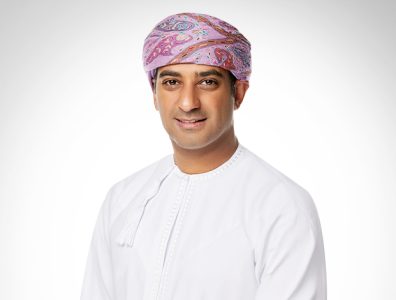
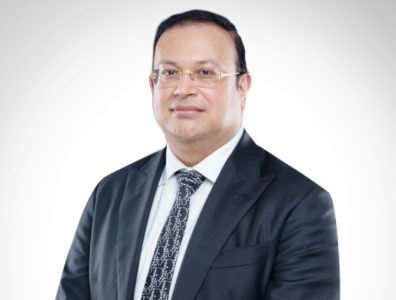
Usama Barwani, vice-chairman of MB Holding, and Kingsuk Sen, CEO of Petrogas E&P, talk to The Energy Year about the importance of Petrogas E&P for parent company MB Holding and the development of the company’s operations in Oman. Petrogas E&P is engaged in the exploration and production of oil and gas in Oman and internationally.
How does Petrogas E&P fit into MB Holding’s broader strategy?
Usama BARWANI: Petrogas has grown to become the largest and most important part of MB Holding. It is the driver of the group. From our early days in oilfield services, we brought a mindset of agility and taking rapid, well-informed decisions. Even though we’ve grown substantially, we’ve kept that entrepreneurial mindset.
Kingsuk SEN: That mindset has helped us grow from producing under 2,000 boepd in 1999 to over 90,000 boepd today. Block 5 alone produces close to 60,000 barrels daily, two-thirds of our total. That block was acquired during a market low, when others didn’t want to take the risk. Investing against the cycle and finding value in overlooked opportunities has been key to our growth strategy.
How central is Oman to your portfolio, and what are your key assets?
KS: Oman contributes more than 80% of our reserves, production and value. Our current assets in Oman include Block 5, Rima Small Fields, Lekhwair Small Fields, and Block 15, which we received last year. The different parts of the portfolio are at different levels of maturity: Block 5 and Rima are long-term producing, the Lekhwair Small Fields are in early development and production, and Block 15 is in the exploration phase.
UB: Oman will always remain our core base and central to Petrogas E&P, but we are growing internationally. Much of our strength we developed in Oman from revitalising older fields with new technical applications. In Europe, we honed our offshore gas developments as another core expertise.
What gives Petrogas E&P a competitive edge in asset development?
UB: We make decisions quickly. We debate issues and make sure we look at all the different data points, but we’re able to act within days in cases where other companies might take months. We’ve seen long processes lead to missed opportunities many times in our work with public companies, private equity and state-owned firms.
KS: That speed has helped us turn around legacy assets that were previously considered marginal. We combine quick action with cost discipline and the technical flexibility to make those projects work.
How are you approaching international expansion?
KS: While Oman remains our priority, we’re also expanding globally. We’re exploring new opportunities in the Netherlands and the UK, where we operate, and new markets in North Africa and the Middle East. We’re now pre-qualified in Algeria and Iraq. Each move is based on careful evaluation, understanding the market dynamics and positioning ourselves to be ready to act when opportunities arise.
UB: In Europe, we’re still quite active in the North Sea, while many companies have been leaving the area. We have two major gas developments coming to maturity in the UK, which are expected to come onstream within three to four years. In the Netherlands, we’ve added three new gas platforms since acquiring Chevron’s assets, and we have another development planned in Denmark.
Do you prefer operating alone or with partners?
UB: It depends on the project. In the UK, for example, we took a gas discovery through appraisal alone, so we could move quickly. We may bring in a partner later. As a private company, we also recognise that our resources are limited.
KS: We often operate as part of unincorporated joint ventures, and we usually aim to be the operator. That gives us control over how the asset is developed. Our successful track record in turning around declining fields, operational efficiency and cost discipline has shown our partners the value of that approach. Except for our project in Egypt, we’re the operator or joint operator in all our projects.
How are you managing risks from price volatility?
UB: The only thing we can be certain of is volatility and uncertainty. This is a cyclical business. When there are good times, there will be bad times coming, and when there are bad times, there will be good times coming.
KS: Many of our key investments, particularly inorganic growth, have happened against the cycle. That strategy has often worked in our favour. Hence, we see price volatility as an opportunity and have capitalised on it through value-added growth.
We are very agile and can adapt very quickly to a low-price environment. A good example is the huge price crash during Covid, where we managed to navigate a USD sub-40 per-barrel oil price by materially downsizing our work programme and budget very quickly.
What is Petrogas E&P doing to align with ESG and energy-transition goals?
UB: We’ve been committed to ESG for many years. We were the first company in Oman to achieve zero routine flaring, long before regulations required it. We’ve avoided heavy oil and prioritised projects with a lower environmental impact. We have been issuing a sustainability report for the Netherlands for many years now.
Last year, we started consolidated ESG reporting across all Petrogas E&P operations, not just in the Netherlands, as part of our commitment to reducing emissions.
KS: We have been championing ESG for many years. We’ve invested in flaring reduction even when it wasn’t financially attractive or required by regulation. We have our ESG commitment reflected in our core values, and we factor it into all key decision making.
Read our latest insights on:
More content from Oman





Quality seismic decisions for Angola
INTERVIEW
Latest news and features



Latest Reports


The Energy Year Oman 2026
The Energy Year Kuwait 2025
The Energy Year Angola 2025
The Energy Year Nigeria 2025
The Energy Year Saudi Arabia 2025
The Energy Year UAE 2025

