

Adding output versatility to Kuwait’s downstream
May 27, 2025 Kuwait


Ali Mohammad Al Ajmi, then-deputy CEO of Al Zour Operations at Kuwait Integrated Petroleum Industries Company (KIPIC), talks to The Energy Year about adding flexibility to Al Zour’s petrochemicals capabilities and increasing the refinery’s crude oil intake capacity. KIPIC is the KPC subsidiary that operates the Al Zour complex.
In May 2024, KlPIC inaugurated the Al Zour Refinery. How do you plan to leverage Al Zour’s capabilities to meet domestic and international market requirements?
Al Zour Refinery has a capacity of 615,000 bpd and is one of the world’s largest refineries. The facility marks a major step in Kuwait’s efforts to expand its refining capabilities, diversify its economy and enhance environmental performance.
Aligned with KPC’s 2040 strategy and Kuwait Vision 2035, Al Zour plays a dual role: meeting growing domestic demand for cleaner fuels and strengthening Kuwait’s export position with high-quality, low-sulfur petroleum products that comply with Euro 5 standards.
Al Zour Refinery began processing heavy crudes such as Eocene and South Ratqa in 2023, adding flexibility and value to upstream operations. Processing heavy crude aligns with KPC’s strategic objectives by enabling greater integration between the upstream and downstream segments. It also allows Kuwait to monetise a broader spectrum of its crude portfolio.
For the domestic energy industry, this flexibility adds supply security and ensures continued operations amid shifts in crude availability or export demands. With an integrated offshore export terminal and storage for 5.6 million barrels, Al Zour also reinforces Kuwait’s position as a global supplier.
Do you have plans to expand your production capacity or product range?
The core products of our petrochemical plant are ethylene and polyethylene, and there are market studies underway to assess potential diversification. Given that this is a multi-billion-dollar investment, KPC is making careful market projections before taking further steps.
Our integrated business covers refining, petrochemicals and LNGI [liquefied natural gas import], and they can be adapted to market demand. Whether by modifying output, absorbing more heavy crude or adjusting feedstock to meet domestic energy needs, the goal is always to be nimble. Our capacity is 615,000 bpd, but real output is dynamic and influenced by factors such as unit turnarounds and shutdowns. During maintenance, capacity may drop to 450,000 bpd. One of our key goals for 2025-2026 is to increase the intake of heavy crude up to the maximum limit.
KIPIC is implementing digital twin technology across its facilities. What are the key benefits and challenges of adopting such technologies?
The initiative aligns with KPC’s long-term vision for operational excellence and carbon neutrality by 2050. Digital twins – virtual replicas of physical assets and systems – enable real-time monitoring, scenario analysis and predictive maintenance, and allow us to proactively manage equipment health and improve energy efficiency, ultimately leading to reduced emissions and lower costs.
The adoption of digital twins also supports sustainability by identifying energy losses, optimising process parameters and minimising unplanned shutdowns, which contributes directly to reducing our environmental footprint. Digital twin technology is a critical enabler in KIPIC’s journey towards smarter, safer and more sustainable operations.
Challenges include the need for high-quality data integration, workforce training and cybersecurity measures to protect digital infrastructure. As we advance technologically, KIPIC is deeply invested in human capital development, with a dedicated programme for upskilling, knowledge transfer and leadership training to empower the next generation of Kuwaiti energy professionals.
In 2024, Kuwait signed a 15-year deal with QatarEnergy to import 3 million tonnes per year of LNG. How is this agreement impacting KIPIC’s operations and Kuwait’s overall strategy?
The move strengthens Kuwait’s long-term energy security and adds diversity to the fuels available for power generation and industrial use. For KIPIC, the deal ensures a stable LNG supply to the Al Zour LNG Import Terminal, which serves gas-fired power plants and reduces Kuwait’s dependence on liquid fuels. The agreement also provides operational flexibility, allowing KIPIC to balance seasonal demand fluctuations and optimise its energy inputs.
At a national level, the agreement reinforces Kuwait’s shift toward cleaner fuels, supports emission reduction goals and deepens regional energy collaboration.
What is the current status of the merger between KNPC and KIPIC?
In 2023, a high-level committee was formed to oversee the merger of KIPIC and KNPC, which aims to consolidate Kuwait’s downstream operations under a unified structure.
The merger is in the implementation phase and focused on aligning business functions, streamlining asset management and reducing organisational redundancies. Beyond optimising costs, we are enabling unified decision-making, co-ordinating supply chains and leveraging shared digital infrastructure. While the integration presents challenges such as cultural integration and system harmonisation, it will help further Kuwait’s energy vision and enable us to respond more effectively to global energy market dynamics.
The Petrochemical Refinery Integration Al-Zour (PRIZe) will diversify your petrochemicals output. How will it change KIPIC’s role in the downstream value chain?
By integrating petrochemical production with refining operations, PRIZe will unlock greater value from Kuwait’s hydrocarbons and enable the production of high-demand chemicals, which will improve KIPIC’s competitive position in global markets. The project also supports Kuwait’s goal of reducing reliance on crude exports by generating more revenues from higher-margin products.
KIPIC is planning to boost Al Zour’s refining capacity while advancing PRIZe. Our mid-term strategy is to maximise synergies across refining, LNG and petrochemical units to diversify Kuwait’s export portfolio and reinforce our presence in the regional downstream segment.
Read our latest insights on:
More content from Kuwait





Quality seismic decisions for Angola
INTERVIEW
Latest news and features




Latest Reports


The Energy Year Oman 2026
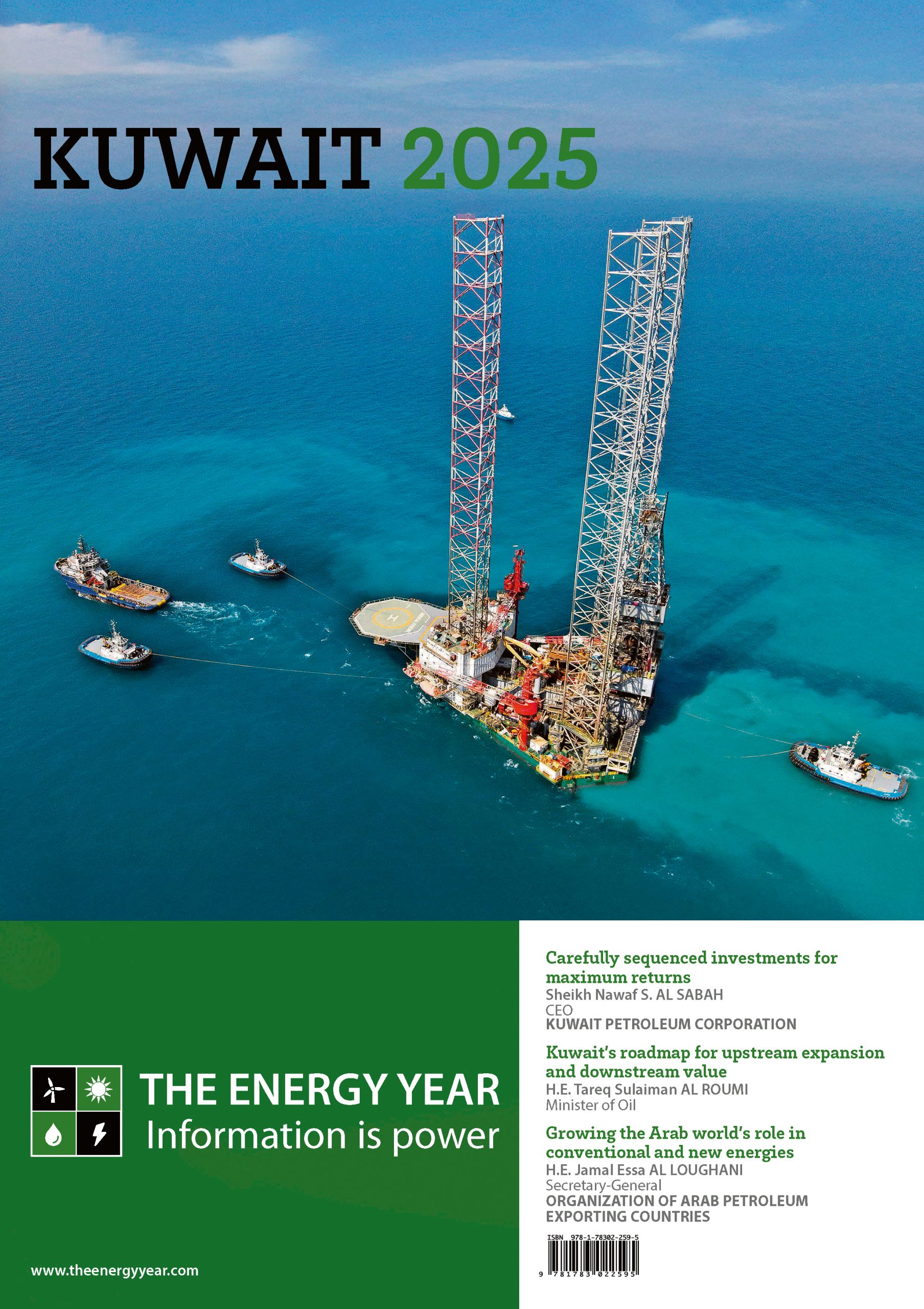
The Energy Year Kuwait 2025
The Energy Year Angola 2025
The Energy Year Nigeria 2025
The Energy Year Saudi Arabia 2025
The Energy Year UAE 2025

