
At sea and on land, KOTC pursues decarbonisation
October 21, 2025 Kuwait


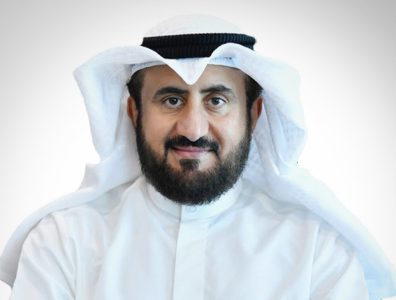
Sheikh Khaled Al Sabah, CEO of Kuwait Oil Tanker Company (KOTC), talks to The Energy Year about the company’s new ventures in international commercial bunkering and driving efficiency through its ongoing fleet renewal programme. KOTC is a subsidiary of KPC engaged in the transport of crude oil, refined petroleum products and LPG.
This interview is featured in The Energy Year Kuwait 2025
How does KOTC support KPC’s international marketing, and what role does the newly established KPC Trading play in your objectives?
We are the commercial international transportation arm of KPC, and we have to be ready whenever they need us. Our vessel fleet is strategically important for Kuwait. KPC launched KPC Trading, which I chair, with a view to offering commercial bunkering services. The company is expected to handle various fuels and petroleum products and contribute to increasing international marketing revenues, along with KPC’s commercial strategy.
We are exploring the lease of storage facilities in Fujairah and how to position ourselves in the very competitive market there. We are assessing the right location and timing to launch our bunkering operations. The company was established on April 1, 2025, and we expect to make concrete steps towards starting operations by end-2025.
Are you planning any additions to your fleet in the near term?
We continuously monitor the market and adapt to demand, and we are in the process of replacing our older vessels under our 2024 fleet renewal programme. A growing number of vessels run on dual-fuel LNG engines, and we are seriously considering adding some to our fleet.
Marine investments are long-term and sensitive to regional trade flows. Owned vessels generally deliver more value than chartered ones, but on an opportunistic basis, we also charter out our vessels and charter in replacements at a lower rate to boost our operations and profitability. We maintain a large enough fleet to serve our clients at any time. Currently, we have 11 VLCCs chartered out to KPC and operating at full capacity.
In 2020, KOTC acquired eight new vessels – one VLCC, three VLGCs and four medium-range tankers – specifically designed with environmental sustainability in mind. They feature optimised hull forms that minimise drag to improve efficiency and electronic engines with intelligent combustion controls. They are also equipped with selective catalytic reduction systems that convert harmful nitrogen oxides into harmless nitrogen and water vapour.
Regarding dual fuel capabilities, the timing of implementation must be managed carefully to capture the right prices and avoid cost inefficiencies. All our vessels are already IMO qualified and operate on very low sulphur fuel oil with sulphur emissions under 0.5%, well below the previous threshold of up to 3.8%. Although this standard is more expensive and operationally challenging, we have successfully adapted to it.
Our 2040 strategic plan calls for constant review and monitoring of market opportunities. Building new vessels is not the only option; we are also thinking about long-term time charters and buying vessels from the market, as well as joint ventures and partnerships that are economically viable.
What steps is KOTC taking to make its land operations more sustainable?
Lloyd’s Register has completed a comprehensive energy transition study for our entire fleet that thoroughly assessed our emissions profile and evaluated the future suitability and tradability of our vessels under increasingly stringent regulations. Moreover, it explored a range of performance optimisation options and defined a decarbonisation roadmap. Based on these recommendations, KOTC is implementing a three-phase plan to replace older vessels with more efficient ones running on dual-fuel engines.
However, as sustainability is now essential in every aspect of oil operations, we are also taking steps onshore. KOTC has been enhancing the sustainability of its land operations through a range of environmentally focused initiatives aligned with KPC’s ESG strategy. The company’s LPG filling plant at Umm Al Aish achieved Net-Zero Energy Certification from the Gulf Organisation for Research & Development (GORD), a major milestone in energy efficiency and renewable integration.
Additionally, KOTC’s headquarters in Shuwaikh obtained a GSAS [Global Sustainability Assessment System] Operations Gold Rating, recognising its strong performance in energy conservation, waste reduction and sustainable facility management.
Building on these achievements, KOTC became the first K-company to launch a large-scale solar programme, investing in two solar power plants at its LPG filling stations at Umm Al Aish and Shuaiba, for a total capacity of around 7 MW.
Commissioned in March 2025, both sites are now fully solar, producing around 11 GWh annually and potentially generating a surplus for the national grid. This initiative saves the equivalent of more than 16,000 barrels of oil per year and serves as a benchmark for sustainability and clean energy adoption within Kuwait’s oil sector.
Together, these initiatives demonstrate KOTC’s strong commitment to supporting KPC’s environmental and ESG roadmap, which emphasises decarbonisation, energy transition, and responsible resource use across all group operations.
What are your growth expectations for the coming years? Are geopolitical tensions impacting your expansion?
KPC is a reputable and reliable supplier. We have stored 3.2 million barrels of crude in Japan and nearly 4 million in South Korea for strategic supplies. These reserves enable us to continue servicing customers if transportation is interrupted.
The Strait of Hormuz is a crucial transit point – nearly one-third of the world’s oil passes through it – and its closure would be catastrophic globally. While we hope that never happens, we have contingency plans in place, supported by our trading company and fleet, to ensure supply continuity, even in a crisis.
In recent years, several of our peers have been expanding through acquisitions or by adding vessels to their fleets. We aim to take a commercial route during this period based on a strategy that emphasises profitability with a global perspective.
Our strategy to navigate market complexities is centred on targeted capital expenditures, resilient cost optimisations and a continued focus on operational reliability to maximise the availability of our fleet to support goals that align with Kuwait Vision 2035. In the coming years, KOTC will continue to play a central role in Kuwait’s energy export chain, balancing short-term market responsiveness with long-term sustainability and technological adaptability.
We have the team and the reputation to succeed. The timing of execution is everything, and we are monitoring the market closely. Sometimes, a better opportunity can arise within an hour of sealing a deal. We must stay flexible and ready to adapt.
Read our latest insights on:
More content from Kuwait





Quality seismic decisions for Angola
INTERVIEW
Latest news and features


Latest Reports


The Energy Year Oman 2026
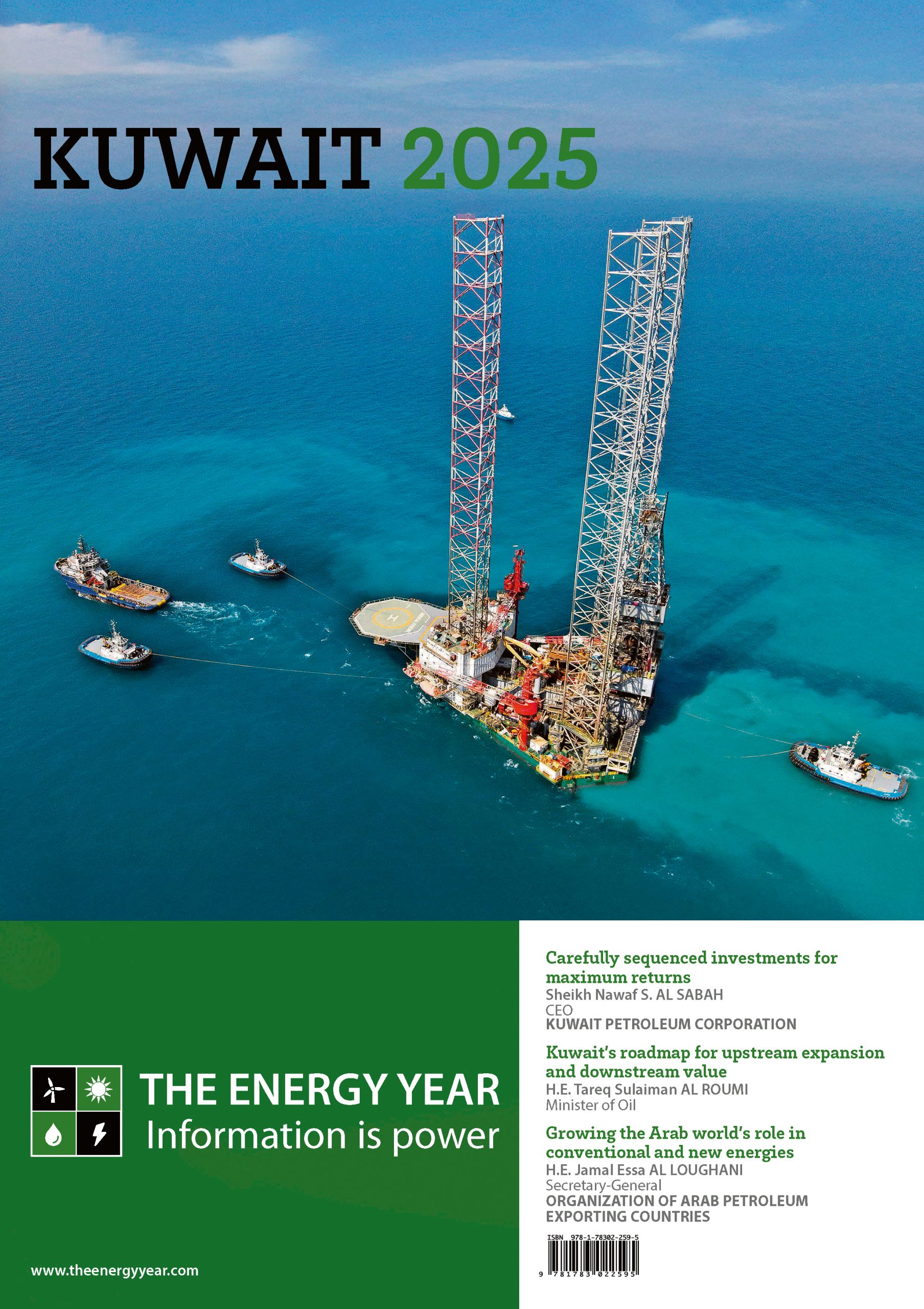
The Energy Year Kuwait 2025
The Energy Year Angola 2025
The Energy Year Nigeria 2025
The Energy Year Saudi Arabia 2025
The Energy Year UAE 2025

