
Colombia’s major copper potential
January 8, 2025 Colombia


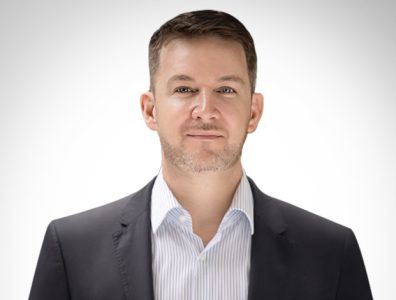
Ian Harris, CEO of Libero Copper, talks to The Energy Year about Colombia’s potential as a regional copper producer and the need for further private-public collaboration on strategic mining projects. Libero Copper is a mineral exploration company focused on unlocking the value of the Mocoa copper-molybdenum porphyry deposit in Putumayo, Colombia.
To what extent could Colombia become an important regional copper producer?
Between now and 2040, we have to produce more copper than we have ever produced to materialise the energy transition. Copper is an essential mineral for this transition. South America has some of the largest copper-producing countries in the world, for example, Peru and Chile. Combined they account for over 40% of the world’s copper production. Other countries in the region, such as Ecuador and Panama, have important copper projects as well.
In this regional context, Colombia has the potential to be a massive copper player. Chile and Peru are undergoing certain hurdles – social and economic – which are directly impacting the copper industry. This provides Colombia with an opportunity.
Colombia could be a very significant supplier of copper in a context where the world desperately needs more copper. Moreover, the current administration considers copper to be a strategic mineral essential for the energy transition.
To what extent is further private-public collaboration needed to advance strategic mining projects?
On average it takes around 15 years from a discovery to the start of production. Mining projects take a significant amount of time to advance and are very susceptible to the business cycle and the availability of capital to advance projects. It is all about timing, and that is one of the major challenges that public entities do not realise.
A project such as Mocoa could take millions or billions of dollars of investment over 20 years before it starts producing copper. The return on investment is long, and that is very difficult for a government to stomach.
As private firms, we must attract capital to advance these projects. There is consequently a need for close public-private collaboration if the government is to eventually reach its goals, and moreover, as soon as possible. As a company we are very much aligned with the aims of the current administration, but we need to work together, shoulder to shoulder, to advance these projects that are critical for the energy transition in Colombia.
Tell us about the potential and recent history of the Mocoa copper-molybdenum deposit.
Mocoa is a porphyry copper-molybdenum deposit located in Putumayo, on the Jurassic belt. Today it’s still in its early stages of resource definition, but a pit-constrained resource at Mocoa contains 636 million tonnes of 0.45% copper equivalent at a 0.25% cut-off.
The Mocoa deposit contains a total 4.6 billion pounds [2.1 billion kilograms] of copper and 511 million pounds [231.8 million kilograms] of molybdenum. This makes it one of the world’s largest undeveloped molybdenum projects in the world.
The mine has a very high content in molybdenum, which is used for quality stainless steel production. For example, it is used for wind turbines. In a reasonable development scenario, the Mocoa mine could supply 5% of the world’s molybdenum.
Mocoa has some history to it. Between 1978 and 1983, UN-Ingeominas carried out an exploration programme that consisted of geological mapping, surface sampling and geophysics. A total of 31 diamond drill holes totalling 18,321 metres were done.
B2Gold subsequently took over and executed diamond drill programmes in 2008 and 2012 consisting of 12 holes totalling 6,890.9 metres. In 2018, Libero Copper acquired a 100% interest in the Mocoa Project from B2Gold.
We now have a concession of 30 years with the possibility of extension to another 30. Up until today, total expenditure on Mocoa over the decades has been around USD 50 million.
We have been spending the majority of our time working with the local community to create a co-development type of environment. That’s where we’ve been spending the majority of our efforts these last years because we want to advance the project sustainably. It would be a mistake to just drill hoping things will go well. We want to make sure that, when we start advancing the project, that it is on extremely solid grounds.
How will Libero Copper proceed with the development of Mocoa in the following years?
An important step for us right now would be to work in parallel on resource expansion and also project development. We have to determine the overall potential of the project first, but there are significant resources already which justify going into the initial engineering and environmental work and moving the project towards production.
The deposit is already checking boxes that say that it would be of a sufficient size and scale. However, we will still require 100,000 metres of drilling and hundreds of additional drill holes. So, there’s still a lot of work that needs to be done to do the resource modelling required for the project.
Right now we’re looking at a smaller operation to begin production more quickly. It’s always easier to start with a smaller project in the beginning and then scale up. This comes to say that we will be working on resource expansion and project development in parallel with working on a smaller-scale startup project.
How is Libero Copper contributing to regional development in Mocoa and Putumayo?
We believe that collaboration and working in co-developing a project is essential. We are looking at the most advanced technology with the smallest footprint possible. This has to be combined with the concept of maximising benefit. It’s not just about minimising impact; it’s also about maximising benefit. It is here where our community work kicks in. We look at how our operations benefit the region and communities.
For instance, we sought a local boot producer and worked with them to make the first pair of steel-toe boots ever in Putumayo. We are also empowering a group of women to make uniforms.
In our main community, Montclar, we went house by house speaking with families to understand their concerns and dreams. We then thought about how they could be part of the project, and we began incorporating their ideas into our plan. This showcases the importance of building local capacity and maximising the benefit. We are working to make the community feel and be a part of the Mocoa Project.
If copper is going to be the new oil in Putumayo, we are preparing locals to be a part of every area inside our company. Most of our geologists come from Putumayo, and we have a senior geologist to prepare local junior ones.
We also give priority to women and indigenous people to be a part of the company. We are hiring local professionals because this is their home, their land and their project. We employ around 120 people but are looking to scale up to 400, with the majority being local. That’s what we have been doing for these two years in Putumayo: building local capacities and making locals the protagonists of this new story. It’s essential for us to have that local essence.
What further opportunities could the Mocoa Project bring in terms of industrialisation and production chains?
We want to do things differently within the company. One of the hardest barriers is how to make the project a part of positive production chains in Putumayo and in Colombia. Around the development of the Mocoa Project, we should also see the growth of a new business ecosystem. There are plenty of spin-off opportunities around the production of copper that should develop in the region.
Mocoa could easily produce 100,000 tonnes of copper per year. There are plenty of businesses that could result from it, but it takes vision – from the government, from local authorities, entrepreneurs and everybody else – to start working on that infrastructure now.
In times of deficit, who controls the raw material controls the production chain. There is a huge opportunity around the copper at our Mocoa Project. It puts Colombia in a very strong position to truly work on industrialisation by using its raw materials such as copper.
Read our latest insights on:
-
-

-

O&M leadership in mining and energy
INTERVIEW
More content from Colombia
Latest news and features







Latest Reports


The Energy Year Oman 2026
The Energy Year Kuwait 2025
The Energy Year Angola 2025
The Energy Year Nigeria 2025
The Energy Year Saudi Arabia 2025
The Energy Year UAE 2025


