
A lifecycle partner in Colombia’s hydro projects
December 23, 2024 Colombia


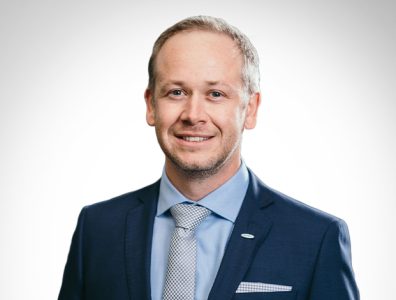
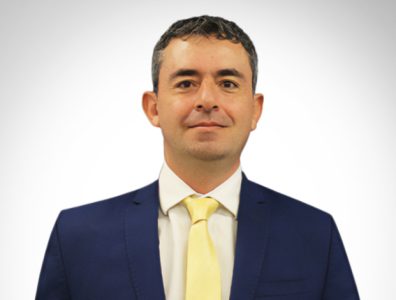
Heinz Peter Knass, CEO of Global Hydro Energy, and Georgios Vavaroutsos, the company's managing director for LatAm, talk to The Energy Year about the company’s establishment and its aims to capitalise on small hydro opportunities in Colombia. Global Hydro Energy develops hydropower plants and hydropower plant technology.
Why was Global Hydro established, and how does it aim to capitalise on small hydro opportunities opening up in Colombia?
Heinz Peter KNASS: Global Hydro has considered LatAm a critical geographical area since its inception. The hydrological potential of the region is very promising, and we aim to capture the vast opportunities in the area of hydropower.
In Colombia in particular, around 70% of power generation actually comes from hydro. As a leading company developing small hydropower plants, we chose to focus on this market.
Water runs through our veins. We design, engineer and manage digitised hydropower plants, a task that could not better match the needs and objectives of this country.
We are active in more than 50 countries, but in 2014, we established offices in Bogotá. Soon after, we also established ourselves in Medellín because it is one of the richest places for water resources in Colombia. The government is betting on the energy transition and clean energies, and this narrative fully aligns with our company’s reason for being.
Worldwide we are witnessing a clear trend from large and medium-sized hydro installations to small-scale hydropower plants, as these have less impact on the environment. These installations are also scalable, require less investment and take less time to build than large-scale megaprojects. In addition, Colombia has one of the highest theoretical potentials for small hydro in the region, with an estimated potential of around 25 GW.
We are scalable hydro specialists for small hydro applications of up to 30 MW. Such applications perfectly match the trends seen in Colombia, where we are seeing a decentralisation of energy production. Small hydro projects and solutions fit well with the country’s energy requirements and needs. Moreover, our offices in Colombia have become essential for controlling all our operations in LatAm – from Mexico all the way down to Chile.
How is the company a lifecycle partner in the development of greenfield and brownfield hydro projects?
Georgios VAVAROUTSOS: Global Hydro is a technical leader in the area of small hydro plants. We have a holistic approach towards designing, constructing, commissioning, operating, maintaining and refurbishing hydropower plants. We offer turnkey solutions, and we see ourselves as a key lifecycle partner. We are experts in achieving optimal designs for digitised power plants, and we assist our clients from the design to the commissioning stage.
In particular, we are experts in the design and production of all the electromechanical equipment of a plant. The equipment needed for these projects is tailored to each plant. The electromechanical design and even the whole steel construction come from us. While the core of our know-how lies in engineering and design, we also have expertise in civil construction and are able to do the designs for the civil work required for the construction of plants.
Likewise, we have the capabilities to develop greenfield projects from scratch but also brownfield projects, which include the revitalisation and refurbishment of plants. Regarding the latter, our experts develop concepts to replace entire systems or to repair and optimise them. This is part of our holistic approach. In Colombia, we see an upcoming market for both new hydro projects and rehabilitation projects.
What hydropower projects have you carried out in Colombia, and what goals do you have for this market?
GV: The first project we carried out was Támesis in Puerto Guillermo for EPM. This project was a wire-to-wire one and included one turbine of 3,212 kW. The scope of supply we covered for this venture included the turbine, generator, its HERO Plant Automation Unit, butterfly valve, transformer, hydraulic unit and the lubrication and cooling units.
We also carried out the Rio Recio project, with two power turbines of 1,473 Kw and 1,264 Kw, respectively, for a total combined capacity of 2,737 kW. The scope of supply for this project involved the turbine and hydraulic unit, the generator and central greasing unit, the diesel generator, the HERO 4 Plant Automation System, the low- and medium-voltage transformers, as well as the steel water construction, including the rake and protection panels.
We are now working on another project called El Limón, a 1.7-MW, electromechanical wire-to-wire venture. We are also finishing another project in Rio Aures, located in a cavern, which includes two turbines with capacities of 9-10 MW.
Our idea is to further capitalise on the opportunities Colombia offers and exploit the rich water resources this country has to generate power in a clean and sustainable way. We want to be an important piece of the energy transition in this country while at the same time creating new jobs and localising as much as we can when carrying out our projects here.
Tell us about your HERO automation system and how it can digitally monitor and operate hydro plants.
HPK: A few years ago, we started to develop our own automation system for hydropower plants: HERO. Our objective is to make our hydropower stations fully automated, requiring no workforce. In this way, our smart plants can run on their own, increasing efficiency and achieving operational excellence via digitalisation.
We digitise the value-creation process for our customers across the entire lifecycle of the power plant. Our digital systems make it possible to monitor and manage a plant from practically anywhere in the world.
HERO is an in-house software that enables us to remotely monitor and control in real time any power plant. We can therefore offer holistic monitoring services and plant management and be efficient plant monitors and operators. The collected data is bundled in our digital support centre and monitored continuously. From here, our experts find chances to improve efficiency or safety and intervene accordingly.
We are in our fourth generation of the system, HERO 4, in which we integrate a lot of AI applications. We work with machine-learning algorithms and also language models so one can, to an extent, communicate with the power station.
Regarding monitoring, these hydropower plants have a series of sensors to gauge temperatures, vibrations and so on. We can continuously monitor all these parameters, and if there is an anomaly, the software immediately informs the operator, who then acts accordingly.
How important is innovation for Global Hydro and for the upgrade of ageing hydro plants?
HPK: We invest approximately 4-4.5% per year of our turnover in innovation. Besides artificial intelligence, we invest a lot in new production technologies, such as lasers, 3D printing and new production processes. As another example, we are looking into new welding technologies with Global Tech. We have to compete against very sophisticated companies from India and China, which forces us to be ahead of the curve in terms of technologies.
At the end of the day, new technologies are essential for greenfield projects but also for ageing plants. With today’s technology, we can easily improve the efficiency of old plants which use outdated technologies. We use new and optimised geometries so that, with the same amount of water, you can produce more energy.
Small hydropower stations are starting to age, and they need upgrades and updates – especially in Europe and North America. New technologies such as the ones we implement are critical for extending and optimising the lifecycle of these facilities.
Read our latest insights on:
-
-

-

O&M leadership in mining and energy
INTERVIEW
More content from Colombia


Quality seismic decisions for Angola
INTERVIEW
Latest news and features



Latest Reports


The Energy Year Oman 2026
The Energy Year Kuwait 2025
The Energy Year Angola 2025
The Energy Year Nigeria 2025
The Energy Year Saudi Arabia 2025
The Energy Year UAE 2025

