


Direct air capture systems for industrial decarbonisation
March 25, 2025 UAE
UAE 


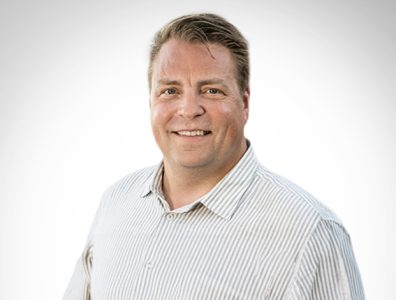
Rob Van Straten, CEO of Skytree, and Bjørn Utgård, vice-president for strategic development, talk to The Energy Year about the importance of direct air capture (DAC) to the development of comprehensive carbon storage strategies and the UAE’s potential to play a leading global role in CCUS. Skytree is a developer of DAC systems for carbon utilisation and storage.
How is Skytree helping companies capture and store carbon dioxide emissions?
Rob VAN STRATEN: Skytree develops and manufactures machines that capture carbon dioxide molecules directly from the air around us, enabling both its use in various processes and its permanent storage to permanently remove it from the atmosphere. While using carbon dioxide in applications such as enhanced photosynthesis for growing tomatoes or carbonating drinks eventually releases the gas back into the atmosphere, its subsurface sequestration or incorporation into building materials ensures permanent storage.
Life cycle assessments determine the impact of sourcing carbon dioxide from the atmosphere through DAC versus industrial processes, as most current carbon dioxide applications rely on fossil-fuel-based capture processes. However, capturing carbon dioxide from industrial exhausts to purify, liquify and transport it to where it’s needed increases its carbon footprint, potentially worsening emissions if the carbon dioxide re-enters the atmosphere.
Transitioning from industrial carbon dioxide use to permanent storage creates negative emissions, which is crucial to combat climate change. And as fossil fuel reliance decreases as a result of decarbonisation, the question arises of where future carbon dioxide will come from.
Despite the public’s negative perception of carbon dioxide, it is used everywhere as a valuable resource including for future chemicals and fuels. That shows the importance of DAC in the energy and CCUS transitions, where utilisation and storage are inseparable parts of a unified carbon dioxide system.
Bjørn UTGÅRD: For instance, in the Netherlands and Norway, notable carbon dioxide storage projects are emerging, such as Porthos, which will store about 37 million tonnes of carbon dioxide under the North Sea, and Aramis, which has a total capacity of 180 million tonnes in phase 1.
Companies such as Shell and Yara are redirecting carbon dioxide captured from greenhouses and medical facilities to permanent storage. Shell will send 300,000 tonnes to Porthos starting 2027 and Yara will send 800,000 tonnes to Norway’s Northern Lights storage facility.
While beneficial for the climate, these projects highlight the need for alternative carbon dioxide sources, especially non-fossil ones, for industries such as agriculture, food & beverage and healthcare. DAC is crucial in the transition to a unified CCUS framework, and Skytree’s DAC technology emphasises both utilisation and storage, unlike many other DAC solutions that focus solely on large-scale storage.
Why is DAC essential for addressing excess carbon dioxide in the atmosphere?
RS: Even if all emissions stopped today – which isn’t possible – we would still have too much carbon dioxide in the atmosphere. As the IPCC [Intergovernmental Panel on Climate Change] has made clear, we need to remove 10 gigatonnes of carbon dioxide by 2050 to prevent or reduce climate disasters.
Interestingly, CCS is aiding DAC in two ways. Firstly, by helping store carbon dioxide, it is reducing the supply for users such as greenhouses who take their carbon dioxide from emitting industrial sources. Secondly, CCS builds storage infrastructure that can be shared with DAC, making carbon dioxide removal cheaper by co-locating point-source and air-captured carbon dioxide.
For countries such as the UAE that have large storage capacity, there are both economic and climate opportunities to store industrial emissions to meet regulations such as the EU CBAM [Carbon Border Adjustment Mechanism] and to store atmospheric carbon dioxide cheaply with DAC for global markets that lack storage.
DAC can be powered by renewable energy or waste heat, and the UAE has vast potential for renewables. The current global energy infrastructure and transportation systems are not yet equipped to efficiently support hydrogen at scale, as the required investments in storage, distribution and transport infrastructure remain prohibitively high.
As a result, the focus is shifting toward hydrogen-derived fuels, such as synthetic methane and synthetic methanol, which combine hydrogen with captured carbon dioxide to create drop-in fuels compatible with existing infrastructure.
What is the potential for such fuels to be produced in the UAE?
RS: Large amounts of renewable energy are required to produce green hydrogen and synthetic fuels, so countries rich in sun and wind – the UAE, Morocco and Australia, for example – are ideal locations for large-scale production.
These nations can leverage their resources to produce cost-competitive hydrogen, which can then be combined with DAC-sourced carbon dioxide to create transportable, storable and energy-dense synthetic fuels. This approach not only facilitates the global transition to hydrogen-based fuels but also supports carbon neutrality goals by utilising captured carbon dioxide in a circular economy.
These fuels use existing infrastructure and are crucial for hard-to-abate sectors such as aviation. But to unlock this potential, abundant carbon dioxide is needed.
What is your assessment of the UAE’s position in the CCUS transition?
BU: The UAE has a leading role to play in CCUS for several reasons. The region has exceptional geological storage formations – those in Fujairah and Oman, for example – with porous rocks that are ideal for permanent carbon dioxide storage through mineralisation. Depleted oil wells also offer ready-made infrastructure to inject carbon dioxide back underground, avoiding costly decommissioning.
Beyond natural advantages, the UAE has strong government support, ambition, capital and a collaborative industry. Projects can move much faster than in some places in Europe, where permits can take years. Combine this with the UAE’s industrial base and expertise, and the country can become a prime hotspot for climate solutions, turning its oil legacy into part of the fix – it can create a business model for big oil companies where carbon dioxide is emitted, recaptured and sold. That is why the UAE is a priority for us.
RS: The UAE is not only a regional leader but also a global platform for international growth, acting as a convener of nations. While technologies such as DAC can channel existing industrial carbon dioxide to circular uses, the real opportunity lies in enabling countries such as Kenya or Morocco, which have vast renewable energy resources but limited local demand.
Instead of struggling to export electricity through impossible infrastructure such as long cables, these countries can use DAC combined with solar, wind or geothermal energy to create local value – either through carbon removal credits or by producing green molecules such as methanol or methane for export. Similar large-scale projects are already underway in countries such as Peru, Chile and Australia, where abundant renewable energy has no current outlet.
Who are you targeting to partner with in the UAE?
BU: We are developing a strategic partnership with ADNOC. Together, we share the ambition to scale up capture capacity in Abu Dhabi and, through their affiliates or partners, contribute to permanent storage projects.
RS: We are also looking at carbon dioxide users, such as greenhouses, water treatment facilities and industrial companies. The key question for the industry here is whether the current fossil carbon dioxide suppliers will continue serving these companies or if the users themselves will buy our machines and stop relying on others. We are already bidding for one such project for a large greenhouse, and are participating in a Fujairah storage initiative. We are also eager to work with waste incineration and treatment companies, as they offer valuable waste heat sources.
Another important focus is buildings. Most of their energy is used for HVAC systems, which connect to our roots. Skytree’s technology was originally developed for the European Space Agency to remove carbon dioxide from the air in confined spaces. For example, the buildup of carbon dioxide in meeting rooms can cause drowsiness, necessitating carbon dioxide removal.
Now, we are bringing that same technology to new use cases on earth by installing DAC units in buildings and taking the carbon dioxide out of the indoor air. This prevents the need for air from outside to be taken in to keep the carbon dioxide levels below health thresholds. This could save 30% or more on the energy bill for those buildings, as there is no need to heat or cool air taken from outside.
Furthermore, the carbon dioxide captured from the building can be monetised through utilisation or carbon credits. We plan to open an office in the UAE within a few months and, although we are just introducing ourselves, we know what we need to do to accelerate.
Read our latest insights on:
-

How the UAE is building its future
INTERVIEW -

-

More content from UAE


Quality seismic decisions for Angola
INTERVIEW
Latest news and features



Latest Reports


The Energy Year Oman 2026
The Energy Year Kuwait 2025
The Energy Year Angola 2025
The Energy Year Nigeria 2025
The Energy Year Saudi Arabia 2025
The Energy Year UAE 2025

