

Enabling Kuwait’s long-term digital goals
September 16, 2025 Kuwait


Sundus Bushahri, managing director for SAP in Kuwait, talks to The Energy Year about progress towards streamlining public-sector IT governance models and the recent shift towards business-driven digital transformation among oil and gas companies. SAP is a global technology company specialising in enterprise software for business operations and customer relations.
How would you assess the current pace of digital transformation in Kuwait?
Kuwait has made commendable progress in its digital transformation journey, with a growing number of agreements and an increasingly open stance toward foreign investment. There is a clear appetite for innovation. At the same time, there is an opportunity to accelerate implementation processes to fully capitalise on this momentum.
In fast-moving sectors like technology, agility is critical. If an RFP takes a minimum of two years to complete, the solution may already be outdated. Ensuring timely execution will help Kuwaiti enterprises maximise the long-term benefits of their digital investments.
What kind of engagement have you had with Kuwait’s oil and gas sector over the past year?
We are seeing a shift and a positive evolution – from IT-led initiatives to a growing emphasis on business-driven transformation. IT should enable, rather than dictate, the tools that are used, and to do this successfully, we need sponsorship from top management. More companies are embracing this approach, and momentum is clearly building across the sector.
We have expanded our discussions with stakeholders in exploration, development, field logistics, production, refining, trading and distribution to demonstrate how SAP can support these activities. While many systems have been developed independently, there is increasing recognition that integration will unlock greater efficiency and insight.
SAP already offers numerous integrated solutions, although some companies are still focused on custom-built solutions layered over legacy systems. As companies continue to advance their digital capabilities, partnering with experienced technology providers can help bridge gaps and accelerate integration.
Does SAP have specific offerings or ideas for Kuwait’s upstream segment?
Kuwait’s upstream could greatly benefit from SAP’s tools for hydrocarbons accounting, production forecasting and cost recovery tracking. They improve real-time visibility and compliance, ultimately helping upstream players enhance their upstream activities.
Field logistics integration tools for material tracking and rental equipment management can help cut delays and improve efficiency. SAP’s Trader’s and Scheduler’s Workbench also improves supply chain visibility and scheduling, supporting more agile and transparent operations. These solutions are already widely adopted across the region and have strong potential to support Kuwait’s upstream sector in streamlining workflows and enhancing operational performance.
Which Kuwaiti oil and gas companies are the leaders in IT execution?
There are several strong players in Kuwait’s oil and gas sector when it comes to IT execution. Equate, for example, is a pioneer not only in Kuwait but on a global level. Its proactive approach to digital transformation sets a benchmark for what is possible. While Equate operates as a private entity, the broader ecosystem, including public-sector companies, has a significant opportunity to adopt similar practices and build on this momentum.
We are seeing positive steps, but successful transformation goes beyond signing deals – it requires sustained implementation and alignment with long-term goals. At SAP, we are committed to enabling this shift. We have invested in human capital through workshops, forums and training sessions, and recently partnered with the Gulf University for Science and Technology to advance AI education.
These programmes have drawn strong participation from private-sector companies. We are continuing to extend these opportunities to public-sector entities and are optimistic about deepening collaboration as national digital priorities evolve.
How are SAP products helping advance Kuwait’s sustainability agenda?
SAP is embedding sustainability into the core of its operations through tools such as the SAP Green Ledger for transactional carbon accounting. Our modular suite supports everything from ESG performance tracking to carbon emissions reporting, functions whose importance will only grow as companies in Kuwait continue to align with global decarbonisation and transparency mandates.
Is the Kuwait SAP User Group helping drive implementations?
The Kuwait SAP User Group is an important initiative for us. When I joined, I introduced a strategy for SAP in Kuwait based on four Cs: Catalyst, Connection, Contribution and Commitment, and the user group was born out of that. It connects our largest clients, with Equate as the chair and sponsor of the group. Others include Alghanim Industries, the ALSAYER Group, Mezzan Holding, Abyat and the Ministry of Electricity & Water & Renewable Energy. The members meet quarterly to discuss challenges, trends and needs, independent of any sales involvement.
This initiative helps unify the client voice and influences how we develop our solutions globally. It also elevates Kuwait’s profile within the SAP global base. It is the 51st official SAP user group worldwide and the first in the GCC. We will soon expand it beyond the founding members and make it accessible to all SAP users in Kuwait.
How do you view the large data infrastructure projects recently deployed by Google and Microsoft in Kuwait?
We welcome these important developments. As a global partner with both companies, SAP works with their platforms to help customers achieve real digital transformation. Success in such initiatives often depends on strong governance and a clear strategy. Kuwait has a great opportunity to build on this momentum by ensuring that solutions implemented are well-suited to the country’s specific needs and future goals.
Digital transformation requires thoughtful planning and ongoing oversight to maximise value. With the right technical guidance, Kuwait can fully realise the benefits of these infrastructure projects and drive sustainable growth.
What are your strategic priorities for the next two years?
Our priority is launching transformational projects in the public sphere and the oil and gas sector. We want to help Kuwait optimise its cost structures and revenue strategies, and we are aiming for major collaborations that can fundamentally reshape operations at scale.
Read our latest insights on:
More content from Kuwait





Quality seismic decisions for Angola
INTERVIEW
Latest news and features



Latest Reports


The Energy Year Oman 2026
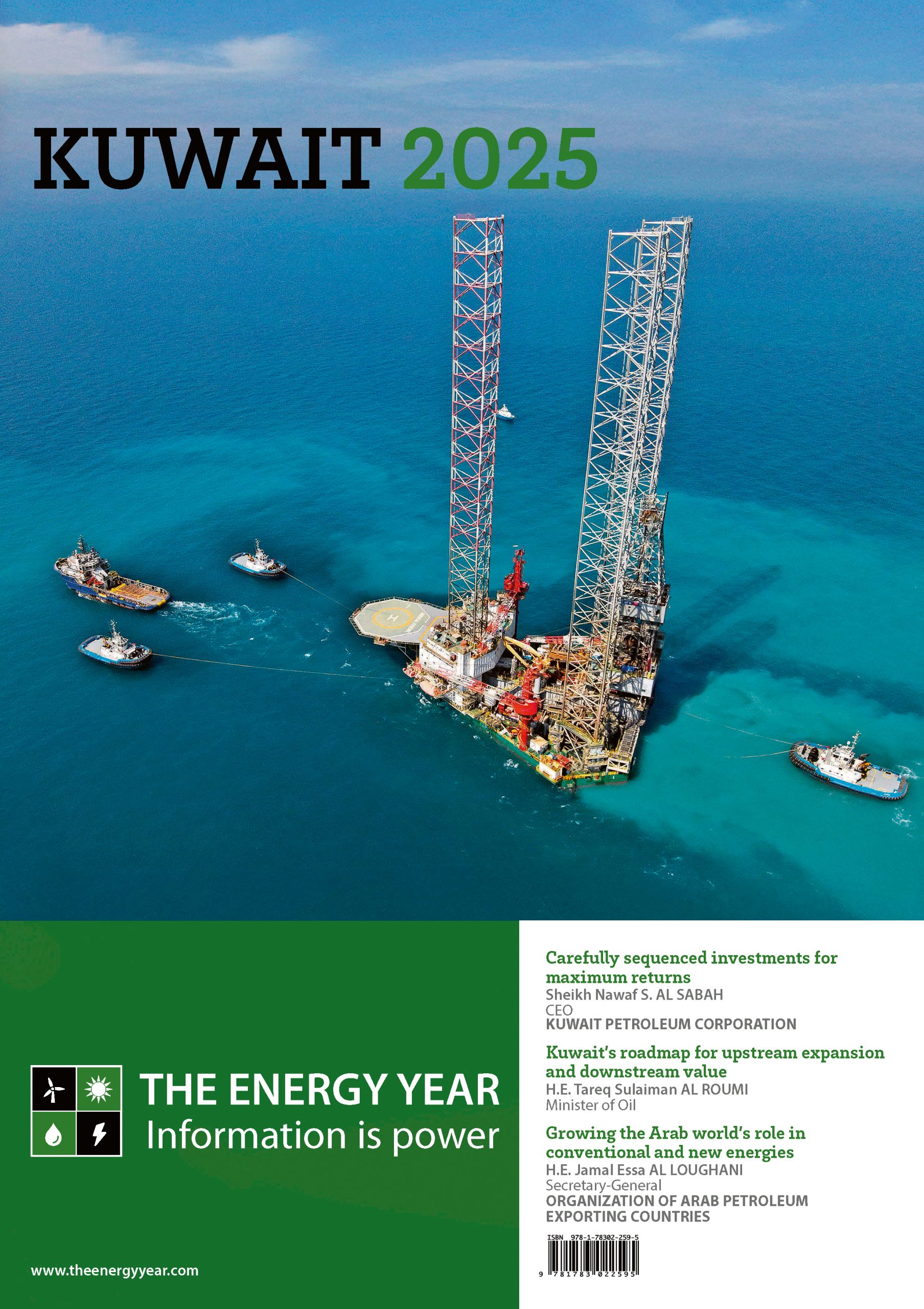
The Energy Year Kuwait 2025
The Energy Year Angola 2025
The Energy Year Nigeria 2025
The Energy Year Saudi Arabia 2025
The Energy Year UAE 2025

