
Engineering Nigeria’s shift to sustainable energy
March 30, 2026 Nigeria


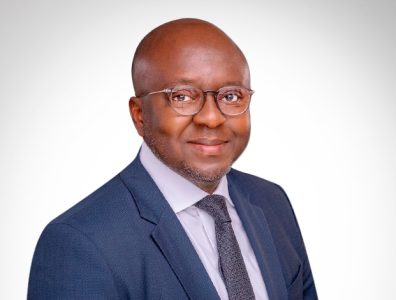
Abiodun Oshodi, managing director of ILF Consulting Engineers, talks to The Energy Year about growing in Nigeria’s power and infrastructure sectors and the increasingly important role of sustainable energy in the company's service portfolio.
ILF Consulting Engineers is an international firm delivering projects in the sustainability, infrastructure, energy, water and transportation spaces.
- Hydrocarbons dominate Nigeria’s energy consumption, but early-stage investments in renewables and power distribution infrastructure signal a gradual shift toward a more diversified energy mix. In this context, costs and grid access are the main factors shaping project development.
- The expansion of distributed generation and hybrid energy systems highlights a growing need for infrastructure that can handle supply gaps, a reality that Nigeria shares with other African countries that are balancing economic growth with decarbonisation.
- Oil and gas revenues are expected to remain a source of support for infrastructure development in the foreseeable future. The sector’s role is evolving from energy provider to financial enabler for renewables, water treatment and transportation projects.
What business does ILF Consulting Engineers’ resource and sustainable industry branch pursue in Nigeria?
Globally, our resource and sustainable industry branch contributes about 30% of turnover. In Nigeria, though, oil and gas still accounts for around 90% of our revenue. We expect increased investment in the power generation and transmission space and a consequent increase in its share of our portfolio.
In the past few years, since working on our first power plant project, we’ve been involved in several transmission projects across Nigeria, and have executed studies for one wind and several PV projects in the country. In Kano, we participated in a 10-MW project that is currently being developed to serve a small farming community, improving energy access and boosting local economic activity.
We’re currently supervising the construction of one of Nigeria’s first mini-grid installations to improve transmission and distribution infrastructure for a defined customer base. The project integrates PV, hydropower and fossil fuel sources. In addition, we are also engaged in the development of our first hydropower project in Nigeria.
Over the past 10 years, Nigeria’s energy industry has begun to present opportunities that were previously absent, including early-stage engagements in emerging solutions such as hydrogen. While these initiatives have so far been limited to feasibility and concept studies, they reflect an evolving mindset and increasing consideration for long-term sustainability.
Nevertheless, the market remains primarily driven by the need for cost-effective and accessible energy solutions. Meeting this immediate demand is a necessary foundation upon which broader deployment of sustainable energy projects is expected to develop progressively.
What is the thinking behind your expansion from oil and gas into renewables and hydrogen?
Our vision and mission are built around improving quality of life. That’s our starting point. We want to serve local and international communities by making life better for everyone. That is our founding compass, and it’s also tied to the Sustainable Development Goals (SDGs).
We don’t treat the SDGs as symbolic – they serve as a guiding principle for us as engineers. We try to make sure our designs are durable and sustainable, so that we’re contributing positively to the environment. It’s a central part of our work.
We’re also constantly thinking about what we can do as a company to reduce the impact of fossil fuels on the climate. For example, when we design gas processing plants, we keep decarbonisation targets in mind, so we’re solving two problems at once. That’s a big part of what drives us.
At the same time, we have to be aware of the local realities. Nigeria’s conversations are different from those in Germany or France. But the goal is the same – improving quality of life. We hope that different markets eventually meet at a sustainable point, but in the meantime, we bring what we’ve learned in more advanced markets to places like Nigeria, where the sustainability journey is just beginning. We help our clients start that journey now, instead of waiting another 10 years.
Looking ahead, how important will sustainability be to your business?
ILF has set a very ambitious sustainability target. Even here in Nigeria, we’re aiming for net zero by 2040. It’s not easy – for example, our offices still run on diesel generators – but we’re working within the Nigerian reality to make progress.
There is a shared desire across our group, from the owners to the staff, to do more for sustainability. The future I envision includes a wide range of sustainable projects for ILF in Nigeria in areas such as renewables and the decarbonisation of older infrastructure.
As I said, right now about 90% of our revenue is from oil and gas. What I would like is to keep the same amount of revenue from oil and gas, but grow our business in energy and climate protection, water and the environment, and transport and urban spaces. These are areas where ILF is already successful globally.
Africa still needs a lot of investment in these sectors. In Nigeria, we want to be part of the big infrastructure projects, such as the Green Line rail development in Lekki, which the government has already announced. We also want to be involved in projects such as building well-functioning sewage systems in every state and a water transmission network that eliminates the need for boreholes and wells in areas underserved by public infrastructure.
In summary, oil and gas will still play a role. It’s a prime source of revenue, and probably the source of funding for all this infrastructure. But in its utilisation, we must ensure that our approach is sustainable. That’s the path we are on and have been on for the past couple of decades.
Read our latest insights on:
-

-

A new opening for African gas
INTERVIEW -

More content from Nigeria


Quality seismic decisions for Angola
INTERVIEW
Latest news and features



Latest Reports


The Energy Year Oman 2026
The Energy Year Kuwait 2025
The Energy Year Angola 2025
The Energy Year Nigeria 2025
The Energy Year Saudi Arabia 2025
The Energy Year UAE 2025

