

Fabric maintenance for renewing Angola’s offshore assets
July 17, 2024 Angola


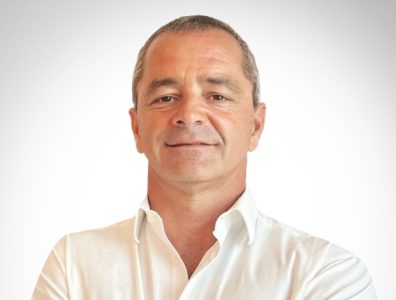
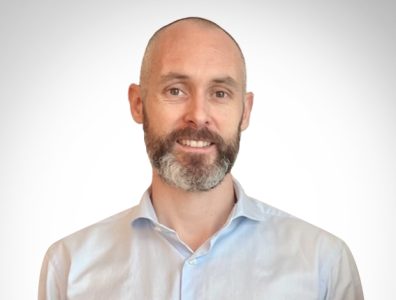
OperAngola’s Martim Canto Moniz, general manager, and Martin Lorenzo, operations manager O&G, talk to The Energy Year about the outlook for Angola’s fabric maintenance sector, the company’s key drivers for growth and how its new industrial unit is advancing and will service the industry. OperAngola provides steel fabrication, maintenance, repair, inspection and facilities management services.
What is the outlook for the fabric maintenance sector in Angola?
MARTIM CANTO MONIZ: FPSOs and other assets in Angola are ageing very quickly, so fabric maintenance is essential for the sustainability of the country’s energy sector. Fabric maintenance is going to see a lot of growth in the coming five years.
The amount of piping to be replaced on most FPSOs is so great that project-based collaborations and partnerships will be very necessary, and the top companies in the fabric sector will have to subcontract a lot of the work.
Some FPSOs need to replace over 1,000 metres of piping, which is a real challenge for the operators because production has to be interrupted temporally to replace them in most cases – and this will impact the ANPG’s [National Oil, Gas and Biofuels Agency] goal of mitigating Angola’s declining oil production. For this reason, it is key that operators and fabric maintenance service providers sit down to develop a strategy to efficiently serve the oil and gas industry.
What are OperAngola’s key drivers for growth?
MARTIN LORENZO: We want to become a reference among the metalworking companies in Angola. One of our main objectives now is working to ensure excellent quality. For our production unit, one of our objectives is to obtain the ISO 3834-2 welding certification and the CE certification for our steel and aluminium structures. This would mean that all our processes, from the material purchase up to the delivery to the client, would be following these strict quality certifications.
An interesting service we provide which helps us in our growth strategy is the rehab of the infrastructure (civil works, electricity, plumbing, HVAC, etc.) within the living quarters of the FPSOs. This is not a common service that you see in the industry.
Not only are the production assets ageing; so are the living quarters. The renewal of them, including the rooms, meeting rooms, galleys and mess rooms, CCRs [central control rooms] and so on will renew the necessary living conditions for the offshore workforce.
One of our priorities is having renowned international partners. We already have an interesting partnership in place for our HVAC services which complements our actual capabilities and technical team, allowing us to be present along the entire EPCI value chain up to inspection and preventive and corrective maintenance.
How is your new industrial unit advancing OperAngola’s goals to better service the industry?
ML: Our production unit is located in a very strategic area here in Angola, namely in the Zona Económica Especial (ZEE) in Luanda, which is close to all the main roads that connect the city with industrial bases such as Sonils. We have a unit comprising 50,000 square metres, 6,000 metres of which comprise workshop areas. We also have more than 3,000 square metres for expansion and a huge area of 20,000 square metres for covered storage, which we use both for raw materials and for the final products.
We have invested seriously in new and innovative equipment to have a really significant capacity which allows us to work on several fronts in the same workshop: material preparation, metalworking and welding, blasting and painting. Our workshop is fully functional and state of the art. As a service provider for the oil and gas industry, we need to keep our standards up to the highest levels regarding safety and quality. The overall industry is quite impressed with our new capacities.
Oil and gas is a sector where trust is fundamental due to the impact that a misunderstanding or misconception could lead to. We are therefore reaching out to our commercial contacts to build the required trust.
What are the key differentiating factors that set OperAngola apart from its competitors?
MCM: One of the most important strengths of OperAngola is the technical capabilities and experience that our multidisciplinary teams have in different fields of intervention. We have invested a lot in training. It is absolutely crucial for us.
Furthermore, in Angola there are many companies that provide mechanical and metal works, but not all of them have the same ISO (ISO 9001, ISO 14001 and ISO 45001) and CE certifications that we have. These certifications are an important differentiating factor compared to our competition.
What role can OperAngola play in Angola’s photovoltaic park projects?
MCM: Photovoltaics are indeed an important sector to be developed in Angola, in addition to investment in the country’s transmission sector.
We can certainly contribute to infrastructure support for renewable energy projects and in particular photovoltaic parks, but in our experience in Angola, the tenders in this specific sector take some time to be finalised. It is an exciting market, but the key challenge is that usually most of the work is awarded abroad in the countries where the project financing was secured, with some subcontracting locally for installation and support activities which complement the main installation job.
Read our latest insights on:
-

Quality seismic decisions for Angola
INTERVIEW -

-

More content from Angola

Quality seismic decisions for Angola
INTERVIEW
Latest news and features



Latest Reports


The Energy Year Oman 2026
The Energy Year Kuwait 2025
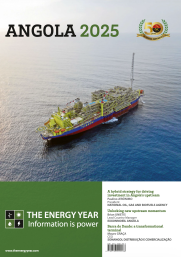
The Energy Year Angola 2025
The Energy Year Nigeria 2025
The Energy Year Saudi Arabia 2025
The Energy Year UAE 2025

