
Gas: key to Angola’s future
April 28, 2025 Angola


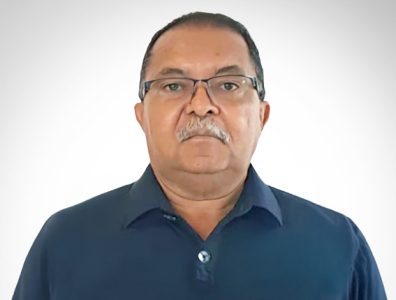
Carlos Amaral, founder of Acrep, talks to The Energy Year about the company’s progress in Cabinda North, how it is developing its gas capabilities in Cabinda South, its model for success in onshore E&P and when it will become an independent power producer. Acrep is an Angolan upstream company.
What progress has Acrep made in Cabinda’s onshore?
We approved our five-year plan two years ago, and one of the standout achievements was Cabinda North. Since August 2024, we’ve been operating the block, having acquired a 62% stake from Azule Energy. We now operate through a contract with Sonangol, and despite being a local company, we hold a 95% working interest.
The goal is to evaluate the Dinge and Nzila discoveries, which we previously appraised over a decade ago through a contractor group. As operators now, we plan to test these reservoirs around July or August of this year, with authorisation already granted. If our estimates are correct, we’re looking at around 140 million barrels of oil in place. That’s a substantial find for a company of our size.
Our broader strategy is to become the sole onshore operator in Cabinda. We’re already operating Cabinda South and North, and we’ve begun discussions with Azule Energy to acquire Cabinda Centre. The region holds around 12 undeveloped colonial-era discoveries. We see ourselves as the company that can use modern techniques to unlock the value in these smaller, overlooked assets.
Cabinda also sits atop an estimated 10 billion barrels of shale oil, which Pluspetrol, a company whose participation in the Cabinda South block we acquired, studied this opportunity extensively. If viable, this shale oil and gas will open a new frontier for us. We expect to produce around 4,000 boepd by 2027.
How are you developing your gas capabilities in Cabinda South?
Gas is a key part of our future. Our goal is to become an independent power producer, and this is now within reach. The government recently set an official price for high-tension power sales – around USD 60 per MWh. That decision was crucial, as previous projects weren’t feasible without a stable pricing structure.
To proceed, we’re awaiting a special authorisation from the Ministry of Power and Water. It’s important to clarify that this isn’t a traditional oil and gas project. It falls under the domain of Sonangol Gas and New Resources, not our partner Sonangol P&P. This venture brings us into a new energy sphere – power and gas.
We’re also a partner in Block 1/14, operated by Azule Energy, where we plan to drill an exploration well in May. The block holds potential for light oil and gas. If successful, we’ll secure our status as a serious gas player.
Cabinda is well-positioned to feed Angola LNG, which is already receiving around 240 mcf [6.79 mcm] per day and plans to ramp up to 600 mcf [17 mcm] per day by May or June. With that kind of capacity crossing the river from Cabinda, we believe it makes sense to harness gas locally and not just export it. There are 900 million people in Africa without gas access. We want to contribute by using Cabinda’s resources to generate power locally and perhaps export power regionally.
What’s your approach to succeeding in onshore E&P?
As a local company, we’ve focused on building in-house capabilities. We bought a drilling rig – and we’re maybe the only Angolan company to have done so – to ensure we can drill more cheaply than service contractors. If a well turns out to be dry, it’s our rig, already paid for, so we’re not losing money to third parties.
I admire Perenco’s model: They don’t just serve contracts, they deliver results. We want to replicate that operational independence onshore. The National Oil, Gas and Biofuels Agency is now encouraging onshore exploration across Angola, and we’re positioning ourselves as a ready partner. We have a rig, we’re producing in Cabinda, and we have a skilled Angolan team.
We aim to play a role in the 300,000-square-kilometre interior basins. That said, to sustain operations in the near term, we’re eyeing a minority stake in a mature producing asset in Angola to secure a steady cash flow while developing our onshore ambitions.
When will Acrep launch its independent power project in Cabinda?
The plan is to start later this year, but we’re still waiting on the Ministry of Energy for authorisation. The recent government move to enforce proper pricing for power was a breakthrough. Producers need a guaranteed return to justify investment, even if the government subsidises consumer prices.
In the meantime, we aim to launch a small photovoltaic project, fully controlled by Acrep. Under current regulations, you can launch rural projects under 1 MW without formal ministerial approval. This allows us to begin modestly while we await our independent power producer licence. Once licensed, we’ll scale and aim to become a significant regional power supplier. The goal is to start small and expand organically.
What are your main objectives for the next few years?
We want to finalise our onshore Cabinda strategy and see real success in Block 1/14. A successful exploration campaign there would catapult us into the gas sector and diversify our portfolio.
We’re also trying to close a deal that supports our goal to grow organically and sustainably. Ultimately, we aim to become not only a recognised oil player but a regional energy supplier integrating oil, gas and power in Cabinda and beyond.
Read our latest insights on:
-

Quality seismic decisions for Angola
INTERVIEW -

-

More content from Angola

Quality seismic decisions for Angola
INTERVIEW
Latest news and features



Latest Reports


The Energy Year Oman 2026
The Energy Year Kuwait 2025
The Energy Year Angola 2025
The Energy Year Nigeria 2025
The Energy Year Saudi Arabia 2025
The Energy Year UAE 2025

