
Managing Colombia’s E&P market
February 4, 2025 Colombia


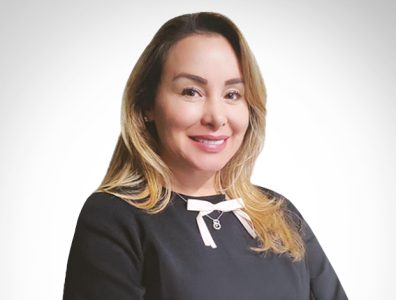
Rosmilar Ceballo, executive president of Atina Energy, talks to The Energy Year about how the company is addressing constraints in exploration and production and how it efficiently manages its rig fleet. Atina Energy develops projects for the oil industry and provides integrated project management in the areas of drilling, completion and workover.
How are you addressing the current constraints in exploration and production?
Our primary challenge in this area is social management, particularly in regions such as Magdalena Medio and Casanare. As the country’s policy has shifted towards reducing exploration, job opportunities have become increasingly scarce, leading to heightened social tensions. People are extremely anxious to secure the few available opportunities, often fighting among themselves to obtain them.
To mitigate this, we’ve implemented a strategy of distributing work opportunities more widely. For instance, in Casanare we operate four workover teams and well services in Llanos 34 for our client GeoPark. We utilise multiple mobilisation companies with framework contracts to spread opportunities across more businesses. However, the demand for jobs always outpaces supply, creating ongoing challenges.
To address these social issues, we’ve developed a multifaceted approach. We prioritise engaging with communities through various means, including cultural and educational events, sponsoring local sports teams and organising family fairs. Recently, we held our first family fair in Casanare, inviting people from the veredas to participate by showcasing their arts, dances and music.
How do you manage your rig fleet to maximise operational efficiency and meet the varying demands of your contracts?
Our company specialises in workover, well-service and completion operations. We’re proud to operate the newest and largest workover equipment in the country, including a dual-capacity rig that can function at both 750 hp and 1,000 hp, depending on the technical requirements and well depths, allowing us to meet a wide range of operational needs.
Our framework contract with GeoPark over the last six years covers all wells in Llanos 34, which has over 400 drilled wells, as well as operations in Llanos 87. Llanos 34 is GeoPark’s flagship project, and we’re essentially the sole workover and well-service company in that field.
With Ecopetrol, we have a similar framework contract, but it works slightly differently. Ecopetrol issues service orders for specific periods, usually four to six months, which can be extended based on field needs. This dynamic allows us to move between different fields and projects and potentially stay with Ecopetrol for two to three years through consecutive orders.
Currently we’re operating eight rigs out of our total fleet of 11. Four of these are in Magdalena Medio for Ecopetrol, and four are with GeoPark in Llanos 34 and Llanos 87. The remaining three rigs are on standby, ready to be deployed as needed.
What opportunities do you see within the complex Colombian landscape?
We’re seeing encouraging signs in the market, with an increase in operators’ budgets for equipment in the second half of 2024. As exploration activities decrease, workover operations become increasingly critical for maintaining and enhancing production levels. This shift presents a significant opportunity for our company, given our specialisation in workover services.
In terms of growth strategies, we’re exploring opportunities to expand our fleet through potential partnerships. We’re currently in discussions with American companies interested in sending drilling rigs to Colombia, which could allow us to enter the drilling service market. Our goal is to move towards offering drilling services with versatile, modern rigs for medium-depth fields, potentially using 1,200-hp and 1,500-hp drill rigs.
In terms of financial growth, we’re projecting our revenue to increase by at least 8% annually. This growth expectation is based on the increasing demand for workover services as companies focus on maximising production from existing wells in the absence of new exploration. We’re also keeping an eye on potential expansion into other markets. While we’re currently focused on Colombia, we see Venezuela as a potential opportunity in the future.
What sustainability initiatives are you implementing in your operations?
Our approach to sustainability is comprehensive, extending beyond mere emissions reduction. We understand sustainability as adherence to procedures, standards and policies that enable long-term operation. To this end, we’ve implemented several initiatives.
We’re certified under the tri-norm standard [ISO 9001, ISO 14001 and ISO 45001], RUC and NORSOK and conduct regular internal audits to ensure compliance with our sustainability commitments. Furthermore, we’re signatories to the UN Global Compact through the Colombia Network, and we actively participate on its board of directors.
Our flagship project for emissions reduction is called “Less Fuel.” Currently in its pilot phase, the system is installed on one of our rigs operating for GeoPark. This innovative system reduces emissions by 77% by connecting the rig to the field’s electrical grid instead of using diesel generators. Not only does this cut direct emissions, but it also reduces maintenance needs and oil consumption, further decreasing our environmental impact.
The “Less Fuel” project goes beyond environmental benefits. It also addresses the challenge of oil disposal and reduces overall pollution. Our plan for 2025 is to have all four of our rigs working with GeoPark connected to this system, if possible.
Read our latest insights on:
-
-

-

O&M leadership in mining and energy
INTERVIEW
More content from Colombia


Quality seismic decisions for Angola
INTERVIEW
Latest news and features




Latest Reports


The Energy Year Oman 2026
The Energy Year Kuwait 2025
The Energy Year Angola 2025
The Energy Year Nigeria 2025
The Energy Year Saudi Arabia 2025
The Energy Year UAE 2025

