

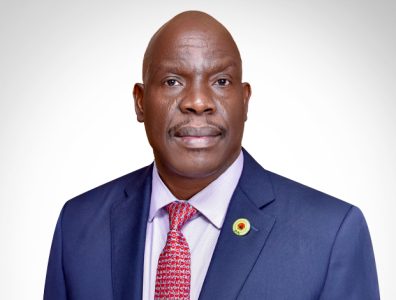
Nigeria creates investor confidence through transparency
July 8, 2025 Nigeria


Gbenga Komolafe, commission chief executive of the Nigerian Upstream Petroleum Regulatory Commission (NUPRC), talks to The Energy Year about how the 2024 bidding round and the implementation of the Petroleum Industry Act (PIA) have positively affected investor confidence in Nigeria and how the regulator is shaping a new upstream business climate. NUPRC is Nigeria’s upstream regulator.
This interview is featured in The Energy Year Nigeria 2025
How do you assess the impact on investor confidence of the latest bidding round in combination with the PIA?
Before the 2024 licensing round, the second-to-last time that Nigeria had one was in 2003, with the marginal fields round, and after that there was the 2020 marginal field bid round, which came with several associated challenges, including incompatible partners coming together to participate in the bid. By contrast, we are very much impressed by the way we conducted the 2024 licensing rounds.
The 2024 oil block licensing round has been deemed the most transparent ever conducted in the country, and it was witnessed by investors locally and internationally. As a matter of fact, the NEITI – the Nigerian arm of the EITI [Extractive Industries Transparency Initiative] – was physically present at the licensing event and has commended NUPRC on the transparent approach that governed the awarding.
It was a huge success overall and marked an important milestone, being the first licensing round conducted under the PIA, a law that introduced sweeping reforms in the industry and which took the nation over one and a half decades to pass. The PIA brought about landmark reforms that were implemented primarily to create investor confidence, attract investment to the industry and ensure sanity and predictability in the way business is conducted in the oil and gas sector.
Oil was discovered in Nigeria back in 1956, and exploration kicked off in 1958, so our country has tremendous experience in E&P. We had challenges in the past, but we learned from them, leveraged our background and formulated innovative bid guidelines for the 2024 licensing round, which revolved around three key pillars: competitiveness, fairness and transparency, as outlined under Section 73(a) of the PIA.
Tell us more about the factors that made the 2024 licensing round a success and how its stages worked.
The key factor is technology. For the first time in the history of Nigeria, NUPRC was able to conduct a licensing round that was fair, transparent and competitive by leveraging digital technology. And you will agree with me, nothing is more transparent than what you can plainly see. Investors’ confidence was boosted when they realised that our licensing round’s methodology used digital technology.
The round was a three-stage exercise. We had a pre-qualification stage, a technical stage and then a commercial stage. All prospective bidders passed through the different stages.
First, bidders were given an encryption key where they posted their commercial offer. On the day of the commercial bid conference, they used their key, and the computer displayed their bid. They were then asked to confirm their bid, and then the computer showed them whether they had won or lost.
This process attracted investors to our licensing round. It showed we are a regulator that operates fully in line with those abovementioned principles.
Can you provide us with further examples of what has changed relative to the past that has improved the attractiveness of investing in Nigeria’s upstream?
Another key factor for the success of this bid round was the mentality of our president. He is very commercially oriented. Soon after he proclaimed that Nigeria was ready for business, he ensured that some of the entry barriers to investing were swept away. To give you an example, President Tinubu has reduced the signing bonus payable by successful bidders from around USD 200 million to USD 10 million.
Nigeria is blessed with 37.5 billion barrels of crude reserves and 209 tcf [5.92 tcm] of gas reserves. We are one of OPEC’s largest producers, and our country boasts 30% of Africa’s oil and 33% of the continent’s gas.
Now we have to valorise these numbers and turn them into revenues and shared prosperity. With the outstanding support of our president, who encouraged us to be innovative in translating these resources into capital, we started thinking outside of the box and designed national schemes that would attract investors to our licensing round.
One of the game-changing approaches with which we have conducted the licensing round is that, in the past, emphasis was on the volume of the signature bonus. Now the paradigm has shifted and is no longer just about the amount of the entry fee. We are more interested in the quality of the work programme that guarantees the development of the blocks in the long run.
We ask bidders to give us a performance bond, which we call a bid bond, something that had not been done in the past. This ensures that, once you win, you are coming to develop the field, something that has not always happened.
The way the licensing round was carried out, as well as the way the law regulating it has been designed, prevents discrimination of any kind. This means bidders don’t know whether they will be winning beforehand; it is a fair and competitive process.
We have seen a relatively unknown player win over Chevron, while another IOC, TotalEnergies, was awarded with two blocks. Then, we saw NNPC lose to an independent player. We believe that this bid round will restore IOCs’ confidence and participation. They realise that, if their bid is very good, they will win.
What are the main parameters you look at before awarding blocks, and when can we expect the next bidding round?
A crucial question to ask before awarding a player is, how will that company competently develop the block? The law has not been designed to be discriminatory and is also flexible and “open-minded.”
For example, passing the technical qualifications is not only about when a company was incorporated, whether it is an old company or a recently established one. It does not really matter because it is not the company that is going to do the work but rather those in the company, who may have experience and capacity long preceding the incorporation of the company.
For instance, a new company could be formed as a special-purpose vehicle to participate in the bidding. All that matters is a company needs to be incorporated before the date of the bidding. Most importantly, we look at the pedigree of a company’s stakeholders to assess their competence. That is how you judge the technical competence of the company. Then we check the company’s financials.
We consider a wide spectrum of elements, bearing in mind that a company is not an inanimate object. It is made up of people with various experiences and backgrounds, and these are key to driving our decision making.
For the future, we want to launch bidding rounds as regularly as possible. We are looking at streamlining the process to have them on an annual basis. The PIA, despite not providing any specifics about the timelines of when new bid rounds have to be launched, clearly states that it is one of the statutory mandates of the commission to conduct licensing rounds.
We want investors to know how and when we carry them out. We don’t want them speculating and wondering if the next one will be next year or in five years. If investors know that we conduct licensing rounds annually, at a particular time, they prepare for them, and this will benefit all parties.
Can you walk us through the key drivers behind the 1MMOBPD initiative?
The 1 Million Barrels project was launched by NUPRC during the commission’s third anniversary. Its drivers and key concepts focus on the need to leverage collaboration and a team spirit within the upstream ecosystem. We have realised that having actors and stakeholders in the industry that operate in silos results in sub-optimisation or underutilised capacity.
We have identified all the actors along the whole value chain – exploration companies; data companies; facility, service and rig providers; and funders – and we have used our regulatory power to bring them together to provide a one-stop shop where they can all network, interact, identify problems and come up with solutions to optimise production in order to take full advantage of our large hydrocarbons reserves.
In summary, this project leverages as best as possible our available capacity to reach the target of 2.5 million bopd. Our approach is working, as shown by the consistent dividend we recorded and the increased level of output.
In October 2024, when we launched the initiative, our production was at about 1.5 million bopd. As of March 2025, we were at 1.75 million bopd, so we have added over 250,000 barrels, and we are still going. Not only did this happen, but it happened quickly.
How do you assess the vitality of the upstream sector in Nigeria, and what efforts is NUPRC undertaking to boost it further?
One of the major parameters by which you measure the vitality and vibrancy of the industry is through the rig count. Back in October 2021, when NUPRC was established, production was at risk of going below 1 million bopd, and the rig count was about 11.
Today, we have 40 active rigs in the country, which shows the recovery we made in less than four years, and we are expecting this number to grow even more thanks to some initiatives we have in the pipeline. For instance, we have recently introduced a rig intervention unit which will unveil a virtual, digital market for rigs. Prospective investors and operators can log on to shop for rigs, minimising the rig-sourcing challenges encountered by players.
What is the role that NUPRC has been playing to shape what looks to be a new upstream climate following the divestments that have recently occurred?
NUPRC is a very proactive regulator. Our resilience and our proactive nature have really helped in the positive turnaround that has been happening in the industry. We recognise the rights of investors, especially in alignment with the policies of President Tinubu, who has fully supported the right investment climate in Nigeria by promptly granting the needed executive approvals to enable NUPRC’s regulatory policies. He believes in making business easy, that an investor should have the right of free entry and free exit, and that the regulators should not hinder these rights or stifle the ease of doing business.
The divestment process marked another first. For the first time, we have been able to ensure that we institutionalised how divestments are done, meaning that divestments in the upstream are now tackled in a structured manner, supported by a robust framework – one of the first on the continent.
The process is based on seven pillars, each of them designed to guarantee the wellbeing of the sector. They safeguard both the divesting and acquiring entities while taking care of our communities. In a nutshell, these pillars encompass technical capacity, financial viability, legal compliance, decommissioning obligations, host-community engagement, labour relations and data repatriation.
What is the philosophy behind them? To safeguard the national interest. Why? Because oil is the main driver of the Nigerian economy. We want to ensure that once an asset is handed over, it will be acquired by a competent entity that can operate optimally since, if they are unable to, that would lead to a gap in revenue for the country, going against the national interest.
To touch upon a few of these pillars, a key one has to do with properly addressing the pre- and post-sale obligations, namely the decommissioning and abandonment obligations. It clearly identifies the obligations of the divesting and acquiring parties with a formula, protecting them both and avoiding the transfer of 100% of the obligations to the latter.
By doing that, we have intentionally tried to safeguard the interest of the acquiring entity so they do not acquire assets that they cannot handle. If they cannot operate an asset, the acquiring entity could even dump their responsibility, and on who? On the nation, which will now be carrying a financially toxic asset.
Another pillar, host-community engagement, is designed to guarantee that we have a peaceful operating environment for an asset. We want to ensure that environmental issues are dealt with, rather than abandoned in the name of divestment, and that everyone equally benefits.
Finally, we have a provision for data repatriation to ensure that the divesting entity makes the acquired data available because the data belongs to the government. This allows the acquiring entity to have the data they need to upgrade the asset.
All these elements of our policy are out there, transparently available on our portal. If you are coming to acquire an asset, you already know exactly what you are coming in for and how to deal with any issues.
How is NUPRC navigating some of the country’s traditional challenges, such as oil theft and vandalism?
We are working in collaboration with the general security services to ensure the minimisation of crude oil theft. Today, the volume of crude oil theft has been reduced to about 5,000 bpd, which is encouraging to investors.
The commission has diligently implemented the host-community development provisions of the PIA, which are targeted at ensuring social inclusion. If you think about it, most of what we call crude oil theft arose out of poverty in the host-community areas, where inhabitants have felt neglected by the oil operators over the years, and they were looking for ways of survival. Now, with the reforms brought about by the PIA, there are finally copious provisions to take better care of them.
As contained in the PIA – Chapter 3, sections 234 and 235 – settlors are expected to incorporate host-community development trust funds, committing to remit 3% of their annual opex into these funds. As we speak, NUPRC has facilitated the incorporation of 110 host-community development trust funds and an overall remittance of about NGN 300 billion [USD 195 million] so far. The whole process occurs under our watch, and there are many development projects ongoing.
The host communities are happy with what is being done, and many of them are now embracing peace as opposed to militancy, which is translating into conducive operating environments in the Nigerian upstream.
Given the competition from new oil and gas frontiers in Africa, what will make Nigeria competitive in Africa in the next five years?
Nigeria is lucky to have a dynamic, resilient and proactive regulator. We have been adapting and adjusting to this trend. We recognise that there has been a change in the global energy map, which has brought about great competition that requires the regulator, on behalf of the nation, to be innovative and resourceful in order to attract investment. That is what we have been doing at NUPRC.
To group some of these measures together and sum them up, we put regulations in place that were made in collaboration with the operators and stakeholders in the industry, and we’re using a new approach to make compliance easier.
Last but not least, it is clear to everybody how the three executive orders [40, 41 and 42] made by President Tinubu and implemented by us are paying off. Overall, a highly conducive environment for investments is being shaped in Nigeria. NUPRC has engendered operational efficiencies to make the industry thrive even more, and we are still going to do more. In the end, we are very optimistic. Based on the measures we have put in place, we can realise 3 million bopd for Nigeria in the near future.
Read our latest insights on:
-

-

A new opening for African gas
INTERVIEW -

More content from Nigeria


Quality seismic decisions for Angola
INTERVIEW
Latest news and features




Latest Reports


The Energy Year Oman 2026
The Energy Year Kuwait 2025
The Energy Year Angola 2025
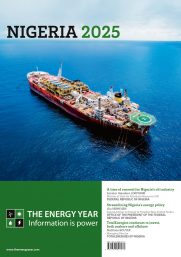
The Energy Year Nigeria 2025
The Energy Year Saudi Arabia 2025
The Energy Year UAE 2025

