
Oman’s gateway to international markets
December 23, 2025 Oman
Oman 


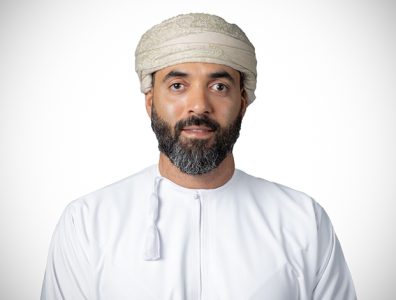
Wail Al Jamali, CEO of OQ Trading (OQT), talks to The Energy Year about the company’s role in maximising the value of Omani energy resources in international markets and prospects for developing a lower-carbon fuel trading portfolio. State-owned OQT trades a range of products, including crude oil, refined products, petrochemicals, fertilisers and carbon.
OQT plays both a domestic and international role within OQ. How do you support the group’s operations in Oman while managing its global trading activities?
As the exclusive market-facing partner for OQ, OQT serves as Oman’s gateway to international energy markets, but our mandate also includes a broader national role. We have a sizeable crude offtake from the Ministry of Energy and Minerals and supply Oman’s share of the OQ8 (Duqm) refinery’s feedstock requirements. From January 2026, we will also market some volumes from Oman LNG. Besides physical trading, we are active in derivatives and paper products, both for hedging and to express market views.
Inside Oman, we serve as a market intelligence and optimisation partner to OQ, advising on production decisions, adjusting product specifications and helping with investment planning based on our real-time market insights. Our commercial optimisation team works closely with OQ as an interface between trading and asset planning to improve plant performance and beat plant-set targets over short tactical periods to capture better margins.
Beyond facilitating exports through our global network and helping OQ’s products reach their optimal destinations, we also ensure OQ’s plants have the necessary feedstocks and blend components. Our global offices span Muscat, Dubai, Singapore, Shanghai, Rotterdam, London and Houston. Through our affiliate Hass Petroleum, a medium-tier African retailer and distributor in which OQT acquired a 40% stake in 2017, we have established a strong presence across nine countries in East Africa.
We traded 55 million tonnes in 2024 – equivalent to more than 1 million bpd – and expect to exceed 60 million tonnes in 2025. Our operations are truly global, with roughly 50% of our portfolio being non-Omani origin. Our third-party volumes come from countries such as Nigeria, Singapore and the UAE.
How do you cover your logistical needs for physical deliveries, and are you planning any investments in fleets or infrastructure?
Most of our shipping requirements are covered in the spot freight market, with occasional time charters when we require longer-term visibility. We are not planning to own any ships. We try to keep as much of the value chain as possible inside Oman, so we often partner with Asyad Shipping if we need support for longer-term transportation commitments. We work closely with them to ensure alignment and explore synergies.
On the storage side, we lease tanks across global hubs to support our blending and distribution activities for both refined products and petrochemicals. In Oman, we have a partnership-driven approach similar to our arrangement with Asyad, and we work closely with OQ’s logistics assets.
This includes leased storage agreements since the commissioning of Advario’s tank farm in Sohar, and collaborations with Oman Tank Terminal Company as they advance their projects in Duqm and Ras Markaz. Internationally, we lease facilities in Jebel Ali, Singapore and the Caribbean – predominantly for refined products – and in Rotterdam and China for petrochemicals.
Our only investment in storage infrastructure has been through our affiliate Hass Petroleum, which operates 140 retail stations and owns a storage terminal in Dar es Salaam and more than 250 trucks. Aside from this, our strategy has been to remain asset-light and agile. That said, we are open to pursuing downstream M&A opportunities if the right ones arise.
Is OQT planning any changes to its trading activities to support Oman’s net-zero objectives?
We work closely with the Oman Net Zero Centre, providing advisory services on carbon markets and carbon pricing. Our goal is to foster long-term collaboration and contribute to Oman’s net-zero ambitions by delivering robust commercial insights that empower informed decision making and help shape the clean energy sector for a sustainable future.
We have already approved an internal energy transition strategy that spans several areas, including cleaner commodities such as LNG and low-carbon blue hydrogen products. In addition, we are exploring biofuels and biogases, advising both government and private-sector stakeholders on viable feedstocks and products.
Energy-producing countries face mounting pressure to decarbonise, yet the financial system lacks viable mechanisms to support this transition. While capital is being redirected away from traditional oil and gas, investors continue to expect infrastructure-level returns from hydrogen and renewables – an unrealistic prospect at this stage.
Furthermore, clean energy offtake is constrained by fixed-price requirements over the entire lifetime of projects, signalling high perceived risk and a lack of confidence from financiers to back projects in the same way as traditional commodities.
Our biggest immediate challenge is pricing, as carbon and green commodity markets remain immature and illiquid. The lack of price visibility makes long-term commitments difficult and compounds the risk perception in these markets. This challenge is further exacerbated by regulatory uncertainty, as frameworks designed to support these projects remain fluid and subject to frequent changes, eroding investor confidence.
We believe the path to green runs through blue. Fuels such as blue hydrogen and ammonia are produced from fossil sources but incorporate carbon capture technologies to significantly reduce emissions. They provide an essential commercial bridge, leveraging existing infrastructure and enabling a phased transition until green solutions become both affordable and scalable.
What is OQT’s competitive edge compared to other global commodity traders?
We occupy a distinctive position. Among NOCs, we were one of the early movers into trading, but we have reached a level of maturity where we are recognised as a global trader.
This dual identity gives us flexibility. The backing of the OQ group, and Oman more broadly, is a critical part of our value proposition. It gives us both legitimacy and purpose in the market. We can wear the state-backed hat or operate as a nimble, entrepreneurial player depending on the context. That flexibility allows us to foster trust across a diverse spectrum of partners, from NOCs and IOCs to independents.
What are your strategic priorities for the next five years?
Profitability and growth remain our primary KPIs. We see Oman as our anchor, but most of our growth will be international. Over the past few years, we have successfully implemented three strategy pillars – diversify, expand and partner – to broaden our portfolio and strengthen our global footprint, with third-party trading now accounting for around 50% of our volumes.
Building on that momentum, the coming years will see us deepen these efforts. We will grow our third-party trading organically, focusing on regions where we are less active, and gradually achieve our ambition of trading every commodity we excel at in every major pricing centre.
Our aim is to trade products as global books, spanning from Houston to London and Singapore. We are also implementing an internal energy transition plan at a pace that aligns with market developments, ensuring we remain agile and responsive to the evolving energy landscape.
A major focus for us is talent. Our commitment is to develop young Omanis into world-class professionals within our industry, matching and ultimately exceeding the capabilities of their global peers. This starts with our long-established rotational programme, which has now been extended to new internship and graduate initiatives designed to provide hands-on experience across trading functions and international markets.
By investing in people, we aim to build a pipeline of Omani talent that can compete at the highest level and shape the future of energy trading.
Read our latest insights on:
More content from Oman





Quality seismic decisions for Angola
INTERVIEW
Latest news and features




Latest Reports


The Energy Year Oman 2026
The Energy Year Kuwait 2025
The Energy Year Angola 2025
The Energy Year Nigeria 2025
The Energy Year Saudi Arabia 2025
The Energy Year UAE 2025

