


On the way to active carbon markets in the UAE
March 24, 2025 UAE
UAE 


Jules Maitrepierre and Ivan Mozharov, co-founders and executive directors of Offset8 Capital, talk to The Energy Year about supporting nature-based carbon offset projects with long-lasting impact and how emissions taxes and tariffs could generate a boom in carbon trading. Offset8 Capital is an asset management firm and financial adviser that finances climate change mitigation projects.
What was the idea behind Offset8 Capital?
Jules MAITREPIERRE: We launched Offset8 Capital in Q3 2022, and at COP28, we introduced the Middle East’s first carbon credit fund. This fund aims to support nature-based solutions, such as reforestation, in Africa and Southeast Asia by funding them through carbon credit offtakes and prepayments.
Most of our clients are from the Middle East and Japan. We have been assisting governments and various stakeholders in understanding carbon markets. We also tried to support the Environmental Agency of Abu Dhabi with insights and generally connect the market with more participants.
In 2023, ADGM [Abu Dhabi Global Market] became the world’s first jurisdiction to classify carbon credits as financial instruments, requiring regulated entities to handle them. We established our firm in Abu Dhabi because the UAE has strong ties to Africa, Asia and the Global South, and ADGM offers a robust institutional framework, so it is an ideal location for the first regulated carbon fund.
Ivan MOZHAROV: We knew that investors and buyers wanted exposure to carbon markets, and ADGM has regional investors and niche buyers. Demand for carbon offsets is growing, especially from airlines in the region affected by the Carbon Offsetting and Reduction Scheme for International Aviation (CORSIA) and that wish to attract talent from elsewhere in the world.
There was already an underlying interest in carbon credits, and we expect compliance markets to emerge. Unlike Europe, where carbon markets are established, the Middle East is just beginning to ask about projects, financing and what defines a good-quality carbon credit.
What types of companies are showing the most interest in carbon credits?
IM: Mainly energy companies, airlines and companies in sectors such as aluminium, steel, cement and fertilisers – those that have carbon exposure and are affected by the Carbon Border Adjustment Mechanism (CBAM). Under CBAM, companies that export high-carbon-intensity goods to Europe must pay a carbon tax at the border unless the carbon is offset domestically.
Entities that generate emissions, especially those under compliance obligations, drive most demand. There is no demand for voluntary offsets because they are voluntary, and nobody wants unnecessary costs – demand stems from imposed reductions. We expect to see policies change in the UAE. In December 2024, for example, regulations were passed regarding emissions declarations, which will increase the pressure on companies.
JM: There is an educational side to generating demand. Large companies can be severely affected – the impact on aluminium exports alone is around USD 2 billion – and they are trying to understand what can be done. They are juggling targets, KPIs and proper sustainability reporting. Currently, in the UAE, most are carrying out test trades, going through onboarding and looking at the legal frameworks that their company lawyers need to get comfortable with.
Building lasting relationships takes time. They start by establishing trust with the companies and helping them develop a comprehension of the market. Then, the companies must develop internal capabilities for recurring orders.
How do you certify your carbon credit projects?
JM: Each project requires a different methodology, as not all certifications are worth the same. First, you find a good project developer. Then, you ask if the project is useful and serves a broader purpose beyond capturing carbon dioxide. If it does, you proceed.
We have a project in Malawi that combines clean cookstoves and afforestation. The local population cuts trees to obtain fuel for cooking, so deforestation is an issue. You want to address both sides of the issue for a long-lasting solution. You use the most updated and appropriate methodology to quantify your impact accurately, and third-party verifiers scrutinise everything from soil samples and native tree species to cookstove usage.
It is also primordial to look at the profitability generated from the credits and how the profits are shared with the local population. It’s about ensuring every tonne of carbon dioxide is verified over 10-15 years. For that, you need to have a greater purpose than simply capturing emissions. It’s about permanence.
How has the UAE responded to your offerings?
IM: The government values the work we have done. We are beyond just concepts and have projects in Indonesia and Malawi – the largest of their kind there. We share these experiences and explain their relevance with the aim of elevating the industry here. We persuaded the International Emissions Trading Association to hold its first meeting in Abu Dhabi meeting under the Chatham House Rule, involving only government stakeholders to shape a regional compliance scheme.
The UAE benchmarks systems such as those in Europe, South Korea and California and works with consultants to weigh the pros and cons of each. Last year, they set a precedent with a law requiring companies that emit more than 0.5 million tonnes per year (tpy) of carbon dioxide – about 50 companies in the UAE – to report their emissions. It is a first step toward a compliance market.
As the government develops the system, they consult with practitioners. The Securities and Commodities Authority is studying how to treat carbon credits on the mainland. We provide feedback from our experience to help create regulations for a market where players will be active. We can provide input on the interests of buyers, project developers and institutional investors to create a structure for trading carbon credits here.
What market growth do you expect in the next few years?
IM: We don’t have an internal growth forecast, but in the UAE, we estimate 5-10% of total emissions could be offset with carbon credits within five years. Total emissions in the world are around 52 billion tpy. If all companies in the world reduce their emissions by 90%, 5 billion tpy would remain. The existing carbon credit market would need to grow 25 times to offset that.
Regional growth will depend on the government’s regulatory speed and the uptake by companies. If CORSIA mandates carbon credits by 2028, it could triple the size of the market.
JM: Compliance purchases under CORSIA, for example, generate a lot of liquidity, but tariff and taxation schemes will be the biggest drivers. Gigantic amounts of capital are going to be created through them because most nations will be able to retain more capital within their territory by having carbon taxes in place.
That will allow for the importation of carbon credits and the support of international projects that generate legitimate carbon credits. Establishing legitimacy will require government-to-government relationships, access to materials and access to commodities. If those elements combine, they can drive the market to staggering heights.
Read our latest insights on:
-

How the UAE is building its future
INTERVIEW -

-

More content from UAE


Quality seismic decisions for Angola
INTERVIEW
Latest news and features




Latest Reports


The Energy Year Oman 2026
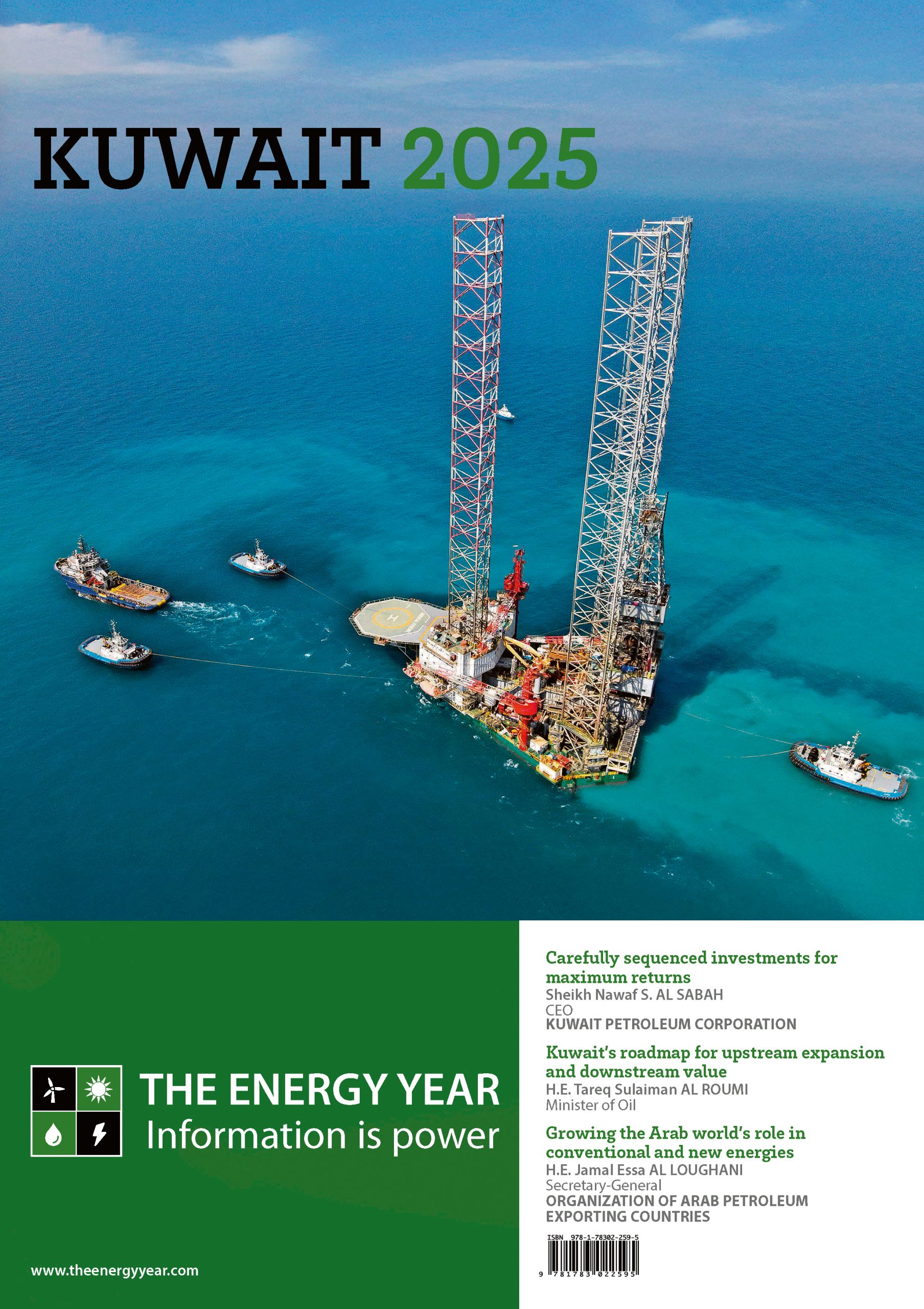
The Energy Year Kuwait 2025
The Energy Year Angola 2025
The Energy Year Nigeria 2025
The Energy Year Saudi Arabia 2025
The Energy Year UAE 2025

