
Securing Ghana’s subsea integrity
February 17, 2026 Ghana
Ghana 


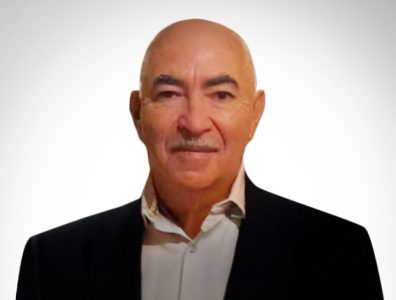
Bob Millikin, managing director of Aquatec Marine & Diving Services, talks to The Energy Year about supporting Ghana’s expanding offshore activity and establishing a long-term subsea services presence in Nigeria’s decommissioning and maintenance market. Aquatec delivers certified underwater inspection, maintenance and repair solutions for FPSOs and offshore assets.
With new offshore pledges from Eni, Vitol, Kosmos and Tullow, how do you see Aquatec positioning itself?
Our specialised underwater services are designed to complement the operations of FPSOs and support vessels, so more FPSOs and drilling campaigns mean increased opportunities. That said, access remains a key challenge.
Take the Pecan field, for example. Eight years ago, there was talk of USD 7 billion coming into that field. Now it’s dwindled to USD 3 billion, and the money goes primarily to the large international contractors supplying the hardware, and this does not always trickle down as there’s not enough in the pot to go around.
Overall, the current direction supports local content, and I hope this continues. For instance, we were pleased to see Harlequin win the contract to manufacture suction pile anchors for an FPSO – that work previously went to Brazil or France.
Aquatec recently went through a two-year period without contracts. What led to that, and have you resumed operations since?
We had a complete halt in activity between 2022 and 2024, despite holding the industry’s highest recognised safety accreditations. Market conditions were extremely difficult, and in several cases, contracts were awarded to less qualified providers. It was a challenging period, especially for companies like ours that follow international standards.
We resumed operations in September 2024, supporting Tullow and Modec. With Tullow, we conducted UWILDs [underwater inspection in lieu of dry-docking] and anode replacements. These are short campaigns – we deploy for a few days at a time based on vessel availability.
Asset constraints remain a challenge, as we often share the limited number of vessels in the field. We were hoping to return at the end of September [2025], but shifting project priorities have delayed that mobilisation.
How has your staffing evolved in the past several years, and what progress have you made in developing local talent, including divers?
We’re continuing to build local capacity. Our operations consultant is mentoring junior staff as part of a knowledge transfer programme, and we remain committed to developing in-country capabilities.
We’re now seeing progress. We’ve brought onboard two women: one, from the Navy, is preparing for commercial diving certification; the other, a carpenter by training, is transitioning into a technical support role. It reflects our long-term commitment to inclusive training and workforce development.
What does expansion into Nigeria look like for Aquatec?
Nigeria is looking promising. We now have a serious, well-placed partner there. I can’t name them yet, but they’re reputable, and we’re entering through a consortium structure.
Nigeria has a mature oil and gas sector. There are extensive offshore assets, and many are now moving into decommissioning. That presents a lot of opportunity. We’ll be offering the same range of underwater services: maintenance, inspections, emergency repairs. And most importantly, for the first time, we’ll have continuity of work.
That changes everything. In 35 years, we’ve never had consistent work. With the right partner and steady contracts in Nigeria, we can finally stabilise the company and grow.
Ghana’s diving industry faces significant safety concerns. What has Aquatec experienced in recent years regarding standards and enforcement?
Some contractors continue to use unqualified divers using substandard equipment, which has led to accidents – including loss of life. There is little accountability when safety corners are cut. Government enforcement of minimum standards would go a long way towards professionalising the sector. If contractors were required to meet internationally recognised benchmarks, it would level the playing field for certified companies like ours.
What message would you like to send to clients about the importance of your work?
We would welcome more proactive engagement from clients. Early planning allows us to advise on scope, methods and timing, which helps ensure assets are maintained safely and cost-effectively.
Subsea services are often deprioritised because they are out of sight. But failure to act on critical maintenance – such as anode replacement – can compromise asset integrity. We encourage operators to engage with us early and understand the long-term value of timely underwater work.
Read our latest insights on:
More content from Ghana





Quality seismic decisions for Angola
INTERVIEW
Latest news and features



Latest Reports


The Energy Year Oman 2026
The Energy Year Kuwait 2025
The Energy Year Angola 2025
The Energy Year Nigeria 2025
The Energy Year Saudi Arabia 2025
The Energy Year UAE 2025

