
Strategic evolution in Angola and beyond
July 3, 2025 Angola


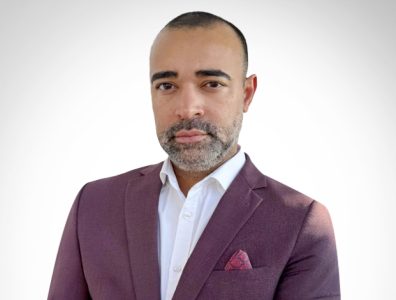
Fred Silva, CEO of Navilog, talks to The Energy Year about the company’s internal restructuring, its strategy of acquiring operational equipment, the evolution of its service offering and its ambitions for regional and international expansion. Navilog Group is an integrated provider of logistics and freight services.
What internal changes has Navilog undertaken over the past year?
Over the past year, we undertook a thorough strategic review of our business trajectory and identified key areas requiring reinforcement. One of the most significant initiatives was the consolidation of our organisational structure. We previously operated through three separate entities – SLTI, Navicorp and Ship Crew Service – which focused on logistics, shipping and recruitment, respectively.
We have now unified these under the Navilog brand: Navilog Serviços e Transitário, Navilog Recruitment, and Navilog Group (based in Dubai). This restructuring presents a clear and cohesive identity to our clients, moving away from the image of disconnected partnerships to that of an integrated group.
Additionally, we have diversified our service offerings. We’ve entered into partnerships in areas such as tank cleaning, insulation and other offshore services. Discussions are currently ongoing regarding phase two of a major project, which includes plans for a green hydrogen plant scheduled for 2026-2027.
Financially, we have strengthened our position and invested in key equipment, such as compressors, generators and manlifts for the Barra do Dande project, transitioning from a manpower-only provider to one that offers both skilled labour and physical assets.
How does owning your own equipment enhance your market position?
It changes our positioning completely. We now own powerful water pumps used for pipeline testing and have expanded our capabilities with barges and tugboats. This elevates our profile in the market.
Rather than being perceived as a subcontractor that secures contracts only to outsource the execution, we are now recognised as a dependable Angolan company capable of delivering comprehensive, end-to-end solutions independently.
Although we do not yet own vessels or barges, we rent and manage these marine assets as part of our service delivery. Our partners recognise the seriousness of our approach. We have successfully collaborated with major players such as OEC Odebrecht. In the future, acquiring our own vessels is definitely part of our strategic roadmap.
Are your international partnerships aimed at markets outside Angola?
At present, all our operations and projects are based in Angola. However, we are actively building partnerships with international firms to enhance our credibility and transfer expertise. For instance, our partnership with UK-based Advanced Innergy Solutions allows them to bring in supervisors while we provide the certified local workforce.
In fact, they’ve requested us to send our Angolan team to Cape Town for a two-month assignment, thereby removing the need to mobilise their own personnel. We offer a cost-effective and visa-free alternative, which is a clear advantage. These collaborations are a stepping stone toward gradually entering smaller international projects and gaining global experience.
How are you preparing your team for this phase of growth?
Rather than increasing our headcount, our focus is on innovation and optimisation. We are heavily investing in internal training and have redefined our corporate vision to align all teams with clearly set objectives. Protocols have been implemented to minimise inefficiencies. Digitised workflows, for example, now manage client notifications and document flows automatically.
Furthermore, we’ve engaged a consulting firm to conduct behavioural assessments across our workforce, ensuring that talent is appropriately positioned. We’re benchmarking salaries to stay competitive and to foster motivation. This year is about introspection, streamlining operations and gearing up for accelerated growth by 2026-2027.
What is your investment strategy for this transformation?
Our budget is not finalised yet, as it is still early in the year, and variables may shift by mid-year. Nevertheless, our direction is clear. I have personally invested in leadership training, and our management team is doing the same. By the end of 2025, we’ll be structurally and culturally prepared to scale. The success of the Barra do Dande project has provided the financial and operational foundation to reinvest confidently.
What new services do you plan to launch in 2025?
We are expanding our offshore capabilities to include surveys, rope access and container-provision services. There is growing demand, particularly for offshore food-container logistics. Given the 30-45-day lead time for building a container, we are acting proactively.
On the recruitment side, we’re enhancing the skills of our personnel by sending staff to South Africa for targeted training in logistics and operations. We identify what is missing in the market and position ourselves to provide it.
Do you expect to participate in upcoming mega-projects such as Kaminho or the West Hub?
Yes, we do. Our previous engagements with Odebrecht and Sonangol have elevated our reputation. We are no longer seen as a minor or unproven entity. Our track record is starting to speak for itself. This year, we’re far more confident about our ability to be shortlisted for such projects. While some may still question our readiness, we are confident that they will eventually approach us, and we’ll be ready.
What are your expectations for Barra do Dande phase two?
We expect to be involved again. The client has already signalled that, pending financing, we will be included in phase two. It will be similar in scope but slightly smaller in scale than the first phase. This time, however, we’ll be contributing from the early planning stages, especially regarding equipment selection.
In phase one, for example, the client initially requested 30-metre barges. We provided 90-metre ones instead, significantly improving operational stability and efficiency. We anticipate being consulted on these technical choices from the outset this time.
What is your strategy for entering new sectors, such as mining or renewable energy?
We recognise potential in these sectors but are not rushing in. Our guiding principle is “grow slowly, grow strong.” We prefer to work with fewer clients who respect our values and pay fairly rather than chase projects that do not align with our long-term vision.
Even if the opportunity is large, we’ll walk away if the client’s philosophy doesn’t match ours. This conservative approach has allowed us to remain financially sound and committed to sustainable growth.
What is Navilog’s vision for the period beyond 2025?
By 2027, our objective is to be actively participating in projects outside of Angola, particularly in the oil and gas sector. We’ve proven our reliability and competence. If the right opportunity comes sooner, we are prepared to seize it. Our internal culture is strong, and we believe that shared values are more resilient in difficult times than mere technical skills.
We are also monitoring economic developments. With 2026 being a pre-election year in Angola, we anticipate a possible strengthening of the kwanza. If that materialises, we will have greater financial capacity to invest in land, equipment and further expansion. That said, Angola remains our home market. Our commitment here is long term.
Read our latest insights on:
-

Quality seismic decisions for Angola
INTERVIEW -

-

More content from Angola

Quality seismic decisions for Angola
INTERVIEW
Latest news and features



Latest Reports


The Energy Year Oman 2026
The Energy Year Kuwait 2025
The Energy Year Angola 2025
The Energy Year Nigeria 2025
The Energy Year Saudi Arabia 2025
The Energy Year UAE 2025

