

Subsurface data as a driver of upstream value
February 3, 2026 Nigeria


ThankGod Egbe, technical director and CEO of CypherCrescent, talks to The Energy Year about how technology is transforming subsurface data integration and the company’s conversion of flare gas into valuable liquid fuels to support Nigeria’s Decade of Gas ambitions. CypherCrescent is a Nigerian energy technology firm focused on upstream optimisation through advanced, integrated data solutions.
What role does technology play in helping upstream operators enhance performance?
As a Nigerian-born energy technology company, CypherCrescent has played a dominant role in supporting E&P operators to derive value from the enormous data-laden upstream arm of the oil and gas industry, integrating these data for better asset management practices and decision-making to achieve increased production, reduce operational cost, and enhance HSE compliance (which is a paramount goal of every E&P operator).
The popular metaphor, “data is the new oil,” applies strongly to the oil and gas industry itself. From the exploration phase for significant economic volume of oil and gas resources, through the development phase to production of these resources, enormous data transpires between these phases. During the development and production phases of assets, different teams responsible for managing these assets are custodians of some key data for optimum management throughout assets’ lifecycles. Prior to now, the observation in the industry has been that the data from the different technical teams reside within the team as siloed data, hindering the supposed cross-collaboration between the teams for better asset management practices.
This birthed the development of our flagship proprietary integrated E&P asset management solution, SEPAL Well and Reservoir Management (WRM) solution, which integrates subsurface data and interpretations for better understanding of assets and attaining operational efficiency, towards implementing strategies for better performance of assets. The technology has helped our clients achieve asset management goals.
A step further from this is the application of natural language processing (NLP) in extracting insightful sought E&P asset management information for day-to-day asset operational activities, with the elimination of the rigorous search and manhour lost in search of this information for a heap of reports.
Unlike other sectors, subsurface data in oil and gas must be deeply integrated before the leverage of technology becomes valuable; that integration is at the core of what we do at CypherCrescent.
What were some of CypherCrescent’s biggest developments over the past year?
This has to be our repurposed strategy as we stepped into our business year in April 2025, towards expanding our offerings and serviced market. We observed an increased rate of technology adoption by the industry, with resounding demand for more functionalities to scale.
Additional value adding features and capabilities were implemented to our E&P asset management solutions backed by the blazing rate of technological advancement, to support E&P operators in achieving incremental production, and contributing significantly to Nigeria’s goal of 3 million bopd.
Beyond the oil and gas industry, we are also engaging players in other sectors, such as manufacturing, remote monitoring, agriculture, and healthcare, on leveraging our technological solutions to overcome challenges therein via innovation-focused subsidiaries.
In all of this, the talent and capacity development of locals cannot be overlooked, and this led to our partnership with the University of Port Harcourt to establish the Energy Technology Institute (ETI), which should be commissioned by Q2 2026, all things being equal. ETI will serve as the first centre for energy-inclined venture development in Africa, while also offering Master’s and PhD programmes.
Can you tell us more about your expansion into the gas sector?
While the Niger Delta has been a more gas-dominated basin, gas development has suffered lack of development when compared to oil. A few years ago, I had conversations with government stakeholders encouraging us to play a bigger role in the gas space. This led to us setting up a research team to identify challenges where no technical solutions currently exist, with one of the key areas being flare gas conversion.
Following this pursuit, we are currently developing a proprietary technology using the Fischer-Tropsch process to convert flare gas to premium liquid fuels.
How important is ecosystem building to CypherCrescent’s growth?
Collaboration is the currency of the present business world, and as such, we are building a collaborative ecosystem with key players from academia, industry and government, under the Triple Helix Model. This eliminates the age-old gap between academia and industry, which provides necessary supports by the government in terms of policies to drive and sustain the sought-after collaboration.
In accordance with this drive, we also developed a platform, Reineur, which brings stakeholders from the tripartite arm towards solution-driven pursuit, seamless collaboration, and research commercialisation.
How is CypherCrescent approaching decarbonisation?
Decarbonisation and emissions monitoring are growing challenges, and we have observed that many companies still use physical surveillance to monitor flaring and emissions, which is not sustainable.
We are currently working with the Nigerian Communication Satellite (NIGCOMSAT) Limited to develop satellite-based tracking solutions, which will allow operators to monitor flaring and emissions without relying on costly ground-based infrastructure. The same technology supports computer vision for asset monitoring.
Our E&P asset management solutions also help companies increase production output without drilling new wells by unlocking more value from existing data. When drilling is necessary, we use modelling to identify optimal locations, reducing cost and environmental impact.
What role can technology play in improving both physical and cybersecurity in Nigeria’s energy industry?
The federal government has made significant progress in reducing pipeline vandalism and theft, as seen in the notable improvements over the past six to nine months, and the national oil company, NNPCL, has played a key role in this.
We support these efforts with satellite surveillance and image analysis to detect anomalies and help track illegal activities. As physical security increasingly relies on digital infrastructure, cybersecurity becomes critical. We work with specialised partners and leverage international platforms to ensure the integrity of our systems and data.
Cyber- and physical security are linked – one reinforces the other.
What are your priorities as you expand across Africa?
We now operate with a pan-African mindset that begins with addressing language barriers. Our technological solutions are ready for the continent’s E&P industry, but communication poses some degree of challenge.
To overcome this, we launched internal French and Portuguese training, as well as recruiting native speakers, including Cameroonian and Congolese professionals in our teams. Our website also now supports English, French and Portuguese. The goal is to build a workforce that reflects the continent we serve.
The challenges we address in Nigeria – poor data integration, declining oil production, low operational efficiency, gas flaring – also exist in other African markets, and it is our ambition to become a pan-African company as opposed to just being a Nigerian player.
Read our latest insights on:
-

-

A new opening for African gas
INTERVIEW -

More content from Nigeria


Quality seismic decisions for Angola
INTERVIEW
Latest news and features



Latest Reports


The Energy Year Oman 2026
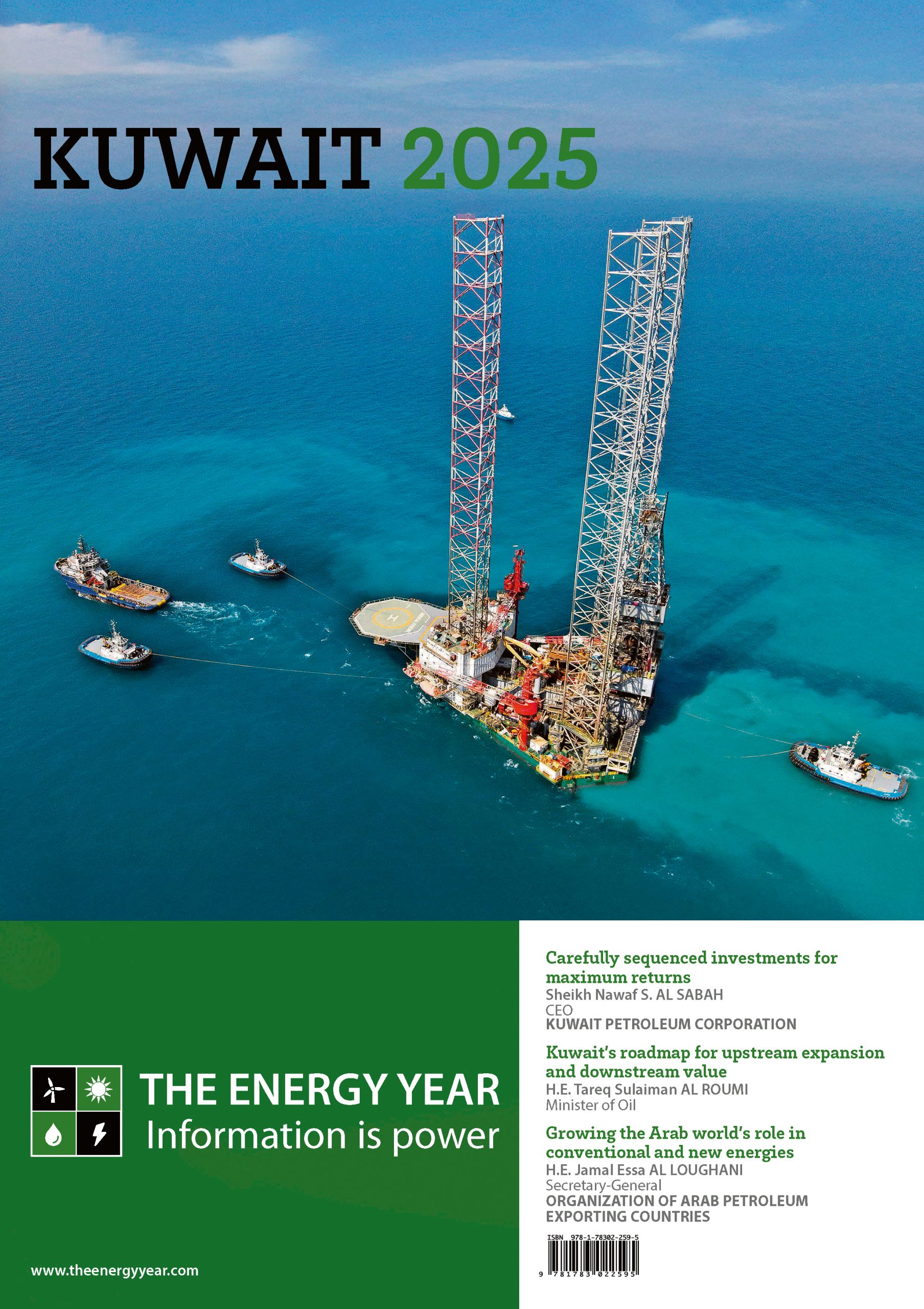
The Energy Year Kuwait 2025
The Energy Year Angola 2025
The Energy Year Nigeria 2025
The Energy Year Saudi Arabia 2025

The Energy Year UAE 2025

