
Unlocking untapped value in Nigeria’s onshore
March 16, 2026 Nigeria


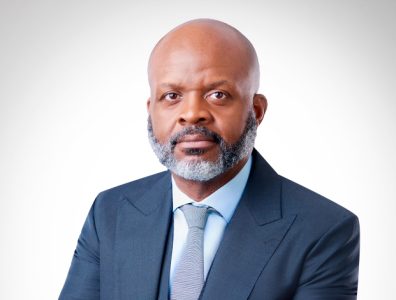
Ado Oseragbaje, CEO of Heritage Oil, talks to The Energy Year about unlocking overlooked value in Nigeria’s onshore assets and scaling production at OML 30 through stakeholder alignment and reform-driven investment momentum.
Heritage Oil is an independent upstream company focused on revitalising mature and underappreciated oil and gas assets globally.
- Heritage Oil has doubled production at Nigeria’s OML 30 since 2022 by unlocking overlooked value through long-term commitment and close alignment with partners, regulators and host communities.
- Operating in the mature Niger Delta requires balancing reservoir decline, ageing infrastructure and complex community relations, with transparency and sustainability central to maintaining a social licence to operate.
- Recent regulatory reforms, including the Petroleum Industry Act and fiscal incentives, have revitalised investor confidence, supporting ambitious targets to reach 100,000 bopd and expand gas development in the coming years.
How has Heritage Oil’s approach to value creation shaped your operations in Nigeria, particularly at OML 30?
Heritage Oil has always looked for value others may have overlooked. Since our founding in 1992, we’ve held assets across nearly every continent – Africa, Asia, the Middle East, Russia and the Caspian, and more recently, Papua New Guinea. But our strategy isn’t to be everywhere – it’s to be where value remains untapped or underappreciated.
That’s exactly what brought us to OML 30. We’ve operated the asset on behalf of our JV partners, NNPCL and Shoreline Natural Resources since 2017, and I believe it’s arguably the best onshore asset in Nigeria. In 2022, we were producing around 30,000 bopd. But by 2025, we reached a peak of 67,000 bopd – more than double. That was the culmination of three years of collaboration between Heritage, our JV partners, regulators and the local communities. Without their support – logistical, technical, and financial – this wouldn’t have been possible. We see OML 30 not just as a producing asset but as a symbol of how long-term commitment and stakeholder alignment can unlock real energy value in Nigeria.
What challenges do you face operating in a mature region such as the Niger Delta, and how do you prioritise your investments?
Operating in a mature basin such as the Niger Delta presents layered challenges. First, the reservoirs themselves are old – many over 40 years – which means we face natural decline and increased complexity underground. Then there’s the ageing infrastructure. Pipelines and facilities built in the 1950s through 1970s simply weren’t designed for today’s operational demands.
On top of that, population growth has encroached on infrastructure corridors. Areas that were once uninhabited now have vibrant communities, including around our well locations. This adds a third dimension: maintaining a social licence to operate. We must be transparent and fair in our dealings with more than 120 communities across OML 30.
With finite capital, we’re constantly balancing three fronts – subsurface investment, infrastructure maintenance and upgrades, and community development. It’s not about choosing one over the others, but rather, optimising the portfolio of needs. We’ve worked hard to be a responsible operator and corporate citizen, understanding that without stability and support in the communities, none of the technical work can succeed.
How do you view recent government reforms in unlocking upstream investment in Nigeria?
The shift in investment momentum post-2021 has been remarkable. If you analyse the past decade, especially the 2016-2025 period, there was a clear investment lull prior to 2021, exacerbated by Covid-19. What changed? Three things.
First, the Petroleum Industry Act (PIA) provided regulatory clarity. Second, presidential directives in 2024 helped cut through bureaucratic bottlenecks that were stalling project approvals – especially those related to tenders and operator independence thresholds. Third, fiscal incentives boosted investor confidence by sharing cost savings between operators and the government, encouraging both spending and efficiency.
We’ve seen the results in rig activity. Between 2023 and 2025, oil prices fell by 20-25%, yet Nigeria’s rig count grew by a similar percentage. That divergence tells you everything. These reforms signalled to the market that Nigeria is serious about improving the business environment, and the recent Shell commitment on Bonga is testament to that investor confidence. Nigeria has always had world-class reservoirs. The missing piece was always policy. Now, that’s starting to align.
What role do host communities play in your operations, and how have you structured engagement with them?
OML 30 is home to one of the most complex host community frameworks in Nigeria, spanning around 120 communities across nine flow stations and the pipeline to the Forcados terminal. Managing this scale requires fairness, consistency and, above all, transparency.
In 2024, we implemented a Sustainability Charter, a key governance document approved by our global board and endorsed by our group chairman. It defines not only how we engage with communities, but also our commitments to workplace equity, environmental care and modern slavery prevention.
This charter provides a compass for how we operate ethically and inclusively. One area where we’ve leaned forward is emissions. We’ve made strong strides in our emissions reduction programme, and among onshore operators, we’re ahead of the curve. Where we still need to improve is on flaring. We’ve secured offtakers and are executing plans to repurpose that gas, with the aim of seeing significant reductions by the end of the year.
What are your main goals for 2026 and beyond in terms of production and development at OML 30?
In 2025, we achieved 67,000 barrels of oil per day – a level not seen since the 1980s. Our target now is ambitious but achievable: 100,000 barrels of oil per day and 200 mcf [5.66 mcm] of gas per day within five years. To get there, we need to increase output by roughly 12,000-13,000 barrels of oil per day each year. That means sustained, year-on-year performance.
In 2026, a key milestone will be reaching a final investment decision on our gas development project. That will underpin the gas portion of our growth strategy. On the oil side, we plan to drill exploration wells – the first on OML 30 in over three decades. Success here could extend the life of the asset considerably.
Another key development is the continuation of the Host Community Development Trusts, which we set up in 2024. These trusts enable communities to manage their own development budgets and initiatives, shifting decision-making power directly into their hands. It fosters independence and accountability – and is a major departure from the old model where communities waited on corporate goodwill for projects.
You mentioned Ghana and Papua New Guinea – how do these assets complement your Nigeria operations?
Heritage is still a diversified player. In Ghana, we’re planning to drill a deepwater exploration well this year, which is a big step forward. It’s a very different environment from OML 30, but from a portfolio perspective, it brings balance. We’ve also maintained our long-term interest in Papua New Guinea. These plays allow us to spread our risk geographically and technically: mature onshore oil in Nigeria, and deepwater and frontier exploration elsewhere.
They also feed into our philosophy of unlocking underappreciated value. In all our ventures, we look for what others might have overlooked – whether it’s a mature field with untapped potential or a frontier basin with limited historical exploration. Our strategy is not to be the biggest but to be the most effective at finding value where others don’t.
Read our latest insights on:
-

-

A new opening for African gas
INTERVIEW -

More content from Nigeria


Quality seismic decisions for Angola
INTERVIEW
Latest news and features



Latest Reports


The Energy Year Oman 2026
The Energy Year Kuwait 2025
The Energy Year Angola 2025
The Energy Year Nigeria 2025
The Energy Year Saudi Arabia 2025
The Energy Year UAE 2025

