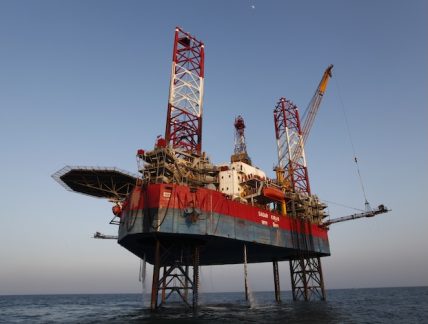
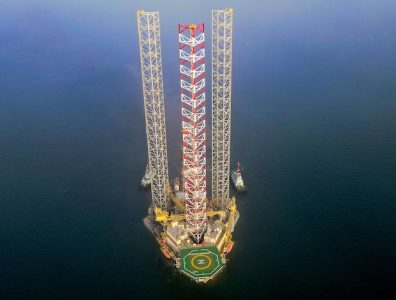
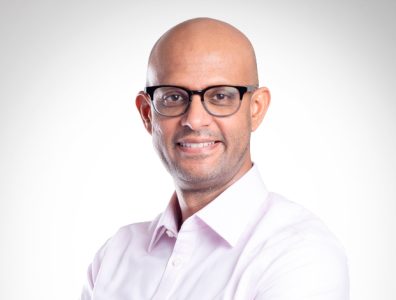
Vikas Handa, managing director of GulfTek (Gulf Technical Factory), talks to The Energy Year about the company’s strategy for gaining market share for its drilling…
READ MORE
2024 oil production735,000 bopd
2024 oil consumption5.8 million bopd
2024 natural gas production32.4 bcm
2024 natural gas consumption70.3 bcm
India is one of the world’s most populous and rapidly growing countries, and the energy industry is a major contributor to the country’s economic and social development, underpinning industrial and manufacturing growth, and rising demand for power and transportation.
The country is highly dependent on oil imports, which are expected to remain structurally significant over the long term despite the reinforcement of domestic exploration and production efforts to boost internal oil and gas supply and enhance energy security. Policy reforms have aimed to simplify licensing regimes and improve investment incentives through updated pricing mechanisms, fiscal advantages and the easing of constraints on foreign asset ownership in the upstream and downstream value chains.
India’s hydrocarbon resources are concentrated in its western and offshore basins, with Mumbai’s offshore and the onshore areas of Gujarat, Rajasthan and the Assam–Arakan basin being long-established producing regions. Many of the country’s producing assets are mature, and natural decline rates have prompted emphasis on EOR, redevelopment and advanced reservoir management techniques.
The upstream sector is led by the state-owned Oil and Natural Gas Corporation (ONGC), which accounts for roughly 70% of output. Oil India Limited, also state-owned, and a number of private domestic companies account for much of the balance. Through policy reforms and investment incentives, India seeks to encourage private and foreign participation in the sector to increase exploration and technology deployment.
Downstream infrastructure has expanded steadily to support rising demand for refined products and oil imports. India is now one of the world’s largest refining hubs, with a mix of state-owned and private operators supplying both domestic and export markets.
Natural gas has become an increasingly important focus of India’s energy strategy, with policy objectives aimed at raising gas’s share in the national energy mix over the medium term. New regasification terminals along India’s eastern and western coastlines are expanding LNG import capacity, and investments in cross-country pipelines and regional distribution networks are improving access for industrial users, power utilities and distribution companies.
India’s renewables sector is expanding rapidly in alignment with energy transition objectives. Total installed generation capacity reached approximately 220 GW in 2025, with solar accounting for around 100 GW. National energy and climate commitments call for up to 500 GW of non-fossil fuel electricity capacity by 2030 to enhance energy security and reduce carbon intensity.
ADES Holding has acquired five premium jackup rigs from Saipem for USD 285 million to expand its regional fleet and backlog.
READ MORE
Josh Sherman of the Houston Producers Forum talks about Houston’s growing pull as energy security concerns and growing LNG and…
READ MORE
Anosh Neterwala of the Neterwala Group talks about bundling environmental services with oil and gas offerings to drive…
READ MORE
Anil Chopra of PetroTel Energy talks about the company’s exploration efforts in Musandam and Dhofar.
READ MORE
Mehul Panchal of Filter Concept talks about the higher efficiency and output that oil and gas facilities can achieve with custom filtration systems.
READ MORE
Haresh Sippy of Tema India talks about adjusting the company portfolio to participate in India’s largest, most sophisticated energy projects.
READ MORE
Neerav Nanavaty of BluPine Energy talks about the growing importance of hybrid projects in India’s renewable energy space.
READ MORE
Vikas Handa, managing director of GulfTek (Gulf Technical Factory), talks to The Energy Year about the company’s strategy for gaining market share for its drilling…
READ MORE
Anil Abraham, CEO of APT Global, talks to The Energy Year about the company’s most important verticals and how the UAE has become an ideal hub for ship refurbishment,…
READ MORE
India has opened the first tranche of its new minerals auction with 20 concessions on offer, the government announced on Wednesday.
The 20 blocks cover eight…
READ MORE
India has set plans to begin blending compressed biogas with gas to cut down on natural gas imports, the government announced on Saturday.
Mandatory phasing will…
READ MORE
Tim Lyle, group director for Fugro’s Middle East & India division, talks to The Energy Year about how the company deploys remote and autonomous solutions, including…
READ MORE
ADNOC Gas has signed a multi-year deal to deliver LNG to Japanese energy company Jera worth between USD 9.4 million and USD 12 billion, the Emirati gas giant announced…
READ MORE
Abdullah Saleh Al-Sayed, CEO and president of Arabian Fal Company, talks to The Energy Year about Saudi Arabia’s transforming socioeconomic landscape, the company’s…
READ MORE
The USA and the EU have teamed up to support the Lobito Corridor trade route linking Zambia and Democratic Republic of Congo to Angola’s Port of Lobito, the nations…
READ MORE
ONGC has set plans to spend USD 24.2 billion on clean energy projects under its drive to have net-zero carbon emissions by 2038, the company’s Chairman and CEO Arun…
READ MORE
ADNOC Gas has signed a five-year LNG supply agreement with Japan Petroleum Exploration Company (JAPEX), the Emirati gas company announced on Thursday.
The agreement…
READ MOREWHOSE PLATFORM IS THIS?
ASK US