


Harnessing Angola’s oil and gas potential
March 30, 2021 Angola


Emanuel Bo Dontoni, president of The Angolan Indigenous Oil & Gas Service Companies Association (ASSEA), known in Portuguese as "Associação de Empresas Autóctones Para a Indústria Petrolífera de Angola," talks to The Energy Year about the challenges faced by Angolan indigenous oil and gas service companies and how they are gearing up for upcoming opportunities in the country.
What are ASSEA’s main activities?
The Angolan Indigenous Oil & Gas Service Companies Association was officially created in February 2019 with the objective of promoting indigenous participation in Angola’s oil and gas industry for the purpose of improving the economic and social well-being of local entrepreneurship.
ASSEA’s active members (50+ SMEs) are all private entrepreneurs with an accumulated 100+ years of technical expertise and managerial experience acquired through decades of national and international leadership roles with leading technology service companies, IOCs and NOCs.
One of our key mandates is to monitor measurable objectives deriving from the enforcement of local content law and ensuring that it is being met, particularly with regards to the percentage of contracts awarded to local companies.
With it, we are working closely with local authorities including the Ministry of Petroleum (MIREMPET), the National Oil, Gas and Biofuels Agency (
What major challenges do local companies face in Angola’s hydrocarbons industry?
The main challenge is derived from inefficiency of the regulatory framework prior to the recently approved local content law. Under that framework, the bulk of wealth creation and industrialisation contract opportunities were executed outside Angola. This weakness led to over 95% of the yearly industry expenditures escaping the domestic economy as capital flight. Despite the ever-growing number of local oil service companies, their annual gross earnings still account for less than 3% of the sector’s aggregate annual contracting budget.
Secondly, indigenous companies were stigmatised and viewed as incompetent, i.e., lacking the required skillsets to operate and therefore be given a realistic chance.
Thirdly, we see a lack of support from local banks and financial institutions, highly volatile local currency, inability to access forex and unethical payment terms from customers towards local companies (60, 90 and 120 days).
The corporate tax for indigenous companies is extremely high and ironically seems to be ever increasing as the local currency depreciates.
The government has enabled operators to award contracts of up to USD 1 million without a public tender. Has this helped local manufacturers to secure better contracts? Read our latest insights on:
Under the old legal framework, operators were authorised to execute projects with budgets of up to USD 250,000, without seeking approval from the Angolan concessionaire, at the time
More content from Angola


Quality acquisitions over acreage
INTERVIEW

Latest news and features




Latest Reports
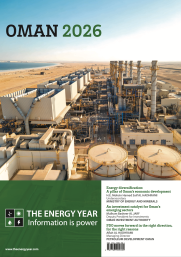


The Energy Year Oman 2026
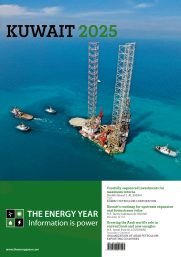
The Energy Year Kuwait 2025
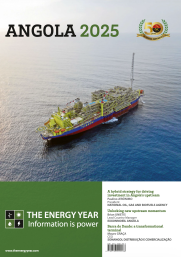
The Energy Year Angola 2025
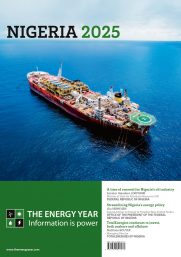
The Energy Year Nigeria 2025
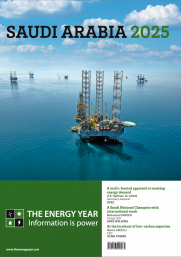
The Energy Year Saudi Arabia 2025
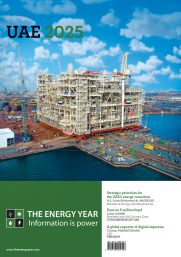
The Energy Year UAE 2025

