
Stability meets sustainability in Kuwait’s capital markets
August 29, 2024 Kuwait


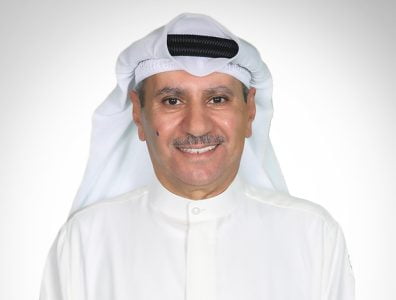
Othman Al Issa, vice-chairman of Kuwait's Capital Markets Authority (CMA), talks to The Energy Year about drafting regulations to make Kuwait’s financial markets robust and attractive for investors, and promoting education about securities activities among the public. The CMA is Kuwait’s securities market regulator.
How is the CMA adapting its regulatory framework to address the needs of domestic and international investors?
We aim to establish a regulatory environment that is adequate for both traditional and sharia-compliant investment tools. We stay updated on emerging topics in securities regulation and are committed to integrating sustainability principles and technology best practices into our strategies. By aligning with international standards and local market needs, we promote rigorous financing practices and support sustainable investments that promote the embedding of ESG practices into Kuwaiti companies’ business models.
What is the Authority doing to promote sustainability and innovation in financial markets?
We have prepared a comprehensive framework that includes rules that regulate the technologies used for financial services and securities activities. We will gradually expand their scope to new services and products in co-operation with other relevant local authorities, in a way that meets the needs of financial institutions and investors.
How is the CMA enhancing efficiency and making the market more attractive to increase the number of listings?
In co-operation with relevant parties, we are studying appropriate regulations to stimulate the listing of various entities, such as SMEs, large foreign entities and local entities such as public-sector institutions and family businesses as well as unlisted stock companies. These efforts seek to increase investments and market liquidity and to encourage the participation of institutional investors to maintain stability. This will in turn enhance the stock market’s role as a source of financing for the business sector and support the national economy.
How have capital markets impacted Kuwait’s economic diversification efforts and its position in the global investment scene?
Undoubtedly, financial markets in the GCC exhibit numerous attractive features, such as stability, low debt, minimal currency risk and substantial reserves.
These features bring opportunities. Over the past decade, we have implemented numerous measures to align with international standards. The CMA has played a crucial role in advancing Kuwait’s capital markets, resulting in their elevation to emerging market status in prominent global financial indices such as MSCI, S&P Dow Jones and FTSE Russell. These advancements have firmly positioned Kuwait on the global investment map, attracting billions in foreign investment and contributing to the country’s diversification efforts, ultimately helping to foster a sustainable economy.
How does the CMA seek to improve the skills of securities professionals and impact social development?
We recognise the importance of human capital and skills development and, in collaboration with the Chartered Institute of Securities & Investment, have introduced qualifying tests for roles requiring registration with entities licensed by the CMA. This initiative is designed to enhance the professional competence, technical proficiency and legal understanding of individuals and aims to fortify the capabilities of professionals in fields associated with the capital markets system. A strong focus on the human element serves as a cornerstone for economic and social development.
We are also in the process of establishing a specialised academy dedicated to education and training in securities, which will operate as an independent, non-profit entity under our supervision and control. Through the academy, we aim to achieve various goals, including the development and expansion of the knowledge economy, the qualification of human resources employed in this sector and the dissemination of knowledge about securities activities among the general public.
Besides providing a comprehensive education on the benefits, risks and obligations associated with investing in securities activities, the academy will also endeavour to co-operate with international educational and professional organisations, as well as to facilitate the exchange of experiences with similar regulatory bodies and regional and international organisations specialised in areas relevant to the advancement of financial markets.
Read our latest insights on:
More content from Kuwait



Latest news and features





Latest Reports



The Energy Year Oman 2026
The Energy Year Kuwait 2025

The Energy Year Angola 2025

The Energy Year Nigeria 2025

The Energy Year Saudi Arabia 2025

The Energy Year UAE 2025

