

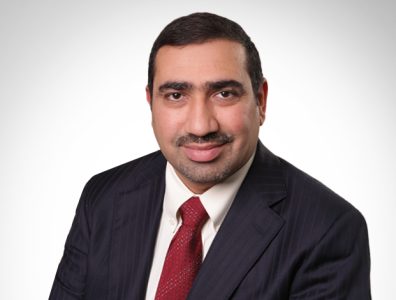
New development plans for Kuwait’s KUFPEC
August 31, 2024


Tareq M. Ebrahim, executive vice president of operations for Kuwait Foreign Petroleum Exploration Company (KUFPEC), talks to The Energy Year about the company’s successful E&P ventures around the globe and introducing efficiency-boosting technologies for Kuwait’s K-companies. KUFPEC is an international upstream company, engaged in exploration, development and production of crude oil and natural gas.
Can you guide us through KUFPEC’s key plans, targets and strategy?
KUFPEC has ambitious production plans. We aim to produce more than 100,000 boepd. However, our objectives do not revolve exclusively around production but also include improving our profitability and growing our skills and knowledge.
We also want to move into new business areas and have signed several MoUs towards that end, including an agreement with various JV partners to share expertise and technology, and which are leading oil companies with high success rates and extensive technical capabilities in drilling and exploration. These partnerships will allow us to expand in those countries.
Our strategy is aligned with KPC’s in that we aim to partner with highly profitable and active asset players, such as IOCs, and conduct operations with JV partners in markets that are attractive from a fiscal point of view. This should give us the flexibility to develop local oil and gas operations while growing our investments.
What opportunities and challenges do you see ahead in the E&P business and how is KUFPEC planning to position itself in the upstream segment?
We have registered several years of positive net income growth. We recorded the highest profits in the history of the company in 2022, breaking the USD 1-billion mark. There have been multiple drivers, including successful JVs in Norway with Equinor and other operators. Those partnerships gave us a seat at the table at a time when hydrocarbon supplies were tight in Europe due to the war in Ukraine.
If many companies focus on Europe, European assets will be in high demand and difficult to acquire. Market demand and prices are cyclical and depend on numerous factors. We have no issue entering any country, provided that the conditions are right.
We recently divested our assets in Norway to Orlen. We also exited from Tunisia in 2022 and from China and the Philippines in 2023. This does not mean, however, that we have stopped looking for opportunities in these countries.
In September of 2023, we inked a farm-in deal with Shell that gave us a 40% stake in Egypt’s Block 3, boosting our offshore assets and our exploration activities in the country. We have already made promising discoveries in Block 3, and we have been approached by other IOCs to join them. BP also seems ready to start drilling there soon.
What factors make KUFPEC a desirable partner for IOCs?
KUFPEC is a reliable JV partner that can contribute technical know-how to any partnerships we enter, even with big IOCs. We are financially and commercially solid and usually have a strong say in our collaborations. Operators require a partner that can add real value, lower associated risks and adhere to commitments. They look for a company that can negotiate with governments from a strong position and that has ample experience and a sound track record.
Our role goes beyond oil and gas operations. Our activities can further Kuwait’s political and diplomatic relationships, as we always try to arrange win-win situations in the countries we enter. Together with our JV partners and host governments, we try to look for broader benefits rather than one-sided interests.
Can you give us some examples of the company’s initiatives towards the promotion of sustainable practices and the introduction of new technologies?
Before we sold our business in Norway, we were quite successful in reducing the carbon emissions of our operations by powering our platforms with green energy. We also initiated discussions with Equinor for carbon storage projects, which are still in progress. We also have CCS and CCUS initiatives planned in Malaysia and Indonesia, where there is an abundance of fields that generate substantial amounts of CO2.
One of the key issues to address is how to maintain high production levels while becoming more environmentally friendly simultaneously. As far as KUFPEC is concerned, we thoroughly evaluate all the projects we enter and, if they involve CCS or CCUS, we make sure that our partners are competent. Carbon capture is a relatively new field, and you need to have the right capabilities to manage it.
Regarding technology, we successfully implemented a process in Tunisia that allows for simultaneous casing and drilling. We presented it to KOC and KGOC, and they warmly welcomed it. Since we maintain dialogue with universities and startups from Norway to Canada to Australia, we consider ourselves a bridge for the K-companies as far as R&D and technology are concerned. Some examples of solutions we have brought to KOC include downhole separators that reduce facility costs and batch drilling systems that allow drilling campaigns to be more efficient.
What do you foresee for KUFPEC’s next development phases?
Egypt is an interesting market for us. We have a JV with Chevron, Shell and TotalEnergies there, and we are looking for other opportunities that may bring profitable outcomes. Although we do not have a preference between oil or gas, more than 70% of our portfolio is gas, including new discoveries in Egypt that are currently under evaluation.
Thrilled as we are about our upcoming E&P operations, we remain cautious because the upstream business is risky, and we should not be overly optimistic in our endeavours. That said, we are aware of the new frontiers that are opening up in countries such as Namibia, South Africa and Brazil and other areas, which are receiving growing interest from international companies.
We are vigilant that operational terms are positive, jurisdictions are clear, and policies are firmly in place because we will not enter a country if these conditions are not met. We avoid investing without knowledge of future financial returns post-discovery.
Read our latest insights on:
More content from Kuwait



Latest news and features





Latest Reports
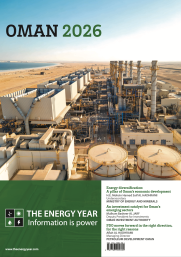


The Energy Year Oman 2026
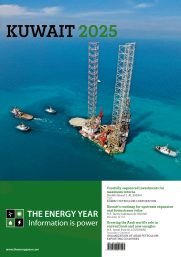
The Energy Year Kuwait 2025
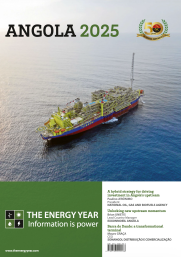
The Energy Year Angola 2025
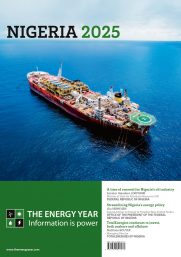
The Energy Year Nigeria 2025
The Energy Year Saudi Arabia 2025
The Energy Year UAE 2025


