
A growing logistics conglomerate in Colombia’s Caribbean
October 21, 2024 Colombia


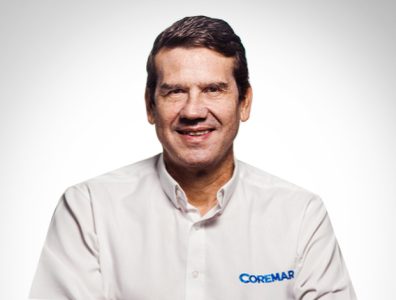
Juan Pablo Ospina, president of Grupo Coremar, talks to The Energy Year about the investments the group is making, how it is diversifying its scope of business through offshore opportunities and the plans to improve the navigability of the Magdalena River. Grupo Coremar is a Colombian logistics and maritime conglomerate providing comprehensive integrated solutions.
What investments make Group Coremar a developing cluster catering to the needs of the Caribbean region?
Grupo Coremar is a developing cluster of around 170 hectares [1.7 square kilometres], and we are actively expanding our current infrastructure in the Barranquilla Port area by constructing a new multipurpose dock valued at around USD 12 million.
This fifth dock will help us move an additional 700,000 tonnes per year. In addition to cargoes such as grains, steel, pet coke, fertiliser and other dry bulk, we also expect to handle fuel, vegetable oil and petrochemicals, among other types of cargo.
Furthermore, we are enhancing our grain-handling capacity by constructing new infrastructure. We are building two new grain silos with an investment worth about USD 6 million to handle roughly 140,000 tonnes of grain.
In 2024, we completed an offshore project and prepared for involvement in another operation expected to start in Q4 2024. To support this project, we are currently building new infrastructure and adapting a yard for operations.
In addition, we are an important steel-importing port and exporters of metallurgical coke as well. In Barranquilla we are the main receivers of clean liquid cargo: diesel, gasoline, ethanol, methanol and other products. In the last year, we installed two additional methanol tanks, which form part of Palermo Tanks. In 2023, we moved around 3.2 million tonnes through our docks, and by 2025 we expect to move more than 4 million tonnes.
How is Grupo Coremar diversifying its scope of business by capturing offshore opportunities?
We have a diversified business model. The most important anchors of the group are Palermo Sociedad Portuaria, which is a multipurpose port of entry and exit for goods; Palermo Tanks, which provides fuel, vegetable oil and petrochemicals storage; and Palermo Parque Industrial, which operates in the real-estate sector, offering land and warehouses within free-trade zones and industrial park regimes. Moreover, we have 30 hectares [0.3 square kilometres] of free-trade area which will be key for nearshoring projects and catering to offshore projects.
Oil and gas services companies are also expanding their operations in this location. These will move in parallel to the development of offshore wind, which is a huge opportunity for us. However, offshore wind needs different capacities, different yards and a long-term view. We are also looking at hydrogen, LNG and other projects as the market has been developing.
We aim to transition part of our business from being an offshore oil and gas logistics company to becoming a general offshore logistics company, including offshore wind projects. Colombia has great potential to produce offshore wind, with important projects in the pipeline. The idea is that with our infrastructure and offshore experience, we will be able to attend offshore wind as well. This approach extends to our free-trade zone, which will expand its focus beyond oil and gas to include energy, nearshoring projects and other sectors.
What plans are in place to enhance the navigability of the Magdalena River?
The Magdalena River is a strategic river corridor due to its privileged geographical position that allows for the connection of the main production centres in central Colombia with ports in the Caribbean region. Governments have made laudable efforts to enhance the navigability of this river to ultimately transform it into a key logistics channel and hub.
Along with the Port Association (Asoportuaria), we are aiming to make the river more navigable within its first 22 kilometres inland to enhance the competitiveness of the Barranquilla Port area.
The local government is also working to enable navigation on the Magdalena River to ultimately transform it into a major channel connecting the interior of the country with the Caribbean Sea.
How is Palermo Tanks’ growth strategy aligning with the shifting liquid fuel scenario?
Palermo Tanks is Colombia’s world-class liquid terminal. It was designed and built to the highest technical, operational and HSE standards. However, its business model has been migrating from pure oil and gas to vegetable and petrochemical products.
For example, we are currently looking at vegetable fats, bioethanol and petrochemicals. Today we have nine tanks including the two additional methanol tanks we installed this past year. In total we have a storage capacity of 530,000 barrels and plan to reach 1 million barrels of capacity, but we are also considering the shifting energy situation in Colombia due to external dynamics.
The US market is shifting from diesel and gasoline to biofuel. There is no feedstock in the US to feed those refineries that are being built in the Gulf of Mexico and California. The raw material comes from South America, and Colombia is a major producer of palm oil.
So, we see growth in renewable biofuels as well as in petrochemicals. That is why we are looking at expanding our storage business in that direction. Add to this the steps the government has taken to remove gasoline subsidies. This is a gigantic market opportunity for us.
What steps is Grupo Coremar taking to align with ESG principles?
We are measuring our carbon footprint. Despite not being a large carbon contributor, we have specific plans to reduce emissions. For example, at Palermo Tanks we are going to start generating solar energy. We are constructing a small-scale solar energy park, which will be finalised by mid-2025. We estimate that the generation coming from this park covers around 30% of the energy consumed by Palermo Tanks operations.
Moreover, in Palermo Sociedad Portuaria, we have several initiatives. Firstly, we are planting mangroves as part of our sustainable development plans.
Additionally, we are doing a carbon-capture model using stone. For this pilot programme, we have a small stone patio with a special stone that captures the CO2 emitted from trucks’ exhaust pipes. We also have a fuel-saving plan, we are switching to cleaner fuels, and we are also buying carbon credits.
In terms of social responsibility, we recently opened a technical institute for the surrounding community. This centre has been developed with the National Apprenticeship Service to educate around 1,200 young students per year, giving them technical and technological skills while promoting entrepreneurship and employment exchange.
Similarly, we have developed a 10-year community transformation plan with diverse actions. The first project under the plan concerned technical and technological training. The second was a donation project of about 50 hectares [0.5 square kilometres], for 2,500 homes and 11,000 people. We are going to donate the hectares to the municipality so they can develop the area.
Then, we have the challenge of receiving a water treatment project from government entities. Moreover, we have 13 additional initiatives for the next eight years to reach a real transformation of society.
How is the group considering entering the LNG and LPG business given market needs?
We are now looking to have facilities at the cluster to import LNG and LPG. The LNG model involves importing it and then proceeding to regasification. We are looking to construct a facility with a capacity of around 50 mcf [1.42 mcm] of gas. We are strategically located 2 kilometres away from the main gas trunkline of the country.
We are now looking at the viability of the project along with some strategic partners. Colombia will have a gas deficit soon, so we are looking at this need of the country as an opportunity for us.
Simultaneously, we are also looking at a project to import LPG. Given the increase in the price of gasoline and LNG, LPG demand for different uses has been growing. By 2026, we expect to have dock 6 planned and dock 7 near operational, which would be the LNG pier enabling us to receive cargo ships.
Read our latest insights on:
-
-

-

O&M leadership in mining and energy
INTERVIEW
More content from Colombia
Latest news and features




Latest Reports


The Energy Year Oman 2026
The Energy Year Kuwait 2025
The Energy Year Angola 2025
The Energy Year Nigeria 2025
The Energy Year Saudi Arabia 2025
The Energy Year UAE 2025

