
UAE tech to bridge the global digital gap
April 9, 2025 UAE
UAE 


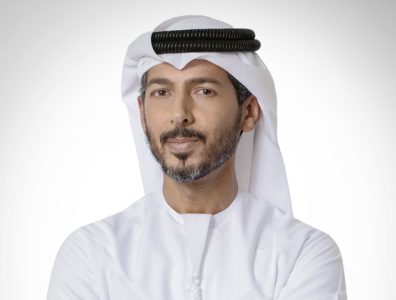
Hassan Alnaqbi, CEO of Khazna Data Centers, talks to The Energy Year about placing data centres close to green energy sources and the company’s vision to bridge the digital divide between the West and the Global South. Khazna Data Centers is a UAE company that designs, builds and operates data centres and provides data hosting solutions.
Why are data centres so important for economic growth?
Data centres, and Khazna’s among them, are the backbone of the digital economy, providing the unseen infrastructure that enables internet access, web services and content. Most people overlook the importance of the submarine cables and data centres that power the digital world and connect us to platforms such as YouTube or Facebook.
With the rise of cloud computing, the need for data centres became evident, as they’re essential for secure, scalable and reliable data storage. Today, the rise of AI has made data centres critical infrastructure, with investments booming to handle AI’s immense demands. Data centres are evolving into AI factories, producing intelligence as output, much like factories produce goods. The transformative potential of AI spans all industries, and data centres power that transformation.
How is the UAE government leveraging AI?
The government has realised that businesses need a common framework to take advantage of the AI-powered transformation. That is what we are trying to achieve by 2031.
With the founding of the Artificial Intelligence and Advanced Technology Council, the government is playing a role in shaping the digital landscape, looking at how we develop LLMs [large-language models] and build data centres, and studying how we use and commercialise technologies.
The key to this is being able to use homegrown data that resides in-country. Having large-scale data centres in the UAE helps organisations make the most of their data while maintaining sovereignty. The AI applications that are being made possible are very exciting.
How is Khazna supporting the UAE’s net-zero goals?
In Abu Dhabi, we are working with TAQA and the government to support the transition to clean energy. In Sharjah, we are collaborating with several organisations, including our JV partner BEEAH, on a waste-to-energy facility. These initiatives align with the UAE’s goal to be carbon neutral by 2050.
Our objective is to use clean energy and lower-carbon materials wherever we can, while also maximising the efficiency of our data centres. Also, we utilise the interconnected ecosystem of data centres, energy resources and clients to promote efficiency, such as through load balancing.
We now select sites based on their proximity to clean energy sources and we have trialled the use of biodiesel for backup generators to reduce Scope 1 emissions. However, we aim to switch to hydrogenated vegetable oil (HVO) completely. All our new generators are HVO-capable and we are trying to source HVO regionally to reduce Scope 1 emissions.
What are some ways in which you utilise AI for sustainability?
AI is key to improving the efficiency of data centres, especially in cooling, as it can prevent energy waste by adjusting cooling levels based on need. AI uses sensors to adjust fan speeds, optimising energy use and reducing emissions.
At our Ajman facility, we shifted from air-cooled systems to a closed-loop, liquid-to-liquid cooling system with water pipes that cool servers based on need. This reduces energy and water use, which is crucial in regions where water is scarce.
Since 2012, we have been using treated seawater, cooling towers and dry chillers for efficiency. Adiabatic chillers, for example, function like sprinklers to reduce heat, and they reduce energy use during high loads or cold weather by up to 70%.
Our facilities in Masdar City achieve remarkable power usage effectiveness (PUE) levels – often below 1.40, while the regional average is 1.82 – because we integrated innovations in their design and operation. Although this improvement in PUE does not provide a return on investment for Khazna, it does for our end users.
Most of our clients are Western hyperscalers, and every dollar we invest in energy efficiency is value added to them. Sustainability is highly valued. We don’t work with companies that don’t have an ESG strategy, as it means they are not integrating innovations into their operations.
What role would you like to play globally?
We are committed to exporting our technology to the Global South. The world cannot afford to have a digital divide between the West and the Global South, particularly Africa. We cannot afford to leave them behind on AI. Our goal is to address this issue as the UAE, as G42 and as Khazna.
The UAE is located near a population of 4 billion between India and Africa, and our mission is to grant that population access to technology that would otherwise remain inaccessible. While there is a business incentive to do so, the UAE’s leadership identifies deeply with nations that were left behind during the Industrial Revolution. We can offer perspectives and solutions based on our expertise in the UAE.
How will AI continue to impact the energy industry?
AI has changed the game by helping companies find oil in days instead of months. ADNOC has truly benefitted from this, and the methodology can work anywhere there is oil.
AI’s growth is causing data centre power consumption to explode, possibly from 60 GW today to 300 GW in a few years. Countries need to diversify the sources from which they produce energy and embrace nuclear, solar, hydrogen, geothermal and fossil fuels. The saying, “Energy for AI, and AI for energy,” fits because innovation is a double pathway.
Read our latest insights on:
-

How the UAE is building its future
INTERVIEW -

-

More content from UAE
Latest news and features







Latest Reports



The Energy Year Oman 2026
The Energy Year Kuwait 2025

The Energy Year Angola 2025

The Energy Year Nigeria 2025

The Energy Year Saudi Arabia 2025

The Energy Year UAE 2025

