

Bringing stakeholders together for clean energy
March 27, 2025


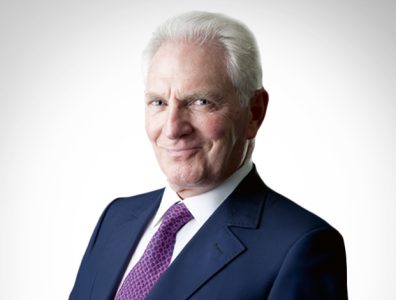
Nasser Saidi, founder and chairman of the Clean Energy Business Council MENA (CEBC MENA), talks to The Energy Year about the benefits of sharing energy infrastructure among GCC countries and the UAE’s growing potential to emerge as a global hub for green finance. The CEBC MENA is a non-profit, non-governmental membership organisation of local, regional and international entities that promotes clean energy in the MENA region.
Why was the CEBC MENA created?
The CEBC MENA was founded in DIFC [Dubai International Financial Centre] more than 13 years ago when clean energy was barely discussed in the region. The goal was to position the UAE, particularly DIFC and potentially ADGM [Abu Dhabi Global Market], as global hubs for financing clean energy, renewables and climate tech.
The region has financial resources, energy companies and new infrastructure developments, unlike the USA or Europe, where infrastructure has deteriorated. The clean energy ecosystem requires finance, policy, regulation and business involvement. Technological advances such as AI and reductions in the cost of clean energy make adoption easier, but no global financial centre specialises in clean energy financing.
Major hubs such as New York or London still focus on protecting fossil fuel interests, while GCC countries see the energy transition – and particularly solar power, given their strong solar irradiance – as an opportunity. Lower solar costs will allow them to use renewables domestically and export fossil fuels for revenue, similar to what is being done with nuclear energy.
As Europe and the USA retreat from their green commitments, opportunities emerge for GCC countries such as the UAE and Saudi Arabia to lead, as they have the resources to support technology companies in need of backing. Additionally, within the growing geopolitical division between the West and China, the GCC is positioned as a middle power. The region can leverage technologies and investments from both sides, benefiting from partnerships without taking sides in global tensions.
Can you provide an overview of how the CEBC MENA operates?
Our membership is diverse and covers the entire clean energy ecosystem, including law firms, technology companies and banks. It also involves regulators, governments and international organisations. We foster collaboration and drive policy development through five working groups focused on energy efficiency, hydrogen, mobility, climate finance and women in clean energy. These groups connect regulators, policymakers and industry leaders to share knowledge and shape regulations.
Additionally, universities and technology institutes, both domestic and international, are increasingly introducing courses focused on sustainability, and they must be further encouraged to support the region’s clean energy transition.
Looking ahead, CEBC MENA plans to expand beyond the GCC into North Africa and establish a global climate institute to address climate risks and technology integration. Membership will also grow to include AI and robotics and will focus on energy-efficient data centres powered by the region’s abundant solar energy, positioning the Gulf as a hub for sustainable data infrastructure.
What is your assessment of the UAE’s potential to become a global hub for clean energy finance?
The UAE is in a good position to become a global hub for clean energy finance. The country benefits from the presence of international organisations such as IRENA, regional and international sovereign wealth funds, major banks and established financial markets. The region as a whole has the skills and technology to finance energy projects, but they need to be directed toward clean energy and climate tech.
Energy financing is not a short-term investment and requires patient capital, and sovereign wealth funds can provide it. Since Covid-19, many funds have shifted from investing overseas to focusing on economic diversification at home, creating jobs outside the capital-intensive energy sector.
Partnerships between domestic and international players such as ADNOC, AVEVA and AIQ are helping the emergence of new technologies, such as ENERGYai. The UAE is leveraging its financial resources and government-backed initiatives in energy, AI and climate tech to lead in energy transition and economic diversification. I am confident that, over the next five years, the UAE is set to become the global centre for clean energy financing.
What are the main regulatory barriers to clean energy uptake that need to be overcome in the UAE and the GCC?
The UAE has advanced regulations, but subsidies remain a challenge in the region. For instance, in Kuwait, 12% of GDP goes toward subsidising fuel and water. To move forward, energy and water must be priced economically, and the region must shift away from state monopolies and allow private competition. The private sector drives R&D and technological innovation, so legislation should enable its involvement.
Infrastructure investment is costly, so it is important to integrate it across the GCC through trade and investment agreements. The UAE’s Comprehensive Economic Partnership Agreements are already opening some doors.
The GCC has introduced the novel concept of treating infrastructure as a globally traded service. The Dubai and Abu Dhabi airports, for example, already function in this way with notable efficiency. Similarly, the UAE can export infrastructure services to African countries lacking investment capacity, or provide solar power through integrated grids to Pakistan, India and beyond.
Read our latest insights on:
-

How the UAE is building its future
INTERVIEW -

-

More content from UAE
Latest news and features





Latest Reports



The Energy Year Oman 2026
The Energy Year Kuwait 2025

The Energy Year Angola 2025

The Energy Year Nigeria 2025

The Energy Year Saudi Arabia 2025

The Energy Year UAE 2025


