

The key role of security in Angolan oil and gas
November 10, 2025


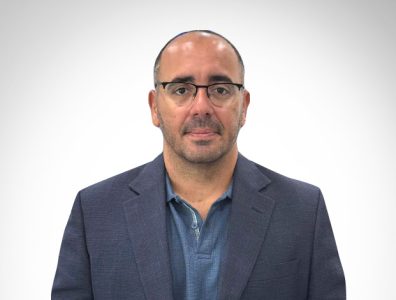
José Carlos Figueiredo, chairman of Teleservice, talks to The Energy Year about the role the oil and gas sector has played in the company’s evolution, its assessment of security risks coming from other African countries and its approach to cybersecurity. Teleservice is the largest private security company in Angola.
What role has the oil and gas sector played in Teleservice’s evolution?
Teleservice was established to serve Angola’s oil and gas sector during the post-1992 period of instability. Following legal reforms that enabled private security companies, we were among the first five or six firms to launch operations, including early work with clients such as Sonangol and Elf [now TotalEnergies] in Luanda and Soyo.
After the 2002 peace agreement, we shifted from a paramilitary structure to a conventional security company. From then until 2019, our focus remained manpower-driven services. In 2020, driven by Covid and a strategic realignment, we began transitioning into a broader solutions provider.
Today, less than 50% of our revenue comes from traditional security. We have expanded into consultancy, risk analysis for foreign investors, cybersecurity, electronic security, marine safety, firefighting and logistics for onshore drilling operations. This includes services such as seismic acquisition, topography, accessibility studies and demining to ensure safe drilling zones.
We have also grown alongside the country’s shift to onshore exploration, adapting our offerings accordingly. Our offshore boats support platform safety and emergency response. We now support oil companies beyond security, enabling safe operations and compliance. As Luanda and other regions have become safer, physical security needs have decreased. We’re not exiting security but diversifying.
How do you assess security risks in Angola compared to other African markets, such as Mozambique?
What happened in Mozambique was not caused by oil companies but by broader governance challenges. It mirrors what Angola went through in the 1980s and 1990s. Offshore development in Angola was seen as safer simply because the war was inland. Moving activities onshore again, as the ANPG [National Oil, Gas and Biofuels Agency] is doing now, is a bold but necessary reversal of decades of offshore focus.
Private security has limits. It can’t address all political or national threats. Oil companies must follow the strategy of the government and invest where they see it is sound. Angola today is better prepared. The government, regulators and financial sector are building a more stable foundation for investment. If a country isn’t ready for a massive capital influx, such as what happened in Mozambique, the outcome can be disruptive.
Security risk evaluation is part of what we offer. Many foreign firms come into Angola without a full grasp of local realities. Just as they hire legal or financial experts, they should also hire experts in physical and operational risk. These risks aren’t always violent. They can simply be disruptions that could have been prevented with foresight.
How are you approaching cybersecurity, and what role do international partnerships play?
Cybersecurity is still new, globally speaking. It’s less than 20 years old and highly geopolitical. There are two key areas: one is business continuity planning, which we manage in-house using local knowledge and trained Angolan professionals. We help clients ensure that systems, backups and internal policies align with local realities.
The other side is network-level security to protect systems from intrusion. This is where we rely on foreign partners. There simply isn’t the domestic expertise or infrastructure in Angola yet. We work with companies in Dubai, Eastern Europe, Israel and the USA. The systems are tried and tested abroad. Local cybersecurity training is just beginning to develop here, but it takes decades, not years.
Our technicians are trained locally, often at places such as Operatec, but the systems and supervision are still external. Even so, we can guide clients through compliance, help implement best practices and offer support aligned with their risk profiles. Cybersecurity contracts are still limited, and the big players – banks and government ministries – often recruit the best talent directly. That means companies such as ours must wait for the next generation.
How has demand evolved for private firefighting, and what’s the rationale behind this service?
Firefighting is one of our most significant additions in recent years. Angola’s public services are stretched by a growing urban population, and the firefighting infrastructure is no exception. Legally, most industrial sites and buildings are required to have some level of private firefighting capacity. It’s a critical service, especially where human life is at risk.
The Chevron incident is a good example. When something overwhelming happens, there may be nothing anyone can do, but the first line of defence matters. We provide trained personnel, most of them trained at local academies such as Operatec, to companies who need reliable first and second response capacity. It’s preventive, not just reactive.
Some companies have internal teams, but for others, it’s more cost-effective to contract us. Insurance doesn’t replace lives, and this service is about human value. Our role is to ensure that companies are not caught unprepared when emergencies arise.
Are you re-entering the mining sector, and how does security differ in that space?
Yes, we returned to the mining sector three years ago. Historically, we had a strong presence in diamond mining but left in the early 2000s due to liability risks. We’re now working with two diamond mines and have supported gold mining operations as well.
Security in mining differs depending on the resource. For gold and diamonds, it’s essential because the reserves are high-value and vulnerable. For iron or copper, security becomes less critical once operations are underway. We provide site protection, reserve control and onboarding security. However, the government still needs to improve oversight to tackle illegal mining and enable more stable operations for private firms such as ours.
How are you using drones across your operations?
We operate drones in both oil and mining sectors. They’re highly effective for difficult terrain, especially for quick topography and accessibility studies. Drones allow us to focus human resources where needed and streamline road and site development. We also use them for safety checks and even production monitoring.
As drone technology becomes more affordable – accelerated in part by global production, and even the war in Ukraine – drones’ applications are expanding. We don’t use them solely for perimeter security; we use them to enhance productivity and support logistics. It’s not a major revenue generator, but it’s a valuable add-on for clients looking for integrated solutions.
What role does workforce development play in Teleservice’s strategy?
We currently employ around 6,000 people and are growing by approximately 1,000 people annually. The range of services we offer demands constant training and professionalisation. While we don’t run our own training academy, we work closely with institutions such as Operatec for highly specialised roles such as private firefighting.
As we evolve toward logistics and integrated services, the need for trained personnel only increases. Whether it’s cybersecurity awareness, equipment handling or marine safety, our focus is on preparing our staff not just for today’s roles but for the company we aim to become in five years.
What is Teleservice’s long-term vision as it evolves into a full solutions provider?
We no longer want to be seen only as a security firm. Our goal is to become a key part of Angola’s industrial and energy supply chains. This means expanding our logistics services, managing safety and access for exploration zones and potentially taking on operational roles close to production.
We’ve been challenged by our clients to go one step further, and we’re already very close to that. We want to be the company that clears the way, literally and figuratively, so that others can operate. If it involves demining, seismic support, road access or firefighting, we want to handle it. We might not become an oil company, but we will be a bigger player in exploration.
The financial sector is developing a bit more appetite for risk, which was not the case 10 years ago. Today, we can think of investments such as vessels or advanced infrastructure. Our offshore fleet now includes 11 vessels, some capable of operating 200 miles offshore. This requires not just capex but serious opex, teams of four crews per vessel, mechanics and logistics. In some cases, we’re also exploring partnerships with regional boat owners, focusing purely on operations.
Read our latest insights on:
-

-

Quality acquisitions over acreage
INTERVIEW -

More content from Angola
Latest news and features





Latest Reports


The Energy Year Oman 2026
The Energy Year Kuwait 2025
The Energy Year Angola 2025
The Energy Year Nigeria 2025
The Energy Year Saudi Arabia 2025

The Energy Year UAE 2025


