

Attacks to slash Qatar’s LNG exports by 17%, revenues by $20 billion


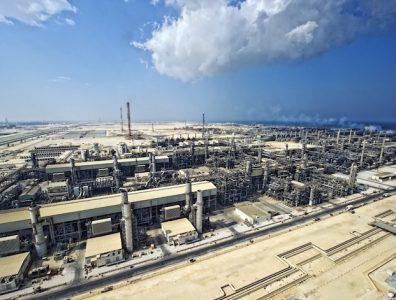
DOHA, March 20, 2026 – Damage from Wednesday’s missile attacks on Ras Laffan Industrial City has reduced Qatar’s LNG export capacity by 17% and will cause estimated revenue losses of USD 20 billion per year, QatarEnergy said on Thursday.
QatarEnergy said the missile strikes damaged liquefaction Train 4 and Train 6, which have a combined production of 12.8 million tonnes per year, or approximately 17% of Qatar’s LNG exports. Repairs to the facilities could take up to five years to complete, during which time supply to markets in Europe and Asia will be curtailed.
“The damage sustained by the LNG facilities will take between three and five years to repair. The impact is on China, South Korea, Italy and Belgium. This means that we will be compelled to declare force majeure for up to five years on some long-term LNG contracts,” said Saad Sherida Al Kaabi, president and CEO of QatarEnergy and Minister of State for Energy Affairs.
Train 4 and Train 6 are jointly owned by QatarEnergy and ExxonMobil, with the US major holding 34% and 30% interest in each asset, respectively.
Pearl GTL, a 140,000-boepd gas-to-liquids facility owned and operated by Shell at Ras Laffan, also suffered damage to one of its two production trains, Shell said in a separate statement. The facility has ceased operations entirely while the company assesses the extent of damage. Before the attacks, it had been operating at partial capacity due to transit constraints in the Strait of Hormuz.
QatarEnergy added that the Ras Laffan attacks will also cause losses in associated production of an estimated 18.6 million barrels of condensate (24% of Qatar’s condensate exports), 1.28 million tonnes of LPG (13%), 594,000 tonnes of naphtha (6%), 18,000 tonnes of sulphur (6%) and 8.8 mcm (309.5 mcf) of helium (14%).
Photo of Ras Laffan courtesy of JLM Photos / QatarEnergy
Read our latest insights on:

Latest news and features






Latest Reports


The Energy Year Oman 2026
The Energy Year Kuwait 2025
The Energy Year Angola 2025
The Energy Year Nigeria 2025
The Energy Year Saudi Arabia 2025
The Energy Year UAE 2025


