

Ready for transition into Angola’s downstream
June 29, 2026


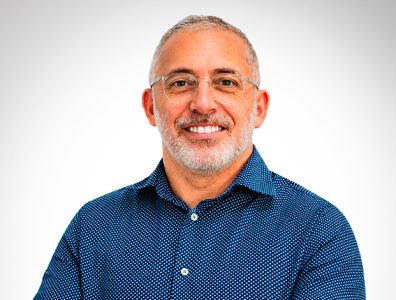
François Bacci, managing director of Ponticelli Angola, talks to The Energy Year about shifting towards maintenance and life-extension projects as activity in Angola’s upstream projects levels off and leveraging the group’s downstream and renewables capabilities to capture opportunities.
Ponticelli provides industrial services for the energy, infrastructure and pharmaceutical industries.
- Angola’s upstream sector is shifting from greenfield growth to asset optimisation and maintenance, with operators pursuing incremental upgrades.
- Few packages within major EPC-led upstream projects remain for distribution among domestic subcontractors. Most of the remaining work on large developments, such as Kaminho, is likely to be executed by the main contractors, with participation opportunities limited to areas where capacity gaps exist or that require highly specialised techniques.
- Refinery expansions and other downstream projects are expected to present business opportunities for industrial services providers. However, due to limited visibility into the pipeline, companies will tend to pursue engagements on an opportunistic basis.
How would you assess the current state of Angola’s upstream oil and gas sector?
The upstream sector started slowing down in 2025, and I believe that trend will continue. However, although activity is not as dynamic as it was, some developments are expected. TotalEnergies, for example, is planning infill work. We understand there could be projects on Block 17 and Block 32, but nothing has been confirmed yet, so the general outlook is that they will not be immediate. I would expect concrete developments in 2027 or 2028.
At the moment, the market is in a transition phase, with companies focusing more on optimisation, maintenance and life extension rather than greenfield developments. For companies like Ponticelli, that means adapting to a different rhythm and remaining active with maintenance and incremental projects while waiting for the next wave of larger investments.
Do you see any opportunities emerging for Ponticelli in Angola’s main upstream projects at this stage?
At this stage, we do not see significant opportunities for Ponticelli on major upstream projects such as Kaminho. This project is largely managed by Saipem, which is acting as the main EPC contractor and is responsible for both the FPSO and subsea systems.
In this type of development, the main contractor typically retains execution of the majority of the scope, with subcontracting limited to specific or supplementary packages. Engagement with subcontractors generally occurs only in cases of capacity constraints or highly specialised needs.
At present, we do not anticipate such conditions arising on Kaminho, and therefore, the availability of work packages aligned with Ponticelli’s core capabilities remains limited.
On the other hand, we are already involved in life-extension projects with TotalEnergies in the Dalia field on Block 17 and with ExxonMobil on Kizomba in Block 15. We would also expect Azule Energy to launch similar programmes on Block 18 and Block 31, although nothing has been announced so far. With limited activity on major projects for now, we are focusing on several smaller developments to maintain our level of activity in the market.
Are there engagements that could emerge for Ponticelli in the downstream and renewables sectors?
It is a possibility. The downstream is not a new area; it is an extension of what we already do. We have already had some involvement in the Cabinda Refinery, supporting Odebrecht Angola during the construction phase, and we could certainly work with them again. The same applies to the Lobito Refinery, where they are also involved. We are available, and the key stakeholders know who we are and what we can do.
At this stage, however, it is difficult to say how much opportunity will come from these projects in the near term. What we can say is that we have the capabilities and the track record, and if opportunities arise, we are ready.
Renewables are part of the group’s broader strategy, and we have a dedicated department that handles those projects. We are close to finishing a solar plant project in Mozambique, and we have executed similar work in Nigeria for TotalEnergies, but in Angola, renewables are not yet a core business. We can leverage our group’s capabilities if needed, but that will happen on an opportunistic basis rather than as the result of a focused pursuit of projects.
Read our latest insights on:
-

Quality acquisitions over acreage
INTERVIEW -

-

More content from Angola
Latest news and features






Latest Reports


The Energy Year Oman 2026
The Energy Year Kuwait 2025
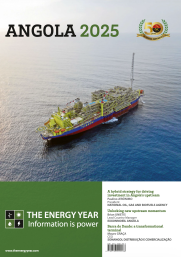
The Energy Year Angola 2025
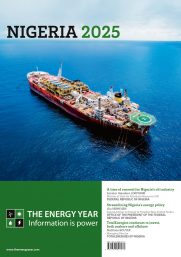
The Energy Year Nigeria 2025
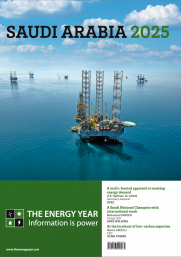
The Energy Year Saudi Arabia 2025
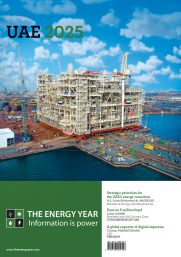
The Energy Year UAE 2025


