

A focus on life extension for Angola’s legacy fields
August 20, 2025 Angola


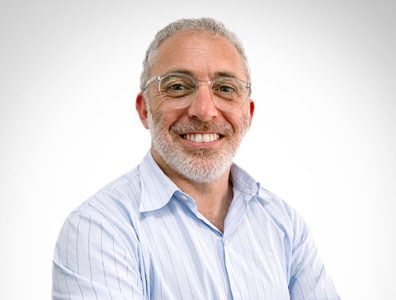
François Bacci, managing director for Ponticelli Angola, talks to The Energy Year about the current state of Angola’s energy sector and the company’s potential regional and international expansion plans. Ponticelli provides industrial services mainly to companies in the oil and gas, energy, chemical, pharmaceutical and steelworks sectors.
How do you view the current state of Angola’s energy sector?
The oil price remains a concern, as its fluctuations can delay or postpone projects. However, the ANPG [National Oil, Gas and Biofuels Agency] and Angolan authorities are doing their utmost to stimulate investment in new FPSOs, blocks and enhanced production in existing fields. Despite the volatility, they are making commendable efforts to sustain high production levels.
Many blocks are already mature, which means production will naturally decline without new developments. Therefore, new projects are critical to maintaining output. We see a promising medium-term outlook up to 2030. That said, we are currently experiencing a slowdown in new EPC projects for 2024 and 2025. Maintenance work remains abundant, and we expect a rebound in EPC activity in the following years.
Have you seen increased demand for Ponticelli’s services in light of major player’s emphasis on maintenance and EOR?
Yes. We currently hold three- to five-year maintenance contracts with TotalEnergies, ExxonMobil, Azule Energy, CABGOC and Sonangol. These contracts form the foundation of our operations. While projects come and go, maintenance contracts offer the continuity that sustains our presence. We’re seeing increased demand, particularly for platform revamping and life-extension programmes.
For instance, with Sonangol, we are executing major revamp works, and TotalEnergies is carrying out a life-extension programme for the FPSOs in the Girassol field, which are soon moving to the Dalia field. This type of work is essential if assets are to remain productive for another 20 years. Other clients such as Exxon and Azule are in similar phases.
Can you share more about your contract with Azule Energy, and are you currently bidding on other major projects in Angola?
This EPC contract is focused on maintenance, specifically for FPSOs in blocks 18 and 31. What makes it new for us is that we are now also responsible for engineering, something usually handled by the client or another subcontractor in previous contracts. It marks an evolution in our scope.
This is a new relationship with a new organisation, so we’ve had to adapt to their workflows. Our performance has improved month by month. The goal is to ensure a contract renewal. It’s a three- to five-year contract, and our aim is a long-term partnership, not just fulfilling a one-off deal.
We are primarily focused on revamping and life-extension projects rather than Greenfield EPC projects such as Kaminho. Kaminho, for example, is unlikely to yield significant work for us under the current setup. Our focus remains on life-extension work with clients such as TotalEnergies and ExxonMobil. We expect these areas to bring more tangible opportunities.
How are your fabrication facilities being used, and do you have plans for expansion?
We’re not planning to expand our facilities, but we do plan to improve them. In Cabinda we make yearly investments to enhance capacity. In Luanda our activity at the Sonils yard has declined following the completion of projects there. We’ve had to adjust by downsizing the yard and restructuring our team. However, we maintain a good relationship with Sonils and can scale up operations quickly should demand return.
Is the downstream sector, such as the Cabinda Refinery, part of your strategy?
It is, and we’ve supported OEC [Odebrecht Engineering and Construction], the EPC contractor for the refinery, on specialist scopes. We’ve also been in contact with Gemcorp, the operator of the refinery. We remain ready to assist further once operational strategies are confirmed. Being located very close to the refinery positions us well for fast mobilisation.
Are you looking at opportunities in Namibia or expanding into Namibe, given regional exploration heating up?
Namibia is under review. Although I’m not personally managing it, Ponticelli is considering establishing operations there. We’re already preparing to support the local market through training and personnel exchanges. For example, we’ve discussed sending experienced staff from Angola to train Namibians or even bringing Namibians to Angola for training.
We are closely monitoring FID announcements, particularly from TotalEnergies, which could trigger significant activity. Given Namibia’s limited current capacity, Ponticelli Angola can play a vital support role.
Regarding Namibe, exploration in northern Namibia is increasing interest in Angola’s southern blocks. We are open to supporting development in Namibe if demand arises. We are agile enough to scale up quickly in that region if clients request our services. Angola is far more developed than Namibia in oil infrastructure, but we see room to provide support across both markets.
What are your main strategic priorities for 2024 and 2025?
Renewing our existing contracts is our top priority. These include long-standing relationships with TotalEnergies, ExxonMobil, CABGOC and Sonangol, all of which have been consistently renewed for over a decade. We provide competitive, locally adapted pricing and strive to maintain top-tier performance throughout the contract life.
Additionally, we aim to secure new projects where available. At our Sonils facility, for example, we recently produced subsea structures weighing over 100 tonnes each for Begonia. We have the technical and fabrication capacity to support subsea equipment such as jumpers and manifolds. The current lull in project awards is linked to oil-price volatility, but we expect activity to pick up.
Are you looking to diversify your services, including renewables through GenSun Solar?
Yes, we are open to that. While our core activity is in Angola’s oil and gas sector, we can leverage group capabilities through subsidiaries such as GenSun for photovoltaic EPC projects. GenSun has completed projects in Nigeria, Portugal and South America. If an opportunity arises in Angola, we are ready to partner and deliver.
We are also expanding our electrical and instrumentation activities through another group company, TCPI. We aim to build those capabilities locally as opportunities emerge, especially those of clients such as TotalEnergies, who are actively pursuing energy-transition projects.
How important is local content to Ponticelli, and how are you investing in it?
Local content is central to our strategy. Currently, 90% of our workforce is Angolan, which is approximately 1,300 people. This number varies with project workload, but we are doing everything possible to retain our trained personnel, shifting them between projects as needed.
In 2023, we invested approximately 20,000 hours in training. This includes technical training in welding, rigging and pipefitting, as well as HSE. We’re also focused on developing our engineering capacity. We’ve established partnerships with institutions such as ISPTEC to onboard interns and young engineers.
Some of our Angolan staff are being trained abroad to become certified welding inspectors, an area with few qualified locals. One was sent to India, and another was sent to Brazil for certification. We’re committed to increasing the number of Angolan employees and their skill level. Our aim is to push our local content closer to 95%.
Read our latest insights on:
-

Quality seismic decisions for Angola
INTERVIEW -

-

More content from Angola

Quality seismic decisions for Angola
INTERVIEW
Latest news and features



Latest Reports


The Energy Year Oman 2026
The Energy Year Kuwait 2025
The Energy Year Angola 2025
The Energy Year Nigeria 2025
The Energy Year Saudi Arabia 2025
The Energy Year UAE 2025

