


A judicious blend of regulation, risk allocation and incentives
September 13, 2024 Kuwait


Ibrahim Sattout, partner at ASAR, talks to The Energy Year about the evolving legal framework for PPPs in Kuwait and possible measures for attracting greater international investments to the country. ASAR is a full-service corporate and commercial law firm that operates in the jurisdictions of Kuwait and Bahrain.
What are the main challenges to decarbonisation in Kuwait from a policy perspective?
The New Kuwait Vision 2035 is very clear about reducing reliance on fossil fuels and moving towards renewable energy. Furthermore, at COP27, the Kuwaiti government declared its intent to reach net zero carbon emissions by 2060, with a commitment to deliver net zero carbon emissions in its critical oil and gas sector by 2050. These objectives were reiterated in COP28, and Kuwait is also striving to generate 15% of its electricity from renewable sources by 2030. These are admirable goals which require significant determination and planning. Such a significant change is challenging and does not happen overnight. It is a gradual effort.
Among the challenges is ensuring that PPP projects in the energy sector meet international standards for sustainability, environmental protection and decarbonisation. When the RFQs for Al Khairan Phase 1 and Az Zour North Phase 2 and 3 were issued, they were cancelled soon thereafter to re-assess the carbon emissions expected to be produced by these projects, which was an admirable move that proved the government’s intention to align with global energy transition goals and achieve its commitments.
Another challenge is the absence of sufficient technical knowledge in Kuwait of the latest renewable energy capabilities, which PPP schemes can help resolve. Closer co-operation with leading international players in the field of renewable energy, as well as with GCC countries which have more experience in renewable energy projects, would help Kuwait enhance its knowledge in the field.
A third challenge is the absence of a clear and comprehensive general policy for decarbonisation which sets out all the standards and requirements with which the PPP investor and the project it bids for must comply. When investors consider whether to bid for a project in Kuwait, it is imperative that they are equipped with comprehensive knowledge of the requirements from the outset. Expecting investors to commit resources, engage legal and financial advisers, and undergo prequalification processes without clear insight into the standards and requirements they must meet is both burdensome and inefficient. Rather, transparency and accessibility to these requirements should be established at the onset, ensuring that potential bidders are fully informed before they embark on the application process. It is essential for the government to recognise the importance of this approach as it aligns with broader objectives, including the pursuit of net zero carbon goals. I am, however, confident that such policy will come sooner or later as part of the government’s plan to pave the regulatory framework towards achieving its net zero carbon goals.
In this context, what support can ASAR provide?
As a leading business law firm in Kuwait, we provide a wide array of legal services to government agencies, investors, consultants and lenders involved in PPP projects. We can offer legal advice on the business environment in Kuwait and explain to our clients the complications arising from regulatory practices relating to investment in Kuwait, laying out how to best approach government agencies and their officials. We can also help establish project companies and the contractual framework governing the relationship among shareholders. Additionally, we can advise on the PPP framework and its underlying requirements and challenges and review RFQs and RFPs, assessing the legal risks and complications, and advising on how to deal with them effectively and practically. We can also help review financing agreements and their interaction with the RFQ and RFP documents.
We pride ourselves on our in-depth knowledge of the intricacies of the Kuwaiti legal system and the regulatory practices of government agencies, as well as how to best approach said agencies and their officials to achieve our clients’ business targets.
We advised KAPP on Az Zour North One, which was the first integrated desalination and power project to be developed under a PPP scheme in Kuwait. We have also advised KAPP on Az Zour North Phase 2 and 3 and Al Khairan Phase 1 before their cancellation and relaunching in 2022. We are also currently advising one of the K-companies on the establishment of a landmark renewable energy plant. Government agencies trust our expertise to guide them through the maze of PPP legal and regulatory requirements.
I should also mention that we have advised the sponsors on all of the other PPP projects launched by KAPP, such as the Umm Al Hayman Wastewater Treatment Project, the Al Abdaliyah ISCC power project, the Kabd Municipal Solid Waste Project, Kuwait’s national railroad project, the Kuwait Metropolitan Rapid Transit System, the development of the Al Abdali economic zone and the development of Failaka Island.
Can you walk us through the evolution of PPP schemes in Kuwait?
Even before the issuance of specialised PPP Laws, the Kuwaiti government expressed interest in PPP and BOT [build-operate-transfer] concepts and launched one of the first BOT projects in the region by way of a special resolution from the Council of Ministers. It was the Sulaibiya Wastewater Treatment Plant, which was designed and procured in the late 1990s by the Ministry of Public Works and the Kuwait Institute for Scientific Research and completed in 2004. This plant was not only the largest of its kind in the world using reverse osmosis technology at the time, but it was also a pioneering initiative in the region.
The Kuwait government’s growing awareness of the importance of PPPs led it to issue the first dedicated BOT law in Kuwait, Law No. (7) of 2008. This law was subsequently replaced by the IWPP Law No. (39) of 2010, which remains in effect and regulates PPP schemes in the water and electricity sectors. The IWPP Law was passed because the government realised that Law No. (7) of 2008 did not fully meet international standards and practices, and hence the IWPP Law was issued to regulate large-scale power projects.
The IWPP Law was complemented by the issuance of the PPP Law No. (116) of 2014, which established the Kuwait Authority for Partnership Projects (KAPP) as a successor to the Partnerships Technical Bureau established under Law No. (7) of 2008.
What is KAPP’s mandate and how might it evolve?
KAPP specialises in the structuring and procurement of PPPs and is a testament to the government’s dedication to the development of such schemes. KAPP has been a key player in most of the PPP projects that have taken place in Kuwait, such as the Az Zour North 1 IWPP project and the Umm Al Hayman Wastewater Treatment Project.
Already, KAPP’s issuance of RFPs [requests for proposals] for the Az Zour North Phase 2 and 3 IWPP projects, as well as the RFQs [requests for qualification] for Al Dibdibah Power and the Shagaya Renewable Energy Project, promise to transform the landscape of the energy sector in Kuwait. In addition, KAPP and the Kuwait Ministry of Communications launched the RFQ phase for the fixed telecommunications network development project.
There is a lot of potential for the regulatory framework to grow and favour more PPPs, and the government is seeking to implement further policies to, among other things, lessen the burden on the public treasury, bring specialised foreign expertise and technology into Kuwait and prepare the next generation of Kuwaitis for the technical aspects of energy production.
What is your relationship with the domestic oil and gas sector and the K-companies?
ASAR is deeply entrenched in the oil and gas sector, where we play a major role in providing legal advisory services to the K-companies. Our involvement includes corporate structuring, complex construction projects and financing arrangements that necessitate specialised legal acumen.
For instance, we are currently advising one of the K-companies on the establishment of a groundbreaking renewable energy plant, a project poised to set new benchmarks in sustainability. We had previously guided another K-company through a similarly innovative energy venture.
Our expertise extends to advising on the structuring of entities within the sector, such as the Kuwait Integrated Petroleum Industries Company (KIPIC), the KNPC subsidiary established to operate the Al Zour Refinery, which underscores our commitment to facilitating the growth and development of key players in the industry.
In addition to our contributions to the corporate landscape, we are actively engaged in providing invaluable guidance to private sector entities operating within the oil and gas realm. Whether offering overarching corporate advisory, facilitating M&A transactions, or orchestrating intricate financing arrangements, our advisory services cater to the diverse needs of our clientele. Notably, we have advised banks and export credit agencies on the financing of pivotal projects such as KNPC’s Clean Fuel Project and KIPIC’s LNGI project, underscoring our ability to navigate the complex financial landscape inherent in the sector.
How would you assess the tendering and contracting process in Kuwait?
Kuwait has made progress on its procurement systems over the past decade and implemented measures to improve transparency, fairness and competitiveness. One of the key developments was Law No. (49) of 2016 regarding public tenders, which made the system more progressive by allowing non-Kuwaitis to compete in public tender without the need for a local agent. This was further enhanced by Law No. (1) of 2024, which provides that a foreign party registered as a service provider or contractor may participate in government tenders directly and without a Kuwaiti agent. We will need some time to fully assess if it meets the expectations of local and international investors.
That said, I should state that notwithstanding the promulgation of the new tender law, the tendering and contracting processes in Kuwait is still subject to some criticism from stakeholders due to various factors. First, there have been concerns about transparency and efficiency in the tendering process in Kuwait. Some stakeholders have criticised the lack of clarity and consistency in the procedures, which can lead to delays and uncertainties for both government entities and private contractors.
In addition, and similarly to many other countries, bureaucratic hurdles and red tape can slow down the tendering and contracting processes in Kuwait. This can result in delays in project implementation and increased costs.
Another element to be addressed is capacity building. Indeed, it is imperative to enhance the capacity of government institutions responsible for overseeing the tendering and contracting processes. This includes providing training for staff, implementing best practices and leveraging technology to streamline procedures and improve transparency.
Despite the challenges, there are opportunities to improve the tendering and contracting processes in Kuwait. This could involve adopting international best practices, engaging stakeholders in the decision-making process and promoting greater competition among bidders.
Overall, addressing issues related to transparency, efficiency, and capacity building is essential for improving the tendering and contracting processes in Kuwait and ensuring the successful implementation of projects for the benefit of the country and its citizens.
Can you suggest some changes that could make the business environment more attractive and easier to navigate?
Law No. (1) of 2024 removes significant restrictions on foreigners doing business in Kuwait and as such, should incentivise foreign investors to establish their business in Kuwait and to participate in government projects.
Foreign parties may now establish a Kuwaiti branch as an exception to the restriction set in Article 23 of the Law of Commerce, which requires foreigners to do business in Kuwait in partnership with a Kuwaiti national who holds a 51% interest in such business. Additionally, foreign parties appropriately registered as service providers or contractors may participate in government tenders directly and without a Kuwaiti agent or partner.
In my view, this legislation removes significant restrictions on foreigners doing business in Kuwait and should incentivise foreign investors to establish their business in Kuwait and participate in government projects.
On the PPP projects level, drawing upon our extensive expertise in this sector, it becomes evident that the establishment of a well-defined policy framework and proactive policy are imperative. Such measures are essential for fostering a conducive environment, underpinned by a clear vision, for the successful implementation of PPP initiatives. Central to this endeavour is the establishment of a dedicated one-stop shop, such as KAPP, to serve as a pivotal orchestrator of PPP projects, ensuring coherence and efficiency in their execution.
Securing political and economic support for PPPs is indispensable to instil confidence both domestically and internationally, thereby encouraging private sector participation. In other words, to truly incentivise private sector involvement, it is imperative that PPPs are rendered attractive through a judicious blend of regulatory frameworks, risk allocation mechanisms, and investment incentives.
Furthermore, it is imperative to conduct a comprehensive review of the existing PPP legislation, acknowledging the invaluable insights garnered over the past decade. This review should prioritise the incorporation of lessons learned to enhance the efficacy of decision-making processes, minimise delays and fortify PPPs against the disruptive impact of political fluctuations.
It is necessary to institute a robust capacity-building framework across various governmental agencies to cultivate and fortify the competencies and expertise of government officials, thereby enhancing the efficiency and efficacy of processes essential for the successful tendering and execution of PPP projects. By investing in skill enhancement and resource development, the government can optimise its ability to navigate the complexities inherent in PPP ventures, ensuring their timely and successful completion.
What is the firm’s footprint in the region and how do you plan to grow it?
ASAR’s legal team currently comprises 30 skilled lawyers, yet we continue to grow our team to meet the needs of our clients. Our regional footprint includes a specialised office in Bahrain, presently undergoing restructuring and expansion, and we may also explore opportunities in Saudi Arabia, which is a very competitive market filled with local and international firms. We have clients from Kuwait and abroad conducting business in Saudi Arabia, so we are keeping an eye on developments in the kingdom to assess our opportunities there.
The legal environment in the GCC is unique and presents a distinctive challenge. While Kuwait, Bahrain and the UAE have legal systems based on civil law due to being influenced by Egyptian laws, they also integrate elements from the Anglo-Saxon and common law traditions. At ASAR, our legal experts possess a comprehensive understanding of both legal systems, enabling us to better accommodate our clients’ needs. Committed to maintaining our position as leaders in the legal sector in Kuwait, we aim to elevate our regional presence to new heights.
Read our latest insights on:
More content from Kuwait





Quality seismic decisions for Angola
INTERVIEW

Latest news and features




Latest Reports


The Energy Year Oman 2026
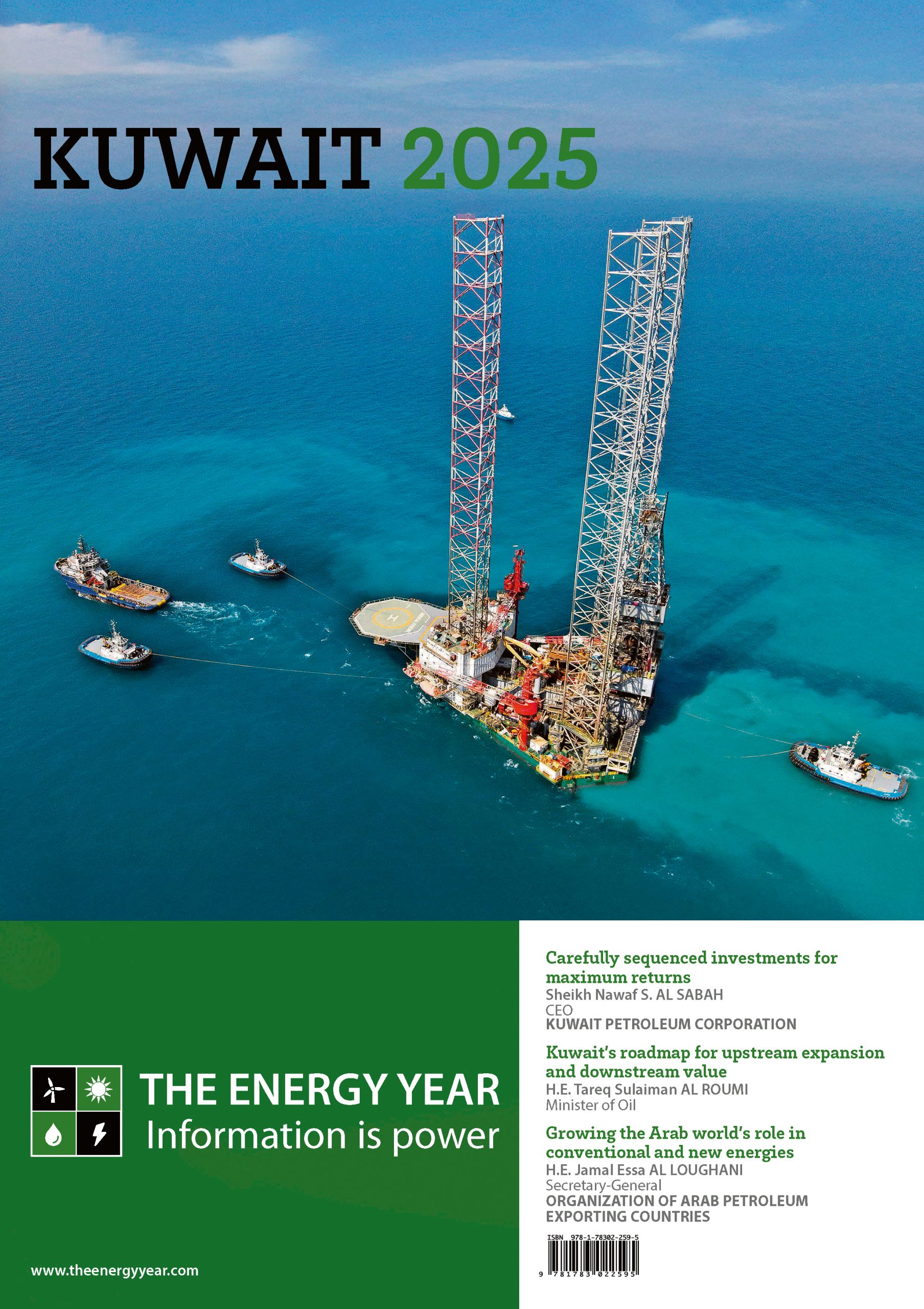
The Energy Year Kuwait 2025
The Energy Year Angola 2025
The Energy Year Nigeria 2025

The Energy Year Saudi Arabia 2025

The Energy Year UAE 2025

