

A Kuwaiti asset manager with GCC ambitions
September 9, 2025 Kuwait


Faisal Sarkhou, CEO of Kamco Invest, talks to The Energy Year about the key drivers of medium-term economic growth in Kuwait and the company’s ongoing expansion into new product categories and GCC markets. Kamco Invest is a Kuwaiti non-banking financial firm that provides asset management, investment banking and brokerage services.
What were the main factors behind Kamco Invest’s Q1 2025 net profit of USD 3.9 million?
Investment companies follow different models, and we continue on a journey that we started 10 years ago, focusing on fee income. 70-80% of our income is derived from our core business lines of asset management and investment banking, with brokerage earning a smaller share.
In asset management, we are among the largest 10 asset managers in the MENA region. As of the end of Q1 2025, our AUM [assets under management] stood at USD 16.9 billion. Our clients consist of sovereign entities, family offices, high-net-worth individuals and institutional investors.
We also have exposure to capital markets, mainly through co-investments in our managed products, and we have done well in the favourable conditions of the past two years. We have steadily grown our investment banking activity in equity capital markets and debt capital markets, as well as mergers and acquisitions.
Which economic sectors do you see as growth drivers in Kuwait and the region?
From a macroeconomic standpoint, Kuwait is at the start of a wave of infrastructure development, especially in energy. Other GCC countries have already made significant progress in their infrastructure, but Kuwait is just beginning this phase. It is an exciting time.
We anticipate the construction, real estate and healthcare sectors to benefit as a result. Brick-and-mortar businesses remain a strong foundation in Kuwait and across the region, but technology will become a differentiator going forward, enhancing how these sectors adapt and grow.
What is your assessment of Kuwait’s fintech sector and its regional potential? Do you see Kuwait developing into a fintech hub?
Kuwait is more of a technology user than an innovator. Over the past couple of years, the number of new technologies that have become accessible in the country has increased, and the challenge now is to implement them effectively.
At the moment, Kuwait is taking steps in the infrastructure space. The partnership between Google and KDIPA [Kuwait Direct Investment Promotion Authority] is a major milestone that sets a precedent for digital standards in the public and private sectors.
However, infrastructure depends heavily on power, and Kuwait continues to face challenges with electricity supply. As demand grows, particularly with the rise of energy-intensive sectors like data centres, the pressure on the grid will intensify. Technology and energy are deeply interconnected. For Kuwait to achieve meaningful growth, they must progress hand in hand.
With upstream and offshore activity on the rise, what is your outlook on investment in energy projects?
There are two key elements: maintenance and expansion. Maintaining existing infrastructure is non-negotiable. Every day, you have to extract oil or gas. At the same time, you must reduce pollution and reinvest to preserve performance. The second priority is growth, be it through discoveries or capacity increases.
Empowering the public and private sectors is critical for both. The public sector needs to become more agile, and the private sector should be allowed to participate in and fund energy projects through partnerships. SMEs and domestic enterprises should be involved, with Kuwait’s financial and banking sectors acting as enablers, along with international investors.
What steps is Kamco Invest taking to integrate ESG priorities into its operations and strategy?
We are increasingly involved in green transactions and expect demand to continue growing. In fixed income, we are seeing a rise in green bonds and green sukuk (Islamic bonds). Regulation is supporting this shift by making green financing more attractive.
From an investment perspective, we have acquired a majority stake in European Green Logistics Space (EGLS), a green logistics platform. It is headquartered in the Czech Republic, with several offices throughout Europe. Europe’s markets offer space and opportunity for green logistics development.
What is your growth strategy for the next three years, and are you targeting any specific metrics?
Kuwait is the heart of our operations. It is our headquarters, and all our expansion efforts – into Saudi Arabia, the UAE and beyond – are co-ordinated from here. We tailor our approach to each market but act as a regional player because we see the GCC as one block, with shared traits: young populations, strong cash flow and globally significant sovereign wealth funds.
We plan to continue strengthening our position in Kuwait, particularly through our relationship with Burgan Bank, which will unlock new potential. Since 1998, our AUM have grown by more than 10% per year. That is our benchmark. A 5% increase on a USD 17 billion base means nearly USD 900 million of additional AUM. Scale matters, and we plan to maintain our momentum with growth in newer markets.
Within the region, we are exploring opportunities through our parent group, KIPCO, which operates AEPCo, a leading player in alternative energy. We align with their goals and aim to expand in tandem with them.
Read our latest insights on:
More content from Kuwait



Quality seismic decisions for Angola
INTERVIEW
Latest news and features



Latest Reports


The Energy Year Oman 2026
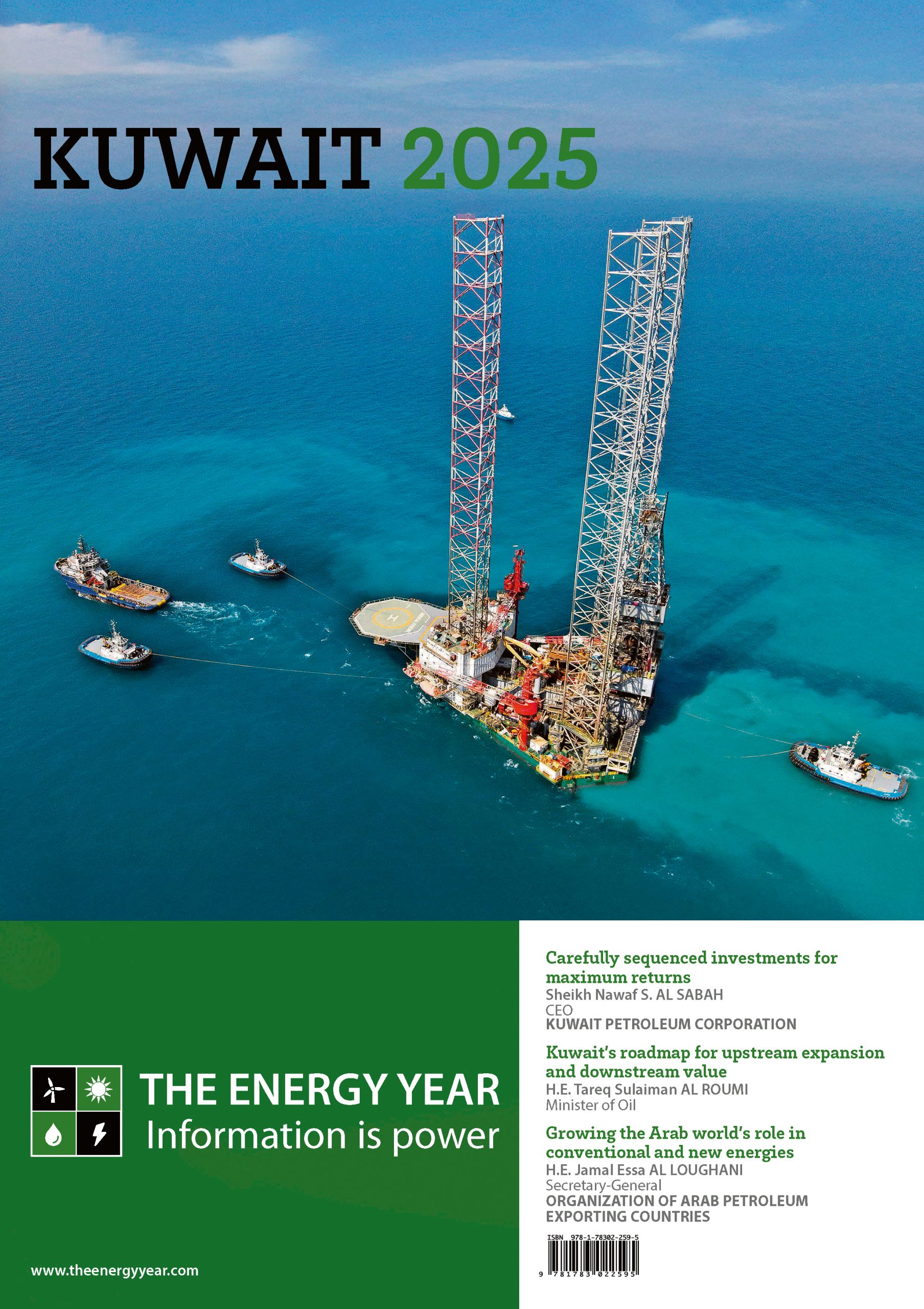
The Energy Year Kuwait 2025
The Energy Year Angola 2025
The Energy Year Nigeria 2025
The Energy Year Saudi Arabia 2025
The Energy Year UAE 2025

