

OPEC’s multi-faceted approach to meeting energy demand
February 27, 2025 Saudi Arabia


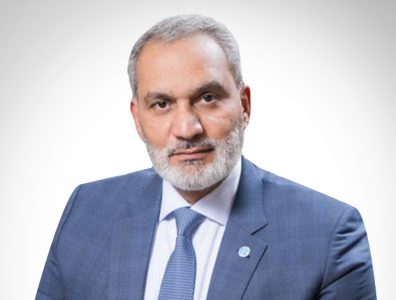
OPEC Secretary-General H.E. Haitham Al Ghais talks to The Energy Year about the investments being carried out by OPEC Member Countries to ensure a stable energy supply and the key role of Saudi Arabia in the organisation’s evolution since its inception in 1960. The Organization of the Petroleum Exporting Countries (OPEC) co-ordinates and unifies the petroleum policies of its members.
This interview is featured in The Energy Year Saudi Arabia 2025
Oil remains a critical input for industries and economies across the world. How do you see oil continuing to support economic growth and sustainable development in the years ahead?
Crude oil remains a cornerstone of global development, acting as a driver of industrial progress and a linchpin for global energy security. Petroleum and petroleum-derived products remain vital worldwide. The enduring influence of oil is evident in the thousands of critical products derived from it, including fertilisers, pharmaceuticals and other essentials. Transportation, emergency services, construction, manufacturing and production, food production, healthcare, housing and infrastructure all rely heavily on oil and would face significant challenges without it.
The indispensability and versatility of crude oil and its derivatives ensure that oil will remain essential in virtually all sectors and industries long into the 21st century. Even electrification, often presented as oil’s great rival, requires petroleum and petroleum-derived products. Cross-linked polyethylene, which is essential for insulating underground and subsea cables, and mineral oil, which is crucial for transformer safety and functionality, exemplify oil’s importance in this regard. Similarly, wind turbines rely on fibreglass, resin and plastic, and solar panels require ethylene. From components to heavy machinery, oil remains vital for renewable energy infrastructure and sustainable development.
As the world seeks to balance economic growth and sustainable development, the oil industry’s adaptability, commitment to operational efficiency and drive for technological innovation – supported by a global workforce of over 70 million people – ensure that oil will remain vital to humanity’s progress.
How can Saudi Arabia balance its role as OPEC’s largest oil producer with the organisation’s objectives and its energy transition goals under Vision 2030?
Saudi Arabia successfully balances its roles and objectives with effective leadership, mutually reinforcing goals and long-term vision. As Crown Prince, Prime Minister and Chairman of the Council of Economic and Development Affairs HRH Prince Abdulaziz bin Salman Al Saud has aptly noted, “All success stories start with a vision, and successful visions are based on strong pillars.”
This is as true for Saudi Arabia today, as it works to foster an even more vibrant society, an ambitious nation and a thriving economy as part of Vision 2030, as it was for OPEC’s founders when formulating the organisation’s objectives in 1960.
OPEC’s mission remains guided by essentially the same binding objectives agreed 65 years ago, with a focus on ensuring sustainable stability for oil markets, which greatly benefits producers, consumers and investors alike. Without it, economic planning and budgeting become more difficult. Saudi Arabia, as OPEC’s largest oil producer, is pivotal to the organisation’s efforts in this regard.
Vision 2030 dovetails with OPEC when noting that oil and gas are essential pillars of Saudi Arabia’s economy, or when pledging “to fully support major national companies by promoting their products and services regionally and globally, especially in the fields of oil and petrochemicals.”
The OPEC Secretariat in Vienna regularly promotes the excellent work being done by national oil companies (NOCs) across OPEC’s 12 Member Countries, including Saudi Aramco. In doing so, OPEC routinely highlights how NOCs are providing the critical products, energy security and affordability that the world needs, while at the same time embracing technological innovation, reducing emissions and mobilising cleaner technologies.
Experts from Saudi Arabia also benefit from various OPEC-organised workshops that facilitate an exchange of expertise. These include discussions on strengthening co-ordination and collaboration on climate change, a field in which Saudi Arabia is fast becoming a leading global actor.
In line with the Paris Agreement, Saudi Arabia aims to reduce emissions by 278 million tonnes per year (tpy) by 2030. It also has ambitious initiatives such as the Saudi Green Initiative and Middle East Green Initiative, which are helping to address climate challenges, combat desertification, protect ecosystems and foster collaboration, knowledge exchange and investments.
Saudi Arabia’s technological innovation is similarly impressive. For instance, the Jubail carbon capture and storage (CCS) hub is set to become one of the world’s largest CCS facilities, with the capacity to capture and store 9 million tpy of carbon dioxide annually by 2027. Furthermore, Saudi Arabia has set a national target to capture, utilise and store 44 million tpy of carbon dioxide by 2035.
In the power sector, Saudi Arabia plans to achieve nearly 50% of its electricity generation capacity from renewable sources by 2030. It is also poised to secure a leading position in the field of low- and zero-carbon hydrogen technologies, highlighted by impressive projects such as the NEOM Green Hydrogen Project, which is expected to be the world’s largest hydrogen facility powered by renewables. This exemplifies the scale and ambitions of Saudi stakeholders such as ACWA Power.
Additionally, Saudi Arabia is working to produce large quantities of blue hydrogen and ammonia, with Saudi Aramco targeting the production of 11 million tpy of blue ammonia by 2030.
On the global stage, the country has a proven track record at G20 Energy Ministers’ Meetings and UNFCCC COPs, advocating for pragmatic technology-driven solutions that prioritise global energy security and affordability while reducing emissions.
All of these efforts reflect a dedication to balancing economic growth with environmental stewardship and energy security and underline how adept the country is at balancing its role as OPEC’s largest oil producer with the organisation’s objectives and energy transition goals under Vision 2030.
How has Saudi Arabia’s leadership contributed to recent developments in OPEC and among the OPEC+ group of producers?
Saudi Arabia’s leadership has been vital to OPEC’s development since the organisation’s founding and in recent years. As OPEC approaches its 65th anniversary in September 2025, Saudi Arabia remains pivotal to maintaining global oil market stability.
The country’s enduring commitment to co-operation and dialogue underpins OPEC’s success, a success that stands as a fitting testament to the responsibility of the five founding members, including Saudi Arabia, that created the organisation in Baghdad all those years ago.
More recently, Saudi Arabia’s leadership has been vital in advancing the broader goals of the DoC (Declaration of Co-operation) group since its inception in 2016. This includes expert chairing of OPEC’s Joint Ministerial Monitoring Committee, particularly during times of crisis such as the Covid-19 pandemic.
Today, the countries participating in the DoC remain fully focused on achieving a balanced and stable oil market, with voluntary production adjustments playing a key role in helping to achieve this important goal.
In this context, Saudi Arabia continues to lead by example. For example, at a meeting on the sidelines of the 38th OPEC and non-OPEC Ministerial Meeting in December 2024, Saudi Arabia was one of eight countries that decided to extend additional
voluntary adjustments of 1.65 million bopd – announced in April 2023 – until the end of December 2026. They also agreed to extend further additional voluntary adjustments of 2.2 million bopd in November 2023 until the end of March 2025.
Saudi Arabia’s leadership in this regard deservedly met with widespread recognition at the time. Indeed, all countries participating in the DoC expressed their deep gratitude for this exceptional leadership and unwavering commitment to global oil market stability. They also acknowledged how, under the chairmanship of HRH Prince Abdulaziz bin Salman Al Saud, they continued to navigate challenges with strategic vision, foster cohesion through consensus building and ensure oil market balance and transparency.
This anecdote underlines how important Saudi Arabia’s leadership has been to recent developments in OPEC and the high regard in which the country is held by all DoC participating countries, including when it comes to its exemplary conformity with production adjustments.
Moving forward, Saudi Arabia’s strategic vision and commitment to collaboration will undoubtedly continue to play a key role in OPEC’s ability to navigate the evolving global energy landscape.
One of the key issues for OPEC Member Countries is attracting investment in oil infrastructure. How will this be done in the years and decades ahead?
Investment is a crucial issue with far-reaching implications. Given that oil will remain critical to the global energy landscape for decades to come, attracting investment in oil infrastructure should be a priority issue not just for OPEC Member Countries, but for producers, consumers and policymakers worldwide.
Investments have picked up in recent years. However, there is no room for complacency, and the trend must continue. OPEC’s World Oil Outlook (WOO) sees investment requirements out to 2050 totalling USD 17.4 trillion, or around USD 640 billion on average per year.
Our research also outlines how detrimental not investing could be to energy security. The oil market deficit could become a staggering 23 million bopd of liquids supply by 2030 if investment in the global upstream industry were to stop today. In addition, it is worth noting that investment is vital for managing decline rates. On average, 5 million bopd must be added every year just to stay at current overall supply levels.
In a world where references to over-zealous initial net-zero numbers have sown confusion among investors and policymakers in recent years, it is vital to reiterate that calls from some quarters to stop investing in new oil projects are not conducive to maintaining energy security and do not chime with energy realities worldwide. Instead, OPEC believes that real-world data, grounded in reality rather than ideology, should drive policy formation, including when it comes to planning future energy pathways.
We see global oil demand continuing to expand in the coming years and decades, as do other forecasters. By 2050, we envisage oil demand at 120 million bopd. The statistics underline the growing energy needs of a dynamic world and underscore the importance of continued investment in oil. They also underscore that those calling to avoid investing in oil require an energy reality check.
With billions of people depending on reliable energy access in the years to come, policymakers worldwide need to work together to ensure a long-term, investment-friendly climate for oil – one that has sufficient financing and works equitably for both developing and developed countries. The world needs to get this right today, as the failure to invest appropriately in all energy sources risks increasing market volatility in the years to come and adversely affecting producers and consumers everywhere.
Do you see the continued expansion of renewables and electric vehicles affecting demand for oil and gas in the coming decades? What strategies does OPEC have in place to adapt to these changes?
By 2050, our WOO sees renewables expanding to comprise 14% of primary global energy demand, up from 4% today. However, it is important to stress that renewable technologies are not replacing hydrocarbons at any real scale. Indeed, the reality in 2025 is that the share of hydrocarbons in the global energy mix is more than 80%, a similar level to 30 years ago.
We expect oil and gas to maintain their dominance in the global energy mix by 2050, making up 29% and 24%, respectively. This reflects the fact that global primary energy demand is set to increase by 24% by 2050, driven by population growth and urbanisation, a growing middle class, economic expansion, expanding energy access and emerging technologies.
The global population is set to reach 9.7 billion by 2050, up from about 8 billion in 2023. By 2030, 500 million people are expected to move into cities around the world. To put this in context, this migration will require the addition of around 64 cities the size of Riyadh.
In absolute terms, the global economy is expected to more than double in size from USD 165 trillion in 2023 to USD 358 trillion in 2050. This remarkable expansion will be led primarily by non-OECD countries and will be underpinned by accelerated industrialisation, enhanced mobility and energy poverty alleviation.
In addition, emerging technologies such as artificial intelligence are already placing a strain on existing energy infrastructure in many countries, a trend that is expected to intensify.
This considerable growth in energy demand is the reason why, in parallel to investing in oil to meet future energy demand, OPEC Member Countries are investing in all fuels and technologies, improving efficiencies, implementing low-emissions solutions and mobilising cleaner technologies such as carbon capture utilisation and storage.
In doing so, many countries across the OPEC and OPEC+ group are demonstrating a balanced, prudent approach to maintaining energy security. This includes Saudi Arabia, which is showing that it is possible to be a leader in renewables, a hub for technological development and a producer of oil that the world will need long into the future.
The world needs to reduce emissions, but at the same time, it also needs energy security and availability. What does OPEC see as the best approach to these intertwined challenges?
As I noted at COP29 in Azerbaijan, the great challenge at hand is to ensure energy accessibility, meet rising energy demand and enhance energy security, all while maintaining energy affordability and reducing global emissions. We all want lower emissions, but this cannot come at the cost of failing to meet the world’s rising demand for ample, reliable and affordable supplies of energy.
Encouragingly, the past two years have brought a renewed awareness across many societies of the need to balance energy security and economic development with efforts to reduce emissions. This, in turn, has prompted many policymakers to re-evaluate their energy transition pathways and adopt a more prudent approach to energy security.
It has been a very important realisation, as no single form of energy or approach can meet expected future energy demand alone and there is no one-size-fits-all solution to the intertwined challenges. This is why OPEC continues to advocate for an “all-peoples, all-fuels, all-technologies” approach to designing future energy pathways.
An all-peoples approach because, in a world in which 685 million people have no access to electricity and 2.1 billion people use unsafe and inefficient fuels for cooking, the energy needs of everyone must be taken into account. The developing world deserves the same standards of living as the developed world.
An all-fuels approach because no single energy source – renewable or otherwise – is sufficient on its own to meet humanity’s contemporary and future energy needs. All forms of energy must be part of the solution, and this is why OPEC Member Countries are investing in oil, gas, hydrogen, renewables and many other fuels. After all, investing in all fuels ensures security and sustainability, and also spurs economic growth and job creation.
And an all-technologies approach because humanity cannot afford to sideline specific technologies to the detriment of others. Technological innovation is essential, which is why our Member Countries are investing heavily in CCUS facilities and many other technologies.
OPEC’s stance is clear. Pathways that balance energy security, economic growth and environmental sustainability are the key. In this regard, the best approach to the intertwined challenges the world is facing is not to dismiss any fuel, technology or approach.
Instead, we must recognise that not everyone’s energy needs are the same, and we must leverage the strengths of all resources to meet the challenges ahead, utilising all technologies.
Read our latest insights on:
More content from Saudi Arabia





Quality seismic decisions for Angola
INTERVIEW
Latest news and features



Latest Reports


The Energy Year Oman 2026
The Energy Year Kuwait 2025
The Energy Year Angola 2025
The Energy Year Nigeria 2025
The Energy Year Saudi Arabia 2025
The Energy Year UAE 2025

