
A reference for EPCIC projects in Nigeria
March 19, 2025 Nigeria


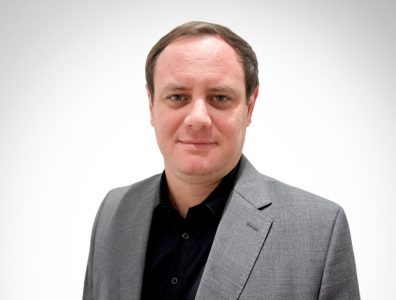
Mathieu Castellani, managing director of Ponticelli Nigeria (PNL), talks to The Energy Year about the company’s footprint in Nigeria and how it is contributing to new projects in the country’s oil and gas sector. Ponticelli provides industrial services mainly to companies in the oil and gas, energy, chemical, pharmaceutical and steelworks sectors.
Can you give us a breakdown of the footprint Ponticelli has in Nigeria and the milestones achieved by the company in the country?
Ponticelli Nigeria is a subsidiary of Ponticelli Frères Group, which has activities all over the world, with operations ongoing in Africa, including in Angola and Congo-Brazzaville (where, together with Nigeria, we have significant fabrication yards), and we are looking with increasing interest to initiate and expand our future activities in Mozambique and Namibia.
PNL was established in Nigeria in 1997 as the first affiliate of the Group outside Europe, and it runs as a Nigerian company with Nigerian partners. Soon after we started our activities in Nigeria, we delivered packages for the Group’s first major turnkey EPCIC project in Africa, the Obite Gas Plant interventions in OML 58, awarded to us by TotalEnergies, which back then was known as Elf.
Between 2007 and 2014, still for TotalEnergies, we were in a JV with Saipem to lead the OML 58 Obagi upgrade, which enabled an increase in production while respecting Nigeria’s federal government regulations concerning the burning of gas.
This led to better safety conditions and extended the lifespan of the existing installations and increased the amount of oil that could be recovered from the asset. It still is the largest contract ever awarded to the Group.
Between 2011 and 2016 PNL also executed an EPCIC contract in OML 102 for the modification and adaptation works on the existing Ofon offshore brownfield development.
Between 2018 and today, PNL has executed all turnaround maintenance for Chevron, including for the Escravos Gas Plant, FSO and Gas-to-Liquids facility, and for the Agbami FPSO.
How has PNL reorganised in recent years, and how does the company look to contribute to further developing Nigeria’s oil and gas sector?
PNL used to be the Group’s largest subsidiary, but in the last decade, we experienced a slowdown. I came here in November 2022 with one mission: to bring PNL back to its original splendour. In 2023, we underwent a reorganisation and restructuring process, and it was challenging, but now our operations started picking up again.
Chevron Nigeria (CNL) recently chose us to perform turnaround maintenance (TAM) on the Escravos Gas Plant, Escravos FSO vessel and Escravos Gas-to-Liquids facilities in OML 90. We have a very solid relationship with CNL, having delivered all their TAM works in the last five years.
Then, in November 2024 TotalEnergies awarded us a procurement, supply, construction and commissioning contract for the Ubeta development project in OML 58, specifically for a well pad and tie-in package to connect six new gas wells to the existing Obite plant to feed NLNG’s needs. It is a two-year project, and we are committed to delivering first gas in Q2 2027.
This undertaking shows the more positive and optimistic upstream environment, which is a consequence of several incentives launched by the Tinubu administration to finally start monetising the country’s gas resources. Ubeta in fact is not a new discovery. It is an old prospect, and only now is it turning into a commercial one. The federal government is making good progress in pushing both local and international players to increasingly invest in gas.
In 2024, presidential decrees were key to this success. Last but not least, we are involved in the HA project for SPDC, which we are currently doing with our partner Doris Engineering. Together we will work on the FEED for three new platforms that will be built.
How well equipped are you to take advantage of future opportunities, and what do you think makes the company stand out from other EPCIC companies?
We definitely see good opportunities ahead, and we are well equipped to take advantage of them. We have been in the country for almost 30 years, and thus, we’ve invested a lot in Nigeria. We have our fabrication workshops in Port Harcourt. We have built robust relationships with oil and gas players, particularly with IOCs. TotalEnergies, Chevron and Shell know us very well, and they know they can rely fully on us.
Talking about our main strengths, we manage all the aspects of our work, the whole chain. We rely on subcontractors and third parties as little as possible. We have two fabrication yards in Port Harcourt, which include 1,000 tonnes of scaffolding material, making us the largest scaffolder in the country; six cranes; and hundreds of pieces of equipment already in Nigeria, which can be delivered fast.
Then, we manufacture around 50 tonnes of steel structure per week, as well as about 3,000 inches of piping per week. It is the Group’s largest yard in the world.
Our fabrication yard has been recently reshaped to increase productivity. Consequently, we are very competitive, and we show our clients our commitment to supporting international projects, placing operational excellence and sustainability at the heart of our approach.
For example, as Bonga North recently reached a USD 5-billion FID, we are planning to expand our fabrication capabilities with dedicated quayside access. We are planning to open a new yard in Onne by the end of 2025, which will be dedicated to subsea fabrication.
PNL has invested in Nigeria since 1997, and as a reliable and responsible partner for the country, PNL continues to invest in Nigeria.
Can you walk us through what Ponticelli is doing concretely to promote the energy transition?
Ponticelli Group has been deeply committed to fostering sustainability projects all around Africa. For example, TotalEnergies hired us to build a 5-MW solar power plant in Afungi, in the province of Cabo Delgado, Mozambique.
Here in Nigeria, we are currently building another 5-MW solar plant with Saft battery storage technology for TotalEnergies at the Obite Gas Plant, which should be ready by 2025. It is an example of how we can support players in reducing their costs while contributing to a project in a way that reflects our strong values: innovation, respect for the environment and a positive impact on local communities.
OML 58 is in a challenging area logistically speaking, in the middle of a bush area. Since we have been working here for 30 years, we know the landscape, and we are familiar with the environment.
Finally, we have also supported TotalEnergies in ending routine flares at OML 100 in 2023.
All these are important elements that add real value in backing IOCs in their sustainability efforts, which in turn help the country in its energy transition journey.
What do you think should be improved to incentivise international contractors in Nigeria?
In the last 10 years, many international contractors left the country because of a decrease in business, fiscal instability and the very high local-content expectations.
To bring back international players, efforts should be concentrated on fiscal and local-content simplification. We know that the federal government is working on it, and it’s something that we carefully follow and support. Local content is important for us. PNL is a Nigerian company fully committed to developing Nigerian talent and fabrication capacities. Our investments over the years speak for us.
What targets have you set for the company’s growth, and what does the future hold for PNL?
In Nigeria, firstly we are targeting maintenance contracts. We’re looking at that market and how it is organised, as we have noticed that, besides PNL, there is no player that can provide full-range maintenance works. Maintenance players are PMT [project management team] companies delivering support services by subcontracting each activity without investing in the country.
We believe this model is old-fashioned, unsustainable and uncompetitive. Imagine that each time you need maintenance works, you must rely on a subcontractor or a third party, and when you do, you’ll need to charge a higher final price to the client, including multiple tax layers! As mentioned, our business model relies little on subcontracting. Our plans are to disrupt this model by fast-tracking maintenance programmes and reducing customers’ opex.
Secondly, we are looking at expanding our footprint in offshore projects, where new opportunities are springing up for engineering and fabrication companies, particularly in the areas of subsea fabrication equipment (e.g., well jumpers), topside for brownfield and hook up and commissioning.
Offshore brownfield works are our core business. They require a lot of preparation and skills since you are modifying offshore platforms without shutting down the installations.
Thirdly, we will keep running our onshore activities for our clients, TotalEnergies and Chevron first and foremost, as they are the IOCs that are still operating onshore assets. We have been working with them for years. They know how reliable we are, and we know how reliable they are.
When it comes to TAM [turnaround maintenance] or FFSD [full-field shutdown] contracts, for example, we are perfectly aware of how costly it can be to shut down an asset, so if we commit to delivering a project within a certain timeframe, customers can be sure that we will meet our deadlines.
Finally, our long-term plan is to bring PNL back to where it belongs, on top of the Group. We have big ambitions, the expertise and the knowledge to reach our goals, and we are the Nigerian reference company that can deliver complex EPCIC projects. Nigeria has started to unlock its potential, and we believe we can support the country along the way.
Read our latest insights on:
-

-

A new opening for African gas
INTERVIEW -

More content from Nigeria


Quality seismic decisions for Angola
INTERVIEW
Latest news and features



Latest Reports


The Energy Year Oman 2026
The Energy Year Kuwait 2025
The Energy Year Angola 2025
The Energy Year Nigeria 2025
The Energy Year Saudi Arabia 2025
The Energy Year UAE 2025

