
A trusted technology enabler in Nigerian oil and gas
August 12, 2025 Nigeria


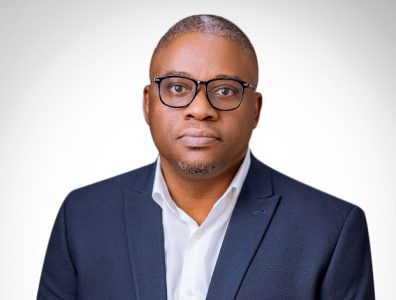
Akintunde Fadare, COO of Geoplex Drillteq, talks to The Energy Year about how the uptick in Nigeria’s upstream will impact the demand for the company’s oilfield services and how it is helping companies increase production. Geoplex Drillteq is an indigenous Nigerian company offering a wide range of oilfield services.
Can you give us an overview of your current services and clients and share your thoughts about how the uptick in the upstream will impact the demand for your services?
We believe that the demand for our services is on the rise. As one of the major full-stream oil and gas service providers in the country, we have actually been experiencing quite an increase, and we are gearing up for more.
Currently, we have an average of four wells per day serviced in Nigeria. As of March 2025, we are working on seven. To mention a few of our activities with some of the biggest operators, we are currently working for Chevron to provide cementing services for two of the IOC’s drilling rigs, as well as delivering wireline and slickline services for them.
We are providing drilling-rig, drilling-bit, electric-wireline and measurement-while-drilling (MWD) services for Shell, both on conventional wells and HPHT [high-pressure, high-temperature] wells. For TotalEnergies, we are providing electric-wireline, MWD and completion services, and we are collaborating with Seplat too. We have mobilised cementing equipment for its swamp activities thanks to a three-year contract we have with them.
We’re also working with NEPL, the upstream arm of NNPC, and delivering turnkey services for Pan Ocean. We just drilled and completed a well with our drilling rigs, as we likewise did for Heritage Oil.
What is Geoplex’s strategy for taking advantage of the evolution of the domestic upstream sector?
We are a leading indigenous oil and gas company, and the ongoing reshaping of the sector – including asset divestments, the entry of new players and upcoming licensing rounds – presents a unique opportunity for us. As a Nigerian company, this is our chance to demonstrate our capabilities, scale our operations and build the experience needed to one day become asset owners ourselves.
One of our core commitments is to equip our clients with the best tools and support to succeed. To do that, we must uphold and continually improve our standards. As multinationals gradually reduce their direct involvement, we anticipate a future where we can no longer rely on them to hold our hands. For instance, today IOCs often deploy QA/QC representatives to inspect our equipment before projects begin, a practice that may not continue indefinitely.
At Geoplex, we are proactively preparing for this shift. We are strengthening our internal quality control and assurance systems to ensure that, even without external oversight, our performance remains world-class. We are not aiming to merely sustain efficiency – we aim to exceed it.
Ultimately, our goal is to drive greater production success for our clients because when their output increases, so does our value and impact. That’s why we’re already implementing the changes needed to elevate our service delivery to the next level.
Can you give us some insights into how you plan to help companies step up production?
We have realised that to make our services more efficient and of higher quality than they used to be, they have to be done using the latest technologies and innovations. If we do it the same way we used to do it, then we are going to get the same result. We have a slogan of “technology enablers.”
What that means is that, if any technology will help improve our work, we need to create an environment that will allow us to use that technology to its full potential. We are reaching out to technology developers to evaluate partnership opportunities. Internally we set a KPI to introduce three technologies in 2025 that will enable us to perform better and faster.
Regarding the first introduction, we have established a partnership with Interwell, a global leader in well-barrier and intervention solutions. Through this collaboration, we’re introducing an innovative slickline-enabled technology that allows for plug setting with just one slickline run instead of two.
This significantly reduces operational time and lowers the risks associated with multiple well entries. We represent Interwell here in Nigeria and are actively showcasing this solution to our clients, demonstrating its value and encouraging early adoption.
For the second introduction, we are in discussions with NOV about a technology for managing torsional vibrations. These are a common problem when you drill. They reduce the lifespan of the tool used to drill and lead to more frequent equipment failures and trips to change pieces. That is lost time. Geoplex is currently working to make both of the mentioned technologies available on the Nigerian market.
We plan to bring a final technology on line by mid-2025. We are evaluating a solution that allows us to deploy real-time sensors on a slickline unit, meaning that some of the intervention work can be done using only one unit rather than several, cutting customers’ production costs and reducing their carbon footprint. Additionally, with respect to decision making, it will help by allowing users to see data in real time.
How difficult is it to facilitate the spread of these new technologies in Nigeria, and what are Geoplex’s competitive advantages when it comes to selling them?
First of all, let me say that not all technology is applicable to a specific market. We take our time to analyse the various available solutions based on our experience to see which have the greatest potential added value. Once we have quantified and estimated the added value of a given technology and assessed the risks and possible measures to decrease that risk, we present it to our clients. Only then do we deploy it.
For every client that is reluctant to embrace a new technology, there is a reason. What is the reason? It is the associated risk. When you are unable to show them the value, you will spend forever trying to sell it. We put ourselves in the shoes of the client, asking ourselves first what innovation does this technology bring and can we defend it?
Trust is crucial. In Nigeria, some players became reluctant about new technologies due to bad past experiences where they got their fingers burned. A new company bringing in a technology to Nigeria will not find it as easy as Geoplex would because we have a trustworthy reputation. We are bringing in technologies that are proven, and our reputation helps us bring in the next one and sell it.
Secondarily, we are a turnkey provider. We take a project from cradle to grave, and we share the risk with our clients when we introduce a new technology. This is something that not many companies can do. However, that has helped us develop and deploy new technologies.
Finally, it is easier for us to sell new solutions because of our tight relationship with manufacturers. We let them know what is desired here in Nigeria. I can call and tell them what is needed, and by the time we have the technology deployed, we have a win-win-win for us, the OEM and the client.
What is the company’s growth plan, and to what extent will Geoplex support the country in mitigating some of the challenges it is facing?
We want to grow in an organic way. Following the 2020 marginal bid round, we have a 40% interest in the Ndibe field (OML 67). Being more proactive and directly engaged in E&P is something that we are evaluating at the moment. The operatorship opportunity is intriguing and is part of the plan since we would not be dependent on any service company.
This company will most likely not be Geoplex, but it will have Geoplex’s brain and lessons learned in it. However, sustainability needs to be at the centre of such a growth plan because it is not just a matter of owning a block. It is also about producing in a cost-effective way and having the right resources.
We learned from our mistakes after working for so many years with big players such as Shell, Agip, TotalEnergies, Chevron and international oilfield service providers such as SLB and Halliburton. Providing the advanced services and technologies that they have can help us optimise production and, most importantly, reduce production costs, which is one of the biggest challenges Nigeria is facing.
At the moment, the production cost per barrel is high (between USD 25 and USD 48). It is not sustainable and is curbing investor interest and field profitability. We are aiming to bring the cost down to a single digit per barrel. We believe that is doable.
Read our latest insights on:
-

-

A new opening for African gas
INTERVIEW -

More content from Nigeria


Quality seismic decisions for Angola
INTERVIEW
Latest news and features



Latest Reports


The Energy Year Oman 2026
The Energy Year Kuwait 2025
The Energy Year Angola 2025
The Energy Year Nigeria 2025
The Energy Year Saudi Arabia 2025
The Energy Year UAE 2025

