
Attracting international capital to Saudi renewables
February 26, 2026 Saudi Arabia


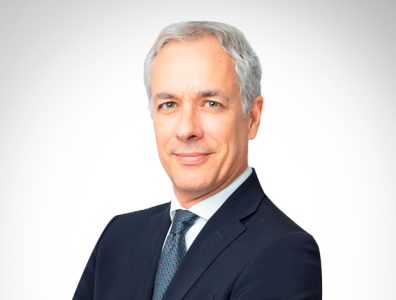
Marco Arcelli, CEO of Acwa, talks to The Energy Year about the growing role of international finance in Saudi power projects and why regulatory support is essential for green hydrogen markets to flourish.
Acwa develops and operates power generation and desalination assets in the Middle East, Africa and Asia.
- One of the main challenges for the next phase of Saudi Arabia’s renewables expansion will be attracting a more diversified group of financial institutions to fund projects.
- Taking into account the stable pricing of power from renewable sources and the fluctuations of gas prices, green hydrogen from Saudi Arabia is competitive with grey hydrogen in Europe.
- While renewable power prices have likely reached a floor, the cost of battery storage systems can be expected to continue declining.
What main factors drove Acwa’s financial results in 2025?
As a company, we develop, invest in, operate, and optimise assets, with optimisation including both performance enhancements and refinancing. In 2025, we had success across all our core activities. We added approximately 25 GW of power generation capacity and 2 million cubic metres per day of water desalination capacity, a figure that matches our combined total for 2023 and 2024. In fact, over the past three years, we have achieved the same capacity growth as we did over the previous 18 years.
Our pipeline has also grown, and we now have more than 40 GW under construction, representing close to USD 45 billion in value. Our overall portfolio is valued at approximately USD 115 billion, with 35% of that in operation, 50% under construction, and the remaining 15% consisting of projects for which we have signed PPAs and are in advanced stages of development. We pursue a diversified mix of assets that allows us to grow while offsetting risks.
What are the primary financing challenges for renewable projects in Saudi Arabia?
The primary challenge is to broaden the group of financial institutions involved in these projects. Saudi Arabia is undergoing a major energy transformation, and we are working to attract both FDI on the equity side and international financial institutions on the debt side.
The NEOM Green Hydrogen Project was one of the world’s largest project financing deals and saw the participation of Japanese and US banks, among others. We just closed the refinancing of another plant in Saudi Arabia that, for the first time, saw private debt issued to US insurance companies as a long-term, low-risk, stable cash flow. Korean financing is being mobilised for our partnership with Korea Electric Power Corporation on combined-cycle projects. Global engagement is essential to deliver projects at scale.
How do you assess Saudi Arabia’s 2030 energy mix targets and its potential as an exporter of clean energy?
Saudi Arabia is pursuing a 50-50 mix between renewables and natural gas in power generation by 2030, and we are playing a key role in this transition. On the gas side, we have 12 GW of combined-cycle capacity under construction – likely the largest such programme worldwide – and we are the largest customer globally for major gas turbine manufacturers.
On the renewables side, we are on track to deliver 70% of Saudi Arabia’s capacity target under the PIF programme, which is aiming for about 130 GW. We currently have more than 35 GW in operation or under construction.
Saudi Arabia benefits from exceptional solar irradiance, and the idea is to leverage this potential together with land availability, ease of permitting and low costs to supply competitive green electricity and hydrogen abroad. EnBW from Germany is a co-developer of the Yanbu Green Hydrogen Hub, for which we expect to complete FEED in Q2 2026, and we have a feasibility study under way with European partners for exporting electricity to Europe. We have also signed an MoU with Japan’s Itochu for collaboration in renewables, green hydrogen, and water.
What is your view on the evolution of the green hydrogen segment and its role in decarbonisation?
Emissions from power generation have declined 40% over the past 15 years, but emissions in other sectors have increased, and green hydrogen and ammonia are currently the only scalable solutions for hard-to-abate sectors such as steel and fertilisers.
China is currently leading the hydrogen race. It has the resources to develop hydrogen domestically and is making substantial investments. It will likely grow faster than any other market in the next five years. Europe, Japan and Korea are potentially strong, but they must move quickly.
In Europe, delays in establishing hydrogen networks and aligning national legislations risk undermining the market. Without swift action, Europe could end up importing Chinese hydrogen instead of sourcing it from partners in countries such as Saudi Arabia.
Green hydrogen from Saudi Arabia is already competitive with grey hydrogen in Europe, especially when considering price stability. While gas prices have fluctuated from EUR 30 to hundreds of euros per MWh, green sources offer fixed prices for 30 years, which contributes to long-term pricing and supply security, and allows downstream industries such as steel, automotive manufacturing and chemicals to plan investments with confidence.
The pace of adoption will be determined by regulation. Renewables are no longer developed for ideological reasons – today, they are the fastest, cheapest and simplest source of energy – but hydrogen adoption will require regulatory support. It will certainly happen at scale; the question is when.
Have renewable costs bottomed out?
We believe renewable energy prices have likely reached a floor for now, primarily due to two reasons. First, the sector is capex-intensive, and costs are increasing with key commodities as well as interest rates. Second, installation costs have stabilised as Chinese suppliers seek to maintain profitability across the supply chain. The cost of battery storage, on the other hand, has dropped significantly over the past two to three years, and we expect that trend to continue.
How does desalination factor into your global strategy?
Acwa is the largest private desalination company in the world. We have built our expertise in Saudi Arabia’s well-regulated market, winning every bid we have participated in. We are now expanding globally, with large-scale desalination contracts signed in Azerbaijan and Senegal in 2024, and opportunities emerging in North Africa, Southeast Asia and China.
There is a misconception that desalination is costly. Today, we can produce desalinated water at USD 0.35-0.70 per cubic metre, depending on the cost of the energy used to produce it. In comparison, households in countries such as Italy pay EUR 1.00-1.50 per cubic metre. Moreover, traditional water supply from mountain reservoirs utilises pipelines that consume significant energy and lose 30-40% of the water they carry. Desalination can be a competitive solution when viewed over the full chain of delivery.
Read our latest insights on:
More content from Saudi Arabia



Quality seismic decisions for Angola
INTERVIEW
Latest news and features



Latest Reports


The Energy Year Oman 2026
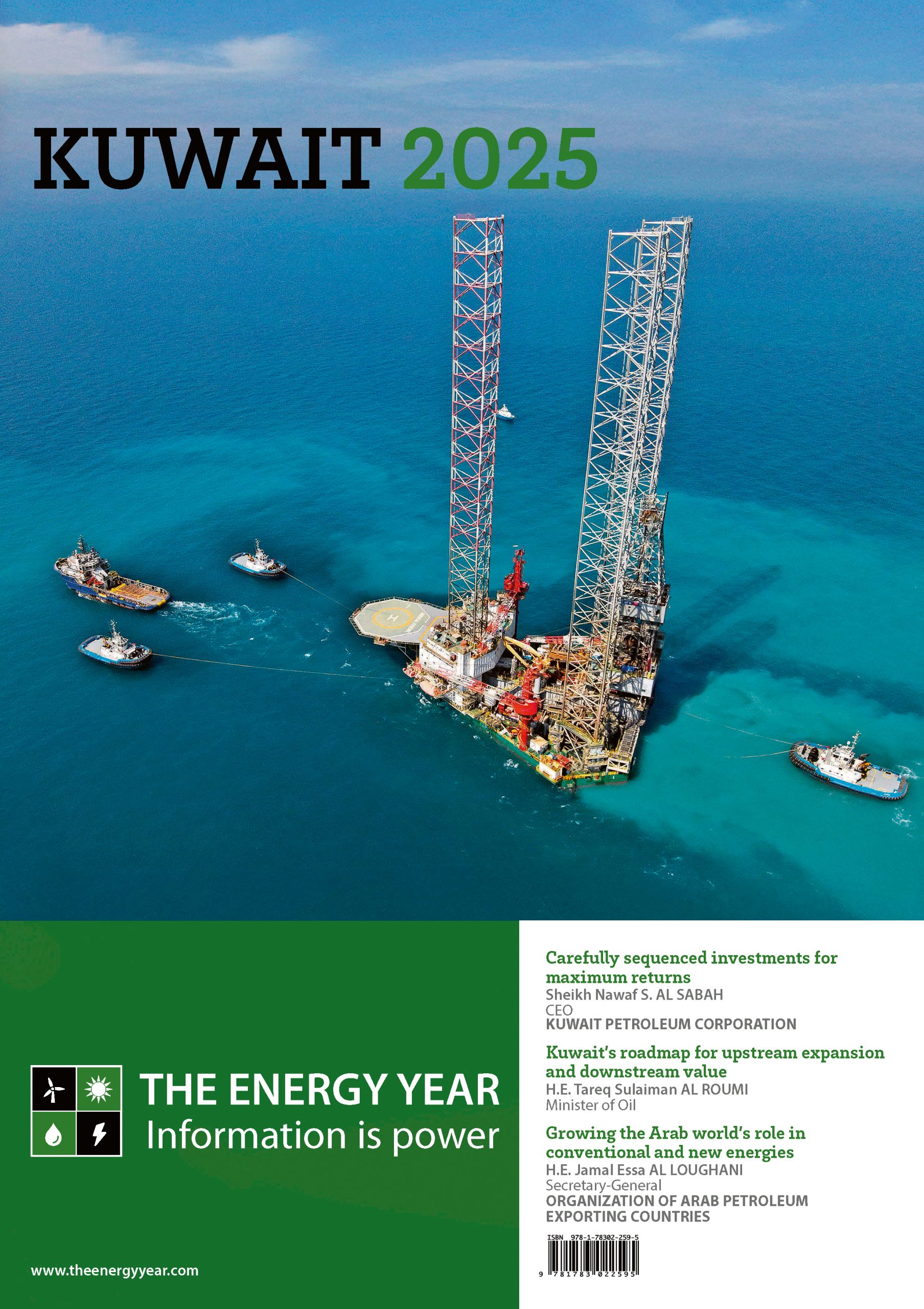
The Energy Year Kuwait 2025
The Energy Year Angola 2025
The Energy Year Nigeria 2025
The Energy Year Saudi Arabia 2025
The Energy Year UAE 2025

