
Creating value from waste in Kuwait
August 27, 2024 Kuwait


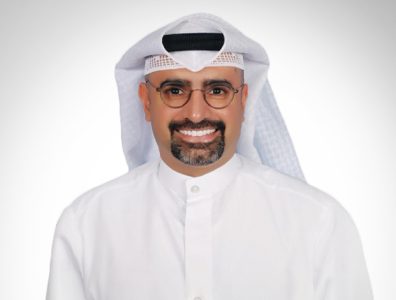
Barak Al Maraghi, vice-chairman and CEO of Al Dhow for Environmental Projects, talks to The Energy Year about promoting the use of recycled materials in construction and recent encouraging developments in wastewater management in Kuwait. Al Dhow is a Kuwaiti engineering and environmental services company with activities in the construction, industrial and oil and gas sectors.
How does Al Dhow contribute to addressing water scarcity challenges in Kuwait?
Water scarcity presents a significant challenge in Kuwait because groundwater reserves are limited. Viable initiatives are needed to produce clean water for agriculture and the population at large. As for our direct contribution to addressing water scarcity challenges in Kuwait, we have successfully commissioned several wastewater treatment projects.
We have also supplied recycled aggregates used in the construction of the infrastructure needed for other wastewater projects. We have extensive sector expertise and operate Kuwait’s largest recycling facilities, so we can contribute to such critical initiatives.
Does the company have any involvement in waste management?
Al Dhow has two facilities that together produce about 600,000 cubic metres of recycled materials annually. Located next to a construction landfill, each facility occupies approximately 50,000 square metres and handles around 2,500 tonnes of construction waste daily. We have them under a build-operate-transfer arrangement with the municipality and the Kuwait Ministry of Finance.
In our recycling process, we segregate, crush and screen materials into a range of sizes suitable for various construction applications, including backfilling and pipe bedding, transforming them from waste into useful resources.
We recently obtained approval to incorporate our aggregates into cement blocks, allowing us to make construction materials that are more cost-effective and sustainable for end users, and allowing us to support Kuwait’s goal to reduce imports of such materials.
This led to the acquisition of our block manufacturing company, Jiblah for Advanced Industries, which is a leader in the market for building materials in using sustainable materials to improve the quality and durability of building products.
Who are your main partners and clientele?
Our clientele is primarily government entities, industrialists, developers and contractors, including well-established firms approved for tenders by the Central Agency for Public Tenders. We have relationships with various prominent construction companies, both national and international.
We collaborate with several international partners from Europe, the US, the UK and the Far East. We have worked on many projects in Kuwait with companies that are global leaders in environmental services and water solutions engineering.
Does Al Dhow have any involvement in the promotion of renewable energy use?
We continuously propose green technologies and are seeing that the market for renewables is gaining momentum. Previously, the opex for a solar generation or wastewater treatment installation was too high to be appealing to private-sector companies and those investments were not carried out.
However, reductions in opex and operating costs have made it more likely for private entities to adopt such technologies and the shift towards renewables is becoming more pronounced.
Public-sector companies, on the other hand, have a different perspective because they have emissions reduction targets. However, they generally have to bear the full cost of electricity, rather than the subsidised prices that private entities and individuals face.
What are some of your current renewables projects?
Our experience includes private-sector and government work. We are particularly active in PV systems, which we have installed in more than 60 government buildings in new residential cities. Overall, we have installed approximately 10 MW. At the moment, we are working with the MEWRE [Ministry of Electricity & Water & Renewable Energy] on some packages for the Shagaya Renewable Energy Park.
We’re also hoping to collaborate on a project that is currently in the study and design phase that contemplates converting organic waste from the Seventh Ring Road landfill into biofuel. Part of the biofuel will be used domestically to generate power and part will be sold to international companies.
Besides this, the MEWRE has introduced three additional solar packages for a total capacity of 1 GW, which is a significant advancement. With vast tracts of unused land available and government plans to establish new free zones to attract investors, there is much potential for solar projects.
The project I’m most proud of is the industrial wastewater treatment and reuse facility we constructed for a state-of-the-art carton manufacturing plant with our partner from the Netherlands. It is for industrial water and its recovery rate is up to 93%, well in line with client requirements and EPA [Environment Public Authority] regulations.
This project’s excellence was recognised in 2021 when our company received the Arab Planning Institute’s Sustainable Production and Consumption Award in the energy and water conservation category.
Recently, there have been initiatives supported by government subsidies to repurpose inorganic waste. One notable project involves the Kuwait Cement Company, a substantial energy consumer, and the plan is to utilise inorganic waste from the landfill in Mina Abdullah as an energy source.
How is the demand for recycled waste materials evolving?
Local demand for recycled waste materials, particularly for construction purposes, is high. Major contracting firms frequently engage with us for infrastructure projects, where our materials are typically used in the mix for backfill.
Our primary goal is to elevate the status of these resources and increase their utilisation in both construction and industrial projects. We are constantly investing in equipment and machinery to refine our production and increase output, and we plan to expand our facilities to meet growing demand, which will be primarily driven by government initiatives to build residential housing.
Our plan hinges on obtaining some approvals from the government and meeting additional standards so our materials can be used in construction in the GCC and internationally.
What are Al Dhow’s expansion goals?
We have been present in the UAE since 2003 through our subsidiary Industrial Quarry & Cement, which owns a limestone quarry concession in Fujairah, and we established an operational branch of Al Dhow in the country in 2023. We are co-ordinating with partners to open an engineering office in Saudi Arabia which I anticipate will launch in early 2025. Both markets have numerous environmental initiatives under way and hold much promise for us.
Read our latest insights on:
More content from Kuwait





Quality seismic decisions for Angola
INTERVIEW
Latest news and features



Latest Reports


The Energy Year Oman 2026
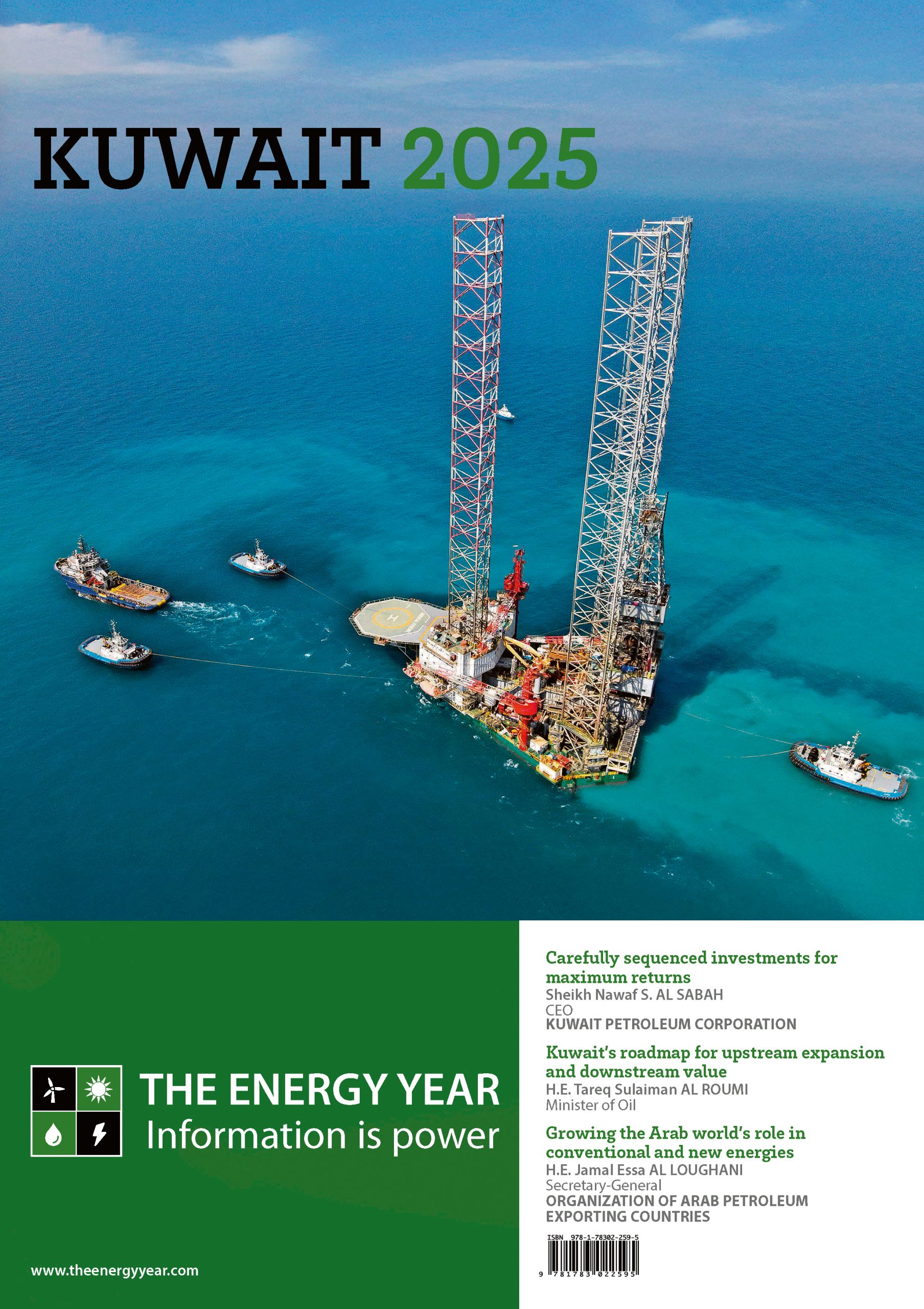
The Energy Year Kuwait 2025
The Energy Year Angola 2025
The Energy Year Nigeria 2025
The Energy Year Saudi Arabia 2025
The Energy Year UAE 2025

