

Cross-border infrastructure for the UAE’s growing gas demand
November 18, 2024 UAE
UAE 


Obaid Abdulla Al Dhaheri, CEO of Dolphin Energy, talks to The Energy Year about building infrastructure to support the UAE’s growing energy needs and the important role that gas can play in decarbonisation efforts and the global energy transition. Dolphin Energy produces, processes and transports natural gas from Qatar’s North Field to the UAE and Oman. It is majority-owned by Mubadala Investment Company, with TotalEnergies and Occidental Petroleum holding minority stakes.
Dolphin Energy owns the only international gas network in the region. How do you see the role of natural gas evolving in the coming years?
While we are seeing a strong uptake of renewables across the region, natural gas is expected to be the most prevalent energy source. According to the Gas Exporting Countries Forum, gas demand in the Middle East is expected to rise by 1.5% per year to reach 855 bcm [30.2 tcf] by 2050.
In the UAE, steps to decarbonise the economy with investments in renewables and nuclear are very much evident. At the same time, gas demand in the UAE is expected to increase by 7 bcm [247.2 bcf] over the same period, driven by industrial demand, petrochemicals and low-carbon hydrogen production.
What role does automation play in your two offshore platforms?
Automation is integral to our process controls, process safety and technological advancement. It plays a role in handling multiple digital inputs which in turn enhances the overall performance of live data collection and processing. Dolphin Energy’s two offshore platforms are not normally manned, and the various systems and software used enable both platforms to operate in an agile manner.
Systems that cover well and pipeline integrity management, process controls, process and emergency shutdowns, and a real-time operational database help maintain the integrity and availability of the management system and the assets for efficient, safe production activities.
How important will AI be for Dolphin Energy in the coming years?
AI carries enormous potential, and we are in the process of deciding how best to utilise it across the company so that it offers opportunities to unlock new efficiencies and drive innovation.
One example is our Smart Plant Study which will help drive operational value and efficiency. As a part of this study, the Plant Data Model – which we will start implementing soon – will offer data-driven decision making for efficient, reliable operations and maintenance.
Adopting AI solutions is an evolution of our digital transformation journey which started in 2018. Since then, we have taken decisive steps to digitise many aspects of our operations and business processes. AI is a natural next step and represents an exciting new journey for us.
What role do local maritime service companies play in your subsea maintenance procedures?
Given the strategic and operational importance of the export pipeline to energy security, it has been vital to partner with companies for pipeline integrity management. This has seen us work closely with third parties such as the Consolidated Contractors Company for Underwater Engineering, the Rosen Group and Milaha, which is part of Qatar Navigation.
The services offered by these valued contractors could also support an initial damage investigation or assessment should an incident occur on our export pipeline. In such a situation, we would mobilise our emergency pipeline repair system ASSIST (Advanced Subsea Intervention Support & Technology) to repair the damage.
The advantage of ASSIST is that it features a diverless subsea launcher and receiver, which helps shorten the repair duration by having the necessary methods and tools at its disposal and ready. This means gas loss is minimised and production is restored as quickly as possible.
Two of Dolphin Energy’s pipelines, the Taweelah-Fujairah Pipeline (TFP) and the Al Ain-Fujairah Pipeline (AFP), distribute gas to the Emirate of Fujairah. What strategic role does the Emirate of Fujairah play for Dolphin Energy?
Fujairah is important to us because of the role it plays in supporting the needs of the UAE. The emirate has the capacity to produce around 2.96 GW of electricity and 263 million imperial gallons [995.6 million litres] of desalinated water. This capacity is being expanded to potentially reach 5.4 GW. As such, the Fujairah Water and Electricity Generation Complex makes a significant contribution to the unified power grid in the UAE.
Dolphin Energy initially built the 24-inch, 182-kilometre AFP to supply gas to EWEC’s [Emirates Water and Electric Company] first power plant in Fujairah. As demand for power in the country increased, Dolphin Energy supplied additional volumes to Fujairah by building the 48-inch, 244-kilometre Taweelah-Fujairah Pipeline. Together, AFP and TFP mean we are capable of meeting EWEC’s existing and future gas demands in Fujairah.
How is Dolphin Energy contributing to UAE’s Net Zero 2050 Strategy?
Natural gas is seen as a transitional fuel in the global shift to lower carbon emissions. Compared to coal and oil, gas produces fewer carbon emissions per unit of energy. Since the launch of our decarbonisation programme in 2022, we have been exploring initiatives to reduce fuel usage, minimise flaring upstream, upgrade our operations’ infrastructure to more energy-efficient technologies and utilise renewable energies, such as solar power, where applicable.
Given that methane is a potent greenhouse gas, reducing methane leaks in our gas operations is a priority for our decarbonisation roadmap. We are implementing technologies for methane detection and reduction both upstream and downstream. In 2023, we signed the Oil & Gas Decarbonization Charter, demonstrating our alignment with UAE policies promoting sustainable energy transitions.
We have also implemented robust sustainability reporting practices to track and report on Scope 1 and Scope 2 emissions, and we have a plan to address Scope 3 emissions – direct, indirect and value chain emissions – to ensure that emission reduction goals and targets are met.
What milestones would you highlight from your operational track record?
Looking back at what Dolphin Energy has achieved, one of the most important aspects throughout our journey has been the partnerships that we have formed, nurtured and developed. From the outset of the Dolphin Gas Project, partnerships have underscored our progress and our success.
Without our shareholders, strategic partners, vendors, sponsorship partners and employees, we would not be who we are today. As we deepen our commitment in key areas such as digital transformation and ESG, the partnerships we share and the new ones we develop will be as important.
Looking forward, what is your vision for Dolphin Energy for 2025 and beyond?
The focus of our strategy in 2025 and beyond is to expedite efforts across a number of areas. These include adhering to the highest health and safety standards, advancing in our journey to mitigate climate change and protect the environment where we operate, meeting stakeholders’ expectations, prioritising our people and leveraging our digitalisation and AI ambitions. Doing so will further highlight our long-term sustainability and ESG commitments to the region.
Read our latest insights on:
-

How the UAE is building its future
INTERVIEW -

-

More content from UAE




Quality seismic decisions for Angola
INTERVIEW
Latest news and features



Latest Reports


The Energy Year Oman 2026
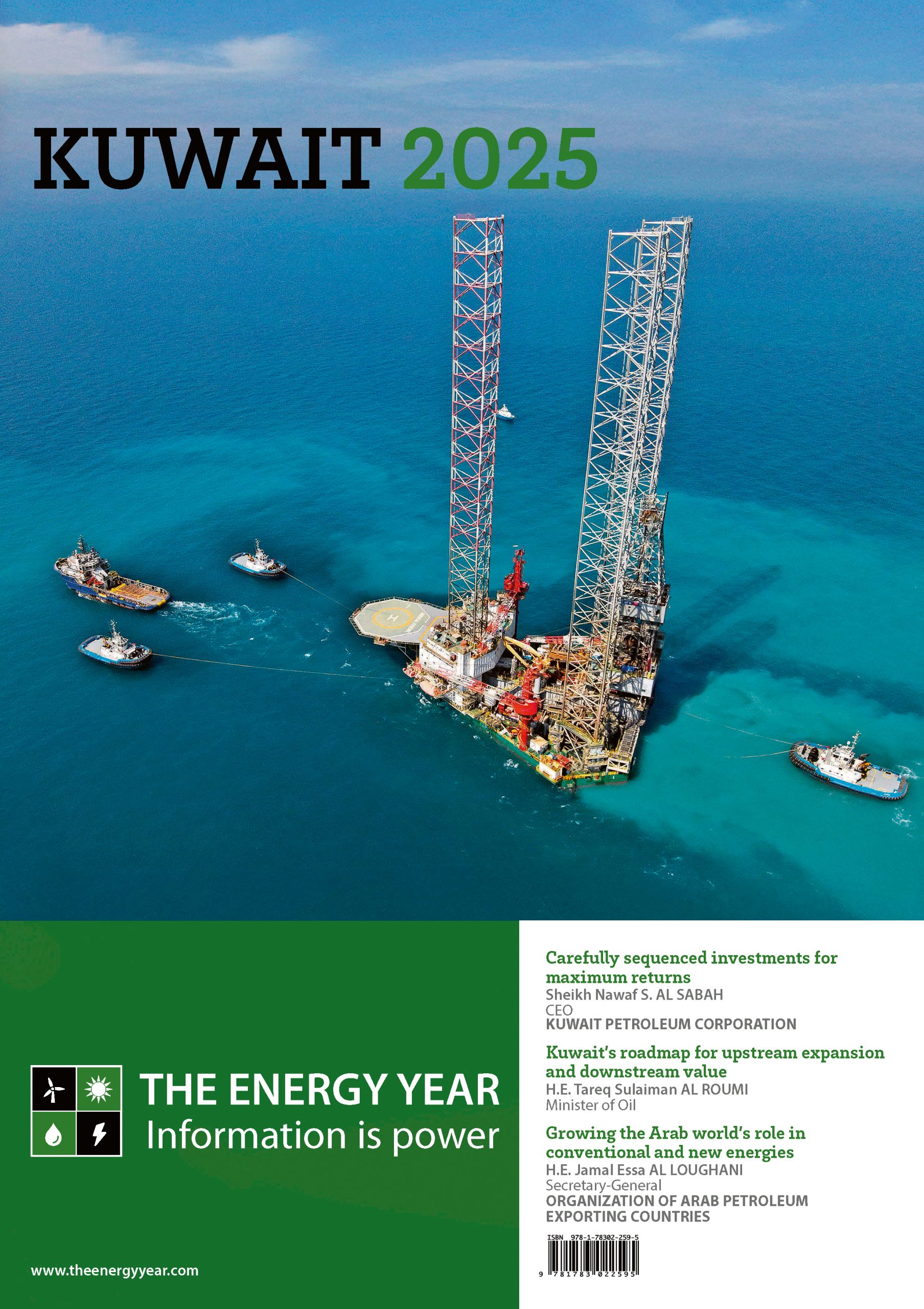
The Energy Year Kuwait 2025
The Energy Year Angola 2025
The Energy Year Nigeria 2025
The Energy Year Saudi Arabia 2025
The Energy Year UAE 2025

