

Building long-term value in Africa’s energy markets
July 31, 2026 Multinational


Marc Starké, Senior Vice-President for Africa at Newrest, talks to The Energy Year about the company’s long-term growth strategy in Africa, the importance of logistics and local capacity building, and emerging opportunities in LNG, offshore energy and critical minerals.
Newrest is one of the largest out-of-home food service and catering companies in the world.
- Long-term commitment is a competitive advantage in African energy markets. Oil, gas and mining projects often face long development timelines, price cycles and execution delays, rewarding service providers that establish an early presence and remain invested through downturns.
- Reliable logistics can determine the success of remote energy operations. Moving food, equipment and personnel across difficult geographies requires resilient supply chains that can maintain service quality despite infrastructure constraints and changing operating conditions.
- Local content is shifting from ownership targets to meaningful capability building. Governments and operators increasingly expect contractors to train local workers, develop domestic suppliers and transfer expertise that continues to create value after a contract ends. Energy operators are increasingly seeking integrated remote-site services. Combining catering, facility management, housekeeping, logistics and workforce-wellbeing services allows clients to reduce supplier complexity while improving productivity and living conditions at isolated sites.
- Successful market entry requires strong local partnerships and disciplined risk management. Partners must understand the capital intensity, delayed returns and operational demands of remote projects, while international companies must remain willing to exit when market conditions no longer support a sustainable model.
- Africa’s next industrial-services growth wave will follow LNG, offshore oil and critical minerals. Mozambique’s LNG projects, Namibia’s offshore discoveries, Nigeria’s energy sector and Zambia’s copper expansion are creating opportunities for companies that position themselves before major developments enter execution.
Newrest has expanded rapidly across Africa over the past decade. What have been the key drivers behind the company’s growth in the continent?
Over the past 10 years, we have expanded into 17 African countries, so our growth has been extremely rapid. Our first contract was in Liberia, supporting ArcelorMittal’s iron ore mine in the north of the country. From there, we expanded into Mauritania, Cameroon, Gabon, the Democratic Republic of Congo, Angola and Madagascar, with almost all those operations centred on energy and mining projects.
A major milestone came when we completed an acquisition that significantly strengthened our inflight catering network while also expanding our remote site services activities. That opened new opportunities in countries including Nigeria, South Africa and Zambia.
Uganda is another good example of how our strategy has evolved. We entered the market around 15 years ago through our inflight catering business, and when TotalEnergies discovered oil, we were already well-positioned to expand into remote site services.
Our approach has remained consistent. Whenever we enter a new African market, we first assess whether we can establish ourselves independently or whether we need a local partner with a strong understanding of the country. We then enter through one area of expertise – inflight catering, remote site services or contract catering, for example – and build from there. At the same time, we have never been afraid to exit markets when circumstances change. That has been key. We have closed operations in Cameroon, Algeria, Mauritania, Gabon and Liberia, among others. I always tell our management teams that it is just as important to know when to leave a market as it is to know when to enter one.
In Africa, you must remain pragmatic. After many years of operating on the continent, you develop a good understanding of where you have a long-term role to play and where you do not. In many of the countries we exited, our clients adopted increasingly stronger local content requirements which we fully understand and support. However, each market evolves differently, and in some cases, we concluded that our long-term strategy was better focused elsewhere.
Today, we are the only truly international catering company operating across Africa. Many of the large international players have left the continent because they saw greater opportunities elsewhere. We have remained committed to Africa because we understand how to operate here, and we are prepared to invest for the long term.
How central is Africa to Newrest’s diversification beyond aviation, and what role does the energy sector play in that strategy?
Our strategy has always been anchored in a 50-50 ambition: to balance our revenue between inflight catering with other activities, including remote site services, contract catering and related businesses. That objective has naturally pushed us to develop stronger capabilities.
Diversification has been driven by our people on the ground, teams with strong local knowledge, commercial instincts and the ability to identify opportunities. That is how we expanded into markets Mauritania and Liberia early on, and why we were able to build momentum across Cameroon, the Democratic Republic of Congo and other countries in relatively quick succession.
In many parts of francophone West Africa, the presence of established French industrial clients such as TotalEnergies, Perenco and Technip Energies created an ecosystem that allowed us to establish operations step by step and build credibility.
Angola is the perfect example. We started from a very small base and gradually scaled by working closely with key clients and earning their trust. Our growth in Africa has been incremental, relationship-driven and built on execution.
We have also learned that entering a market requires speed and pragmatism. We do not over-engineer our entry strategy.In most cases, we go in directly and learn how the market operates from the field. That approach makes us more agile thancompanies that rely heavily on external advisory structures for entering.
Of course, this also means accepting risk. African markets often require significant upfront investment, particularly in infrastructure and logistics. In some cases, capital cannot be repatriated easily. You need to be patient and take a long-term view.
That said, the continent represents around 10% of Newrest’s global turnover, and the profitability is attractive. The energy industry remains a key driver of growth across the continent, and we continue to see strong potential in mining-related services.
Angola has become one of Newrest’s most important markets in Africa. What has driven your success there, particularly in the energy industry?
Angola has been a long journey for us. People often forget that the market went through a major downturn in 2015 when the oil price collapsed. Many operators scaled back significantly, and the country became extremely challenging for service providers.
Despite that, we stayed and continued to build. We started with offshore operations, where expectations are high and standards are demanding. Over time, we proved our ability to deliver consistently in that environment, which allowed us to expand into onshore operations and eventually into mining.
Today, Angola is one of our flagship countries in Africa. We continue to work with major clients such as Chevron and have expanded our portfolio to include offshore, onshore and mining-related contracts. We have strengthened our position with projects in Cabinda and partnerships with McDermott, Sapura and Catoca in the mining sector.
A key element of our success has been logistics. In Angola, if you do not have a strong and reliable logistics backbone, you cannot operate effectively. We have built an extensive supply chain that allows us to move goods and services across extremely challenging geographies, including daily transport routes into Cabinda.
We have also invested heavily in workforce development. We established a centre in Angola where chefs, housekeeping teams and operational staff receive structured training. This supports knowledge transfer, allowing culinary expertise and operational best practices to be shared across teams, has been critical in ensuring that we can scale sustainably while maintaining service quality.
Ultimately, our model is based on localisation and capability building. By training and empowering local teams, we can ensure continuity, improve performance and expand our operations more effectively across the country.
That said, Angola remains a highly dynamic and sometimes unpredictable market. Conditions can change quickly, so agility is essential. Nothing in Angola is ever truly stable, which is why operational flexibility is so important for us.
Newrest is known for its integrated site services model for remote sites. How does this approach differentiate you in markets such as Angola and Nigeria?
In mining, particularly with a major operator such as Catoca, the scale and expectations are extremely high. These are world-class operations, and you need to be fully aligned with their service delivery, pricing and reliability standards.
We follow an integrated services model. We are not just providing catering; we are trying to bring the site to life. In many remote camps, you often see very basic environments that are functional but lacking a real sense of comfort or community. Our objective is to change that experience by introducing an ecosystem of services that can include retail, wellness or recreational areas. The idea is to make these sites more liveable for people who are often working up to 28 days at a time in remote locations.
We also focus on creating a sense of daily life and engagement. This can include dedicated staff who plan activities and see to the well-being of the workers, ensuring that they have a better overall experience while they are on site.
At the same time, we remain a fully integrated service provider. Catering is at the core, but we extend well beyond that into broader facility management services. This integrated model is increasingly important, particularly as clients themselves look for fewer suppliers and more consolidated service delivery.
This ambition was reinforced in 2025 with the integration of GEPSA, a leading French hard facility management company specialising in sensitive sites. The move strengthened the facility management expertise we have gained over many years in Africa and deepened our multi-technical and multi-service capabilities, particularly in highly demanding operating environments.
Of course, we are not alone in these markets. Competition in Angola’s mining and remote site sectors is increasing, and new local players are emerging who understand the environment very well. However, many of them are still in the process of building scale and workforce capabilities. Our advantage lies in our experience, logistics reach and established workforce. We have a much larger trained base, and that allows us to deploy teams quickly and maintain consistency across large and complex operations.
Following Newrest’s recent takeover of Compass Group’s operations in Mexico, Colombia and Chile, are you pursuing similar acquisitions in Africa?
Over the past decade, the catering industry has seen much consolidation. Many regional players have been acquired by larger international groups, including French and Italian companies. Interestingly, consolidation only really started to extend into Africa well after we had already established ourselves on the continent. We looked at several of the same assets that later became part of other groups, but we ultimately decided to follow a different path. We believe we already have the right formula for Africa, so rather than acquiring companies, we have prioritised organic growth.
Our approach is to be seen as a credible and reliable partner for local shareholders and operators. In many cases, we can attract partners who are aligned with our way of doing business and who bring complementary strengths to the table.
In many African markets today, regulations increasingly require local participation – often 51-49 structures – which we fully respect and integrate into our model. We see this as a positive development. It helps accelerate market entry and ensures that we are working with the right local counterparts from the outset. What matters most for us is finding partners who understand that the business is capital-intensive and requires patience. Ultimately, our focus remains on sustainable organic growth. We prefer to build our footprint step by step, develop local teams, and grow client relationships over time rather than rely on acquisitions. We believe we already have the right structure and experience for Africa.
What do you look for when selecting local partners in African markets?
Generating sustainable profit in this industry is not straightforward, and most of our partners understand that reality from the outset. We are not talking about a business that generates quick returns. It is capital-intensive, particularly in remote and inflight operations, and it requires significant upfront investment before any meaningful return is seen.
Therefore, the first thing we look for in a partner is a clear understanding of our industry. We need people who understand that patience is essential, both for building operations and in making profits.
The second factor we look for is trust in our model. We employ large workforces, manage complex supply chains andoperate in difficult environments. Partners need to understand that this is operationally intensive and requires consistent reinvestment.
The third element is alignment on growth. We want partners who are not only financially aligned but also aligned with our ambition and long-term commitment to countries. In most of the markets where we operate, we have been able to identify the right partners.
What are Newrest’s main expansion priorities in Africa for 2026?
Looking forward, there are a few markets that stand out. Mozambique is one of the most important. It has been discussed for many years in the context of LNG, but now we are finally seeing real progress, particularly with major operators such as TotalEnergies and ExxonMobil moving forward with developments and Final Investment Decisions (FIDs). Many players have been waiting for the market to mature. Others have entered and then pulled back due to delays. We have maintained a presence in Mozambique for more than 15 years, waiting for the right moment. Today, we are participating in tenders, and our goal is to support LNG projects as they move into execution.
Namibia is another major priority. It is emerging as a potentially very large offshore market; it could even surpass Mozambique in scale. We are still in the preparatory stage, building local relationships and ensuring that we understand the logistics and operational requirements in detail before full-scale project execution begins.
Nigeria is firmly back on the agenda. We already have a long-standing inflight business in Abuja and Lagos, but we are now evaluating opportunities linked to energy and industrial services. It is a complex market, but also one with significant scale if you get it right.
In Zambia, particularly the Copperbelt, we continue to strengthen our position. We have been present there for many years and were among the first international service providers to support new copper projects. With copper production expected to increase significantly over the coming years, we see long-term potential there as well.
Overall, our priority is to consolidate our position in Angola, expand our presence in Mozambique, Namibia and Nigeria and continue to play a strategic long-term role in Zambia’s mining sector. Our strategy in these markets is to anticipate rather than react. We try to position ourselves ahead of major investment cycles so that when projects move forward, we are already embedded in the ecosystem and ready to scale.
How do ESG, local content and capacity building influence Newrest’s operations in Africa?
Too often, local content is reduced to shareholding structures or CSR reporting. For me, it goes far beyond that.
I see it as a framework of elements through which we can make a real local impact. Food sourcing, waste management, procurement, employment and skills development can all have a direct effect on the local economy if they are done properly.
Increasingly, what we are seeing, especially in the mining sector, is an emphasis on capacity building, which, for me, is the most meaningful evolution of local content. It is not just about who owns the company, but about the capabilities you bring and leave behind.
In practical terms, capacity building starts with the contract. You hire locally, you train people, and you progressively develop their skills so that they can take on more responsibility over time. We have done this extensively in Angola, including through the creation of training centres for chefs, housekeeping teams and operational staff.
The second step is to develop local suppliers. Services such as laundry or logistics can gradually be transferred to local entrepreneurs. It requires investment and support, but over time, it creates a sustainable ecosystem around the operation.
The third layer extends beyond the site itself. We engage with communities in the villages and towns near the operations, sharing our know-how in areas such as food safety. Many people working on sites come from these communities and return there regularly, so improving standards outside the site has a direct impact on health, productivity and quality of life.
Ultimately, I believe you must accept that as an international company operating in Africa, you are not only there to take value out of the market. You must give back as well. That is what true capacity building means in practice, and it is increasingly what governments and major clients expect from us.
What is your long-term vision for Newrest in Africa, and how do you want the company to be perceived by the market?
One of the key advantages we have is that we are the only truly intercontinental player in this space. We operate in South America, Asia and Africa, and that footprint matters. It gives us credibility with global clients that are themselves operating across multiple regions. My objective is to build on that position and ensure that we are present in the right markets. We don’t want to be everywhere, just in the places with potential for long-term growth in oil and gas, mining or infrastructure.
In Africa specifically, I want Newrest to be seen as a credible alternative to the traditional players. Many companies are attracted to the continent because of its oil, gas and mining potential, but when cycles slow, or projects are delayed, they often lose interest and leave. Our approach is to stay, adapt and invest over the long term.
Energy developments can take a long time to materialise. We have seen FPSO projects in Angola take many years to become operational, so a long-term perspective is important. We are not chasing short-term opportunities but building a business that can support clients over 10-, 15- or 20-year cycles. Ultimately, I want Newrest to be recognised as a reliable, resilient and integrated partner. A company capable of delivering not only catering but complete remote site solutions, while understanding the realities of operating in complex environments.
Read our latest insights on:
-

Data to de-risk Africa’s offshore assets
INTERVIEW -

-

More content from Multinational




Quality seismic decisions for Angola
INTERVIEW
Latest news and features




Latest Reports


The Energy Year Oman 2026
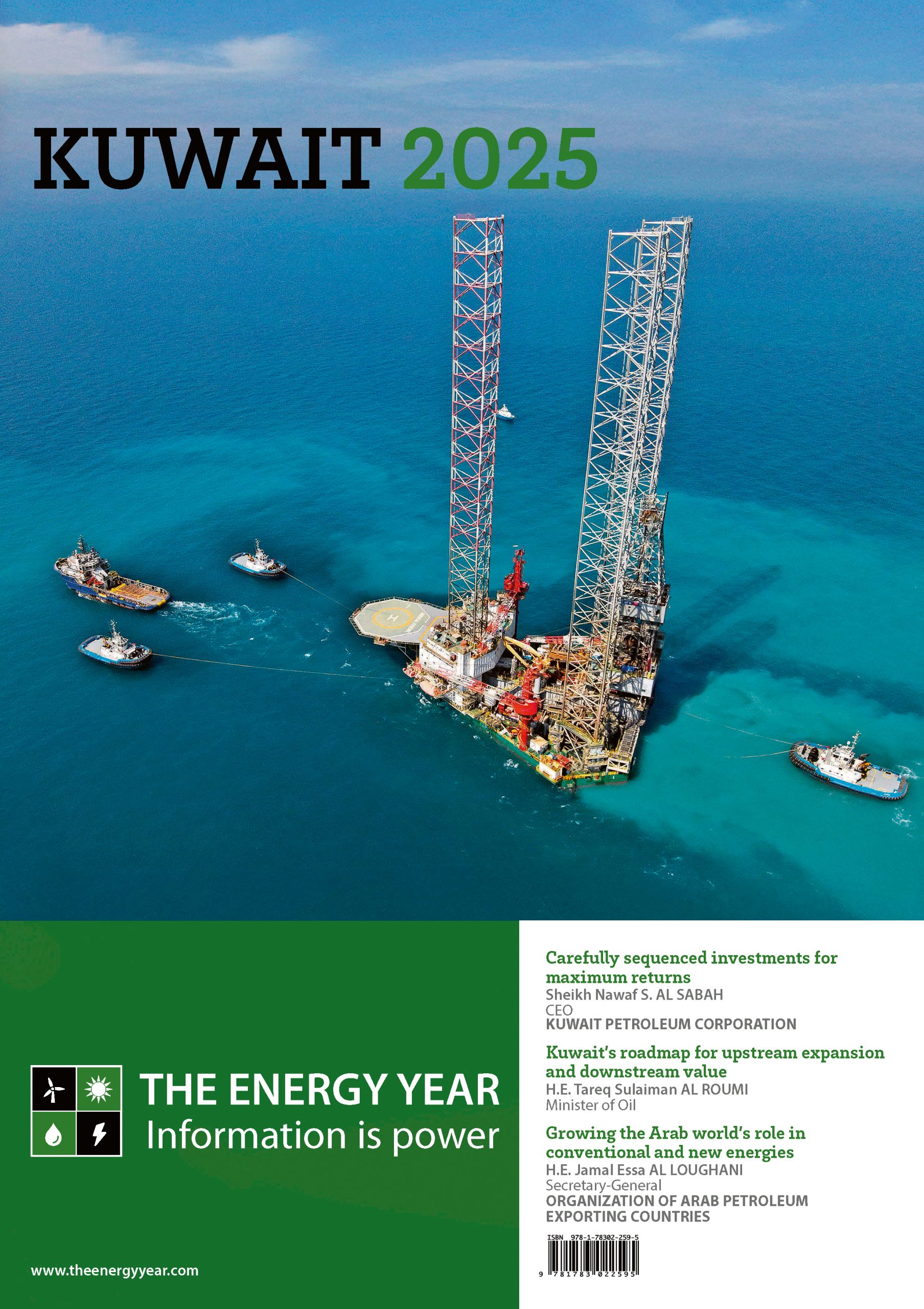
The Energy Year Kuwait 2025
The Energy Year Angola 2025
The Energy Year Nigeria 2025
The Energy Year Saudi Arabia 2025
The Energy Year UAE 2025

