

Hybrid systems will reshape Africa’s solar growth
June 17, 2026 Multinational


Hadyr Koumakpai, vice-president and general manager, Africa, at JA Solar, talks to The Energy Year about Africa’s accelerating solar growth and how to lower installation costs and improve project bankability as the continent progresses towards hybrid systems.
JA Solar is a manufacturer of PV silicon wafers, cells, modules and energy storage equipment.
- The rising cost of conventional power, concerns over energy security and the instability of many national grids are driving demand for solar across Africa, particularly among commercial and industrial customers.
- However, for solar generation to thrive, project bankability must improve. Taxes on solar products, limited cross-border integration and high logistics costs continue to make African solar projects more expensive than in other regions.
- Hybrid systems are becoming central to Africa’s energy transition. As weak grids and transmission constraints persist alongside rising fuel costs, integrated systems combining solar, battery storage and backup generation are gaining importance as a way to improve reliability and reduce dependence on diesel.
How does JA Solar see Africa’s solar sector evolving over the next five years?
Africa is entering a decisive decade for energy transformation. We have been in Africa for more than a decade, and during the last five years, we have seen consistent growth. In 2025 alone, JA Solar delivered more than 4.5 GW in African markets.
The continent has some of the best solar irradiation in the world and urgent energy supply needs. Countries are evolving at different speeds, and each one has its own approach to deploying renewables, but we are seeing very strong momentum in South Africa, Kenya and Morocco, and substantial growth in many other countries. The common drivers are the rising cost of conventional power generation, grid instability, energy security concerns, and growing demand from commercial and industrial customers.
On top of that, many African economies are seeking to transform more raw materials and manufacture more products in-country, which requires massive amounts of additional energy. We do not believe Africa will pursue traditional centralised energy models, but instead will combine utility-scale solar, distributed generation, hybrid systems and storage integration.
What needs to happen in Africa for the cost of solar installations to come down and the bankability of solar projects to improve?
The cost of solar has already dropped significantly, and that is one of the reasons we are seeing such a boom across Africa. However, there are still structural challenges that make projects costlier than in other regions.
While countries globally have lowered or removed taxes on solar products, they persist in many African countries. There is also insufficient cross-border integration, and infrastructural and logistical hurdles can make the transportation of equipment from one country to another complicated. Sometimes, transporting equipment from the port to the project site costs more than shipping it from Asia to Africa. This increases the burden for developers and investors.
Reliable technology is essential. Lowering technology risk automatically improves bankability. For many years, JA Solar has driven innovation in PV technology. Our DeepBlue 5.0 series introduced advanced features, and specialised solutions such as our DesertBlue modules are anti-dust, fire-resistant and anti-glare. Both are designed to address diverse environmental challenges while enhancing project bankability and reducing LCOE [levelised cost of electricity].
Are battery storage and hybrid systems gaining importance within Africa’s renewables mix?
Battery energy storage systems are becoming increasingly important because many African countries have unstable grids and weak transmission infrastructure. The transition from standalone solar installations to integrated energy systems is one of the most promising shifts we are currently seeing in Africa, because hybrid systems that combine solar, battery storage, and sometimes existing backup generation, can dramatically improve reliability while reducing dependency on diesel, a fuel whose price has increased significantly in recent years.
To accelerate adoption and support the energy transition, JA Solar has established a dedicated regional support network to assist customers in designing hybrid PV and BESS [battery energy storage system] systems. Backed by strong technical expertise across the continent, we can ensure efficient project execution and commissioning.
What steps is JA Solar taking to localise its technologies in Africa?
Africa could become one of the world’s defining renewable energy growth stories, offering not only a major energy access opportunity, but also a pathway toward clean industrialisation. Localisation is essential for sustainable growth, and it is not a one-time action, but rather a continuous process driven by clear priorities, strong execution and sound economics.
We are fully engaged in that process by maintaining teams close to the markets, studying and understanding local requirements daily, supporting local value creation and working closely with local partners. In one of South Africa’s largest projects, we worked extensively with a local factory, helping improve production lines, providing technical training and supporting teams throughout the entire manufacturing process. More recently, we have been involved in factory deployment initiatives in Egypt. The continent possesses strong talent and capabilities, but international partnerships remain critical to strengthening local ecosystems and accelerating market development.
Is JA Solar targeting any specific African markets for growth, and what are the company’s priorities?
Frontier markets are among the most compelling growth opportunities in the global energy sector due to their substantial long-term potential. While entering these markets requires greater commitment, including investments in local capacity building, the long-term returns can be significantly more impactful. JA Solar has built an organisation capable of serving every market across Africa. We continuously engage with local stakeholders to better understand their unique requirements and identify opportunities where we can add value, help strengthen competitiveness and improve outcomes.
The future of energy extends far beyond solar modules. Increasingly, the conversation will centre on integrated energy systems and the optimal combination of technologies to address specific energy challenges. Success will depend not on individual products, but on how effectively different solutions work together to deliver reliable, affordable and sustainable energy.
This is why JA Solar is evolving from a product-focused manufacturer into a solutions-oriented energy partner. Our ambition is to support not only decarbonisation, but also industrial development, energy security and long-term economic growth, and to play a meaningful role in shaping a more resilient and sustainable energy future.
Read our latest insights on:
-

Data to de-risk Africa’s offshore assets
INTERVIEW -

-

More content from Multinational


Quality seismic decisions for Angola
INTERVIEW
Latest news and features




Latest Reports


The Energy Year Oman 2026
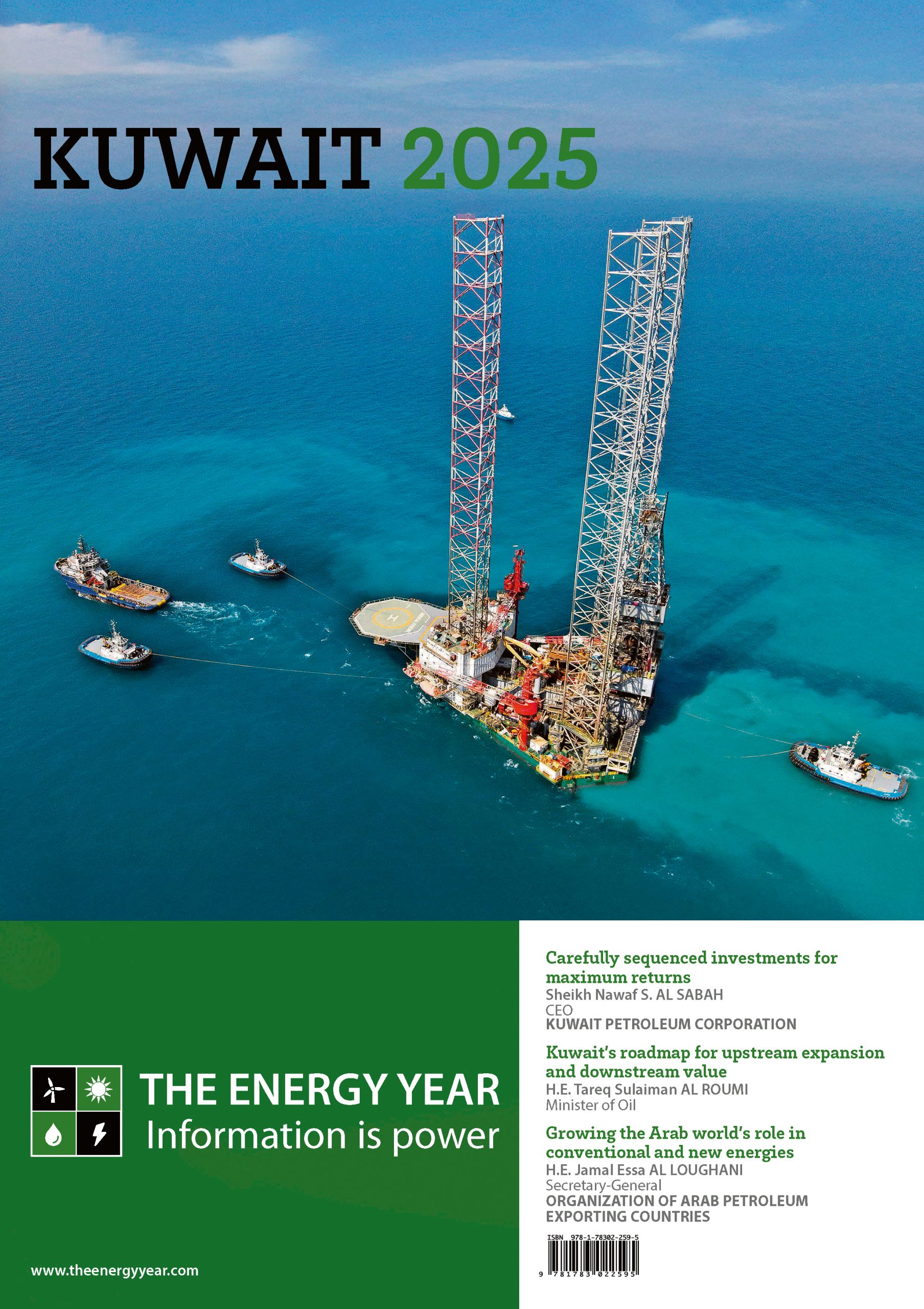
The Energy Year Kuwait 2025
The Energy Year Angola 2025
The Energy Year Nigeria 2025
The Energy Year Saudi Arabia 2025
The Energy Year UAE 2025

