
Driving energy automation in the UAE
April 5, 2025 UAE
UAE 


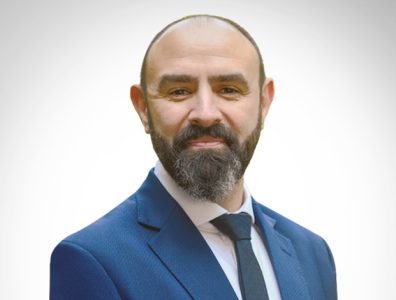
Sebastien Grau, global industry vice-president for Process Industries at Rockwell Automation, talks to The Energy Year about incorporating AI applications into the company’s portfolio of industrial solutions and growing in the renewable energy space through strategic acquisitions. Rockwell Automation is a multinational provider of industrial automation and digital transformation solutions.
How is Rockwell Automation addressing the shift to renewable energies?
In Rockwell, we are uniquely positioned to address the shift from oil and gas to alternative sources of energy. We are now organised to report broader energy numbers that include oil and gas as well as other conventional energy sources, renewables and low-carbon technologies such as hydrogen and CCUS. Energy now accounts for 15% of Rockwell’s business.
What are your growth expectations for the next five years?
Our target is to grow at twice the market’s pace, especially in energy. For renewables and low-carbon energy, doubling isn’t ambitious enough; we can do more. Our joint venture with SLB, Sensia, is a success; it is growing, and it is delivering value to our customers. Sensia is expanding its initial core business of digitising oil and gas fields to offering services to the midstream segment.
We are also enhancing our portfolio with AI applications to provide more value to end users. Over the past three years, and particularly in 2024, we have seen significant growth in our process industries business, especially in the energy vertical, which is now driving Rockwell’s momentum. We will keep building on this progress.
How is Rockwell encouraging uptake and generating momentum for new technologies?
Our approach combines organic and inorganic growth. We are building strong internal teams in machine learning, AI and digital tools, and also acquiring external expertise when needed. Kalypso, for example, has become central to our operations after we acquired it three years ago.
Kalypso’s consultancy teams support companies such as ADNOC. They focus on the lowest-hanging fruit, making improvements that bring the largest results in the shortest time frame, such as harmonising teams and aligning them with broad corporate targets.
We have also created a dedicated AI team led by a talented CTO who sees AI as a tool to improve user experience and is embedding “invisible AI” into our products to enhance decision making and improve business results. A recent innovation, GuardianAI, integrates AI into variable-speed-drive rotating machines. It monitors equipment for preventive maintenance and requires no additional components. Such user-centred, hidden AI solutions reflect our commitment to continuous improvement and efficiency.
How are you educating the market on the benefits of advanced technologies?
As long as safety and efficiency are prioritised, the barriers to the adoption of advanced technologies are becoming lower. This is especially true in the oil and gas sector, where companies are eager to test solutions for potential adoption. In general, end users are more prepared to innovate than two years ago, which leads to more business cases and applications across process industries.
Automated data generation and processing have been present in the oil and gas sector for some time, but closed-loop optimisation without human intervention is new. With tools such as MPC [model predictive control] powered by machine learning, patterns in data can be analysed and processes can be optimised automatically, which is an important step ahead for the sector.
What role do partnerships play in your efforts to drive the adoption of advanced technologies?
ADNOC has become a leader in adopting new technologies, and its robotics programme is leveraging innovations in data platforms and cybersecurity solutions. Similarly, Aramco has transitioned from relying solely on internal teams to incorporate new technologies to forming partnerships with third parties.
A key partner for Rockwell is Cognite, a Norwegian company that offers a data platform to optimise data analysis. Rockwell is developing specific OT applications with Cognite’s product through our DataMosaix platform. Alongside SLB, we have developed an agnostic robotic platform for offshore operations, and we have deployed autonomous robots on an FPSO in Angola. They perform inspections in areas that are considered dangerous for humans and process data for alarm management and operational efficiency.
This blend of internal development, collaborations and acquisitions ensures that we remain adaptable and innovative, and capable of delivering cutting-edge solutions to meet the evolving demands of the energy industry.
Read our latest insights on:
-

How the UAE is building its future
INTERVIEW -

-

More content from UAE


Quality seismic decisions for Angola
INTERVIEW
Latest news and features



Latest Reports


The Energy Year Oman 2026
The Energy Year Kuwait 2025
The Energy Year Angola 2025
The Energy Year Nigeria 2025
The Energy Year Saudi Arabia 2025
The Energy Year UAE 2025

