
Fundamental oil and gas training for Saudi Arabia
December 26, 2024 Saudi Arabia


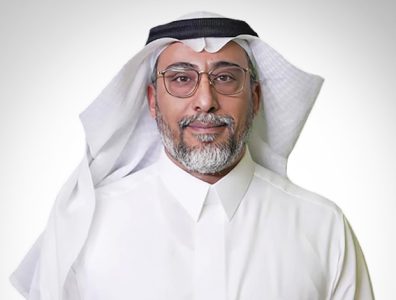
Abdulaziz Al Hijji, managing director of the National Industrial Training Institute (NITI), talks to The Energy Year about the growing number of international companies that are seeking sector-specific training in Saudi Arabia and the institute’s ongoing shift towards shorter, more flexible programmes. NITI is an independent, not-for-profit training institute that prepares high-school graduates for work in Saudi Arabia’s oil and gas, petrochemicals and construction sectors.
What would you highlight from NITI’s operations in the past year?
2024 has been a very exciting year. We have focused on fundamental training programmes for welders, machinists, operators and electricians, offering units on HVAC, instrumentation, health and safety, construction safety, heavy equipment operation, pipefitting and fabrication – all of which are vital trades that are consistently in demand across various industries.
With the country’s economic growth and the growing number of signed-off projects, we have seen a noticeable increase in the demand for training in emerging trades that are starting to gain traction in the market such as project control centre technicians and project planning and scheduling. While they are not yet in high demand, they have significant potential to grow in the domestic economy.
The number of different clients we serve has increased, driven by an influx of international companies into the Saudi market. We now have more clients from countries such as China and India, which broadens our portfolio and creates exciting opportunities for us to cater to diverse needs.
Who are some key partners that you have worked with during the past twelve months?
We have had the privilege of working with prominent international companies such as the China Petroleum Engineering and Construction Corporation, Kalpataru Projects, Larsen & Toubro, Hyundai and Samsung. These companies have been present in the market for some time. Additionally, there have been new entrants from the GCC. These companies were fortunate to secure significant contracts, and we were equally fortunate to partner with them on their journey to develop their workforce.
Furthermore, we have a partnership with the Ministry of Industry and Mineral Resources to offer courses that cater to a variety of sectors beyond oil and gas. This collaboration is another avenue for us to expand our offerings and market share.
What steps does the institute take to stay abreast of technological developments?
We stay up to date with the latest technology by maintaining close relationships with our corporate clients, who are our primary means of identifying new needs and demands. We also rely on our network to understand the latest technologies being applied in the trades we focus on.
In our diversification, we try to remain aligned with market demand. Overall, our priority is to specialise in oil and gas services, establish ourselves as a top institute in the sector, and build a strong platform from which to expand.
What areas are you looking to evolve into outside the oil and gas sector?
Oil and gas covers a wide spectrum of disciplines, from drilling to refining. We strive to offer training in connected trades such as heavy equipment operation, metal fabrication, CNC [computer numerical control] machining and welding.
Many of our new clients operate in sectors outside of oil and gas that nonetheless require similar skills. For example, we have customers in the services sector that require crane operators and crane maintenance, and we have expertise related to that.
The main challenge lies in the size of the equipment and the specifications required, which can sometimes exceed what is typical for oil and gas. Some forms of specialised fabrication, for instance, require cutting-edge equipment that we must acquire, and we must ensure we have the right experts to deliver the training.
What makes NITI stand out among other technical training institutes in Saudi Arabia?
NITI is a flagship centre among NTCs [national training centres] due to its scale and the significant investment received by Saudi Aramco and the TVTC [Technical Vocational Training Corporation]. Our campus is one of the largest vocational training centres in the Middle East, comparable in size to a college.
Our facilities include state-of-the-art workshops, advanced equipment and simulators, all of which provide us with a distinct advantage. The simulators, in particular, allow us to offer an unparalleled training experience to our students, and add tremendous value to our offer.
Do you have plans to add new facilities or equipment to your campus?
We benefit from the size of our facility. The campus is very large, spanning almost 365,000 square metres, which gives us ample room for expansion. At the moment, however, we want to focus on the machinery we have.
For instance, we want to move towards automated welding because that’s where the market is heading. A lot of welding now takes place in workshops rather than on the ground, and it’s done with advanced machinery. It’s no longer manual torch welding; it’s more about precision welding, and we want to prepare our trainees for that.
Are you planning any changes to the structure of your courses and your overall business model?
We see a growing demand for more flexible, targeted training, so we are shifting towards offering shorter courses and professional certifications, ranging from a few days to three months, depending on the course complexity and requirements.
We want to diversify our revenue streams and be more aligned with the training needs of the industry, the market and project lifespans.
Employee training is a continuous journey. Every company strives to develop their employees, and we’re trying to capitalise on that with the capabilities we have. Another factor is that private-sector companies seek training based on short courses and build their employee teams based on market demand.
Do you have any intention to expand regionally?
Establishing a strong local footprint is the first priority. Once that foundation is solid, expansion outside Saudi Arabia is the natural progression. We are exploring opportunities for establishing global operations through our partners and collaborators.
What are some of the certifications that NITI holds and how important are accreditations for your activities?
It is essential for the institution to adhere to quality standards and for these to be formally validated. A new national centre for training and accreditation has been established, MASAR, and we are proud to hold their accreditation.
We also hold programme-specific accreditations from City & Guilds, the American Accreditation Association and OPITO [Offshore Petroleum Industry Training Organization] which complement certifications from other organisations such as TWI in the UK.
What is your long-term vision for the growth of the institution?
One of our key goals is to achieve an international ranking and position ourselves among the top vocational institutes worldwide. We also aim to establish multiple centres across Saudi Arabia, and eventually expand beyond national borders. We have already succeeded in attracting companies from across the GCC to train with us, and we hope to replicate this success by establishing our presence in those countries in the future.
Read our latest insights on:
More content from Saudi Arabia



Latest news and features






Latest Reports


The Energy Year Oman 2026
The Energy Year Kuwait 2025
The Energy Year Angola 2025
The Energy Year Nigeria 2025
The Energy Year Saudi Arabia 2025
The Energy Year UAE 2025


