
How robotics is reshaping the high-pressure pumps business
March 2, 2025 UAE
UAE 


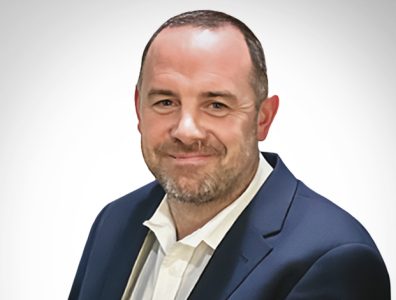
Sam Norris, managing director of Asia Waterjet Equipment (AWE), talks to The Energy Year about the advantages of establishing manufacturing and assembly facilities in the UAE and the cost and safety benefits of incorporating robotics into cleaning operations. AWE is a supplier of high-pressure waterblast products and accessories in the Middle East, North Africa, the Caspian and South East Asia.
Why did you start manufacturing in the UAE?
AWE has had an established presence in the UAE since 2006. The UAE serves as our primary base in the Middle East and the headquarters for the business. When we first started doing business here, a lot of the equipment we sold came as turnkey pump packages from the US and Europe, but as our business grew, we felt that it was important to have local value in our products, and we decided to begin manufacturing for the domestic market.
In addition to our focus on the UAE market, we see this base as crucial for reaching our clients in surrounding Gulf countries, where similar industrial and petrochemical requirements demand timely, high-quality solutions.
Manufacturing locally is very important for us, as there is a very different operating environment here than in other parts of the world. Clients need reliable and rugged equipment built for the harsh environment; we’re dealing with high temperatures and humidity. Our pumps are designed and built to be easily operated and maintained to operate in ambient temperatures that can reach up to 55 degrees Celsius at times.
The UAE is our main production facility for the products we assemble. The two main pump products we represent are Jetstream of Houston, which are high-pressure jetting pumps, and Pioneer Pump, a UK-based manufacturer of transfer pumps for dewatering. We also have a facility in Saudi Arabia that caters for that market, but our headquarters is here in the UAE.
What are the benefits of having a local presence as an international company?
I believe that being close to the customer is very important. Up until recently, the UAE had a different working week and being local meant you were available. All the other GCC countries still have a different working week.
The benefits of being local are that we can maximise our availability for our customers. We serve the service sector and when our clients are going on a job, they want the assurance of having support close by and not having to wait for somebody who is on a different working week, in a different time zone or a day or two travel time away.
By offering local content, whether it’s here in UAE, through the ICV [in-country value] programme, or in Saudi Arabia through IKTVA [In-Kingdom Total Value Add], we feel that we are highly valued by contractors. They see that we are right beside them. We are less than an hour away from most of our clients.
Although the engines and the pumps themselves are imported, all of the framework is fabricated locally. Whenever we can, we source ancillary items locally as well because we want our supply chain to be local. Having local service support and local parts and accessories does give us an advantage.
What sectors do you primarily cater to in the UAE?
About 65% of our business is in energy and petrochemicals. About 25% is marine – mostly offshore service contractors and dry docks – and the balance is in construction, infrastructure and facilities management.
In the UAE, we are privileged to work with major industrial maintenance contractors and interface with petrochemical companies, particularly on high-stakes projects where safety, efficiency and reliability are essential. These companies do the decontamination and cleaning in petrochemical plants and refineries before inspection and industrial maintenance activities take place. In Saudi Arabia, we work with some international companies but most are domestic, homegrown Saudi companies.
In the marine sector, we support contractors doing marine growth removal, pipeline repair works or surface preparation on platforms. We also have many of our pumps in drydocks in Abu Dhabi and Dubai working on hull treatment and surface preparation works.
Are you incorporating robotics and automation into your operations in any way?
As technology has evolved, we have evolved as well. With safety a huge priority in our industry, AWE heavily promotes the use of automation and robotics to take the person away from the hazards of holding the gun or the lance to do the cleaning. We always advocate the safer solution, which is the hands-free option, whether it’s for cleaning static equipment inside plants, or to prevent working at height in shipyards and drydocks.
Some of our more exciting ventures have been the application of automation and robotics to industrial maintenance and infrastructure work. On the Saada Bridge expansion in Abu Dhabi, we utilised robots and high-pressure water for breaking through concrete while not damaging the reinforcement bars, allowing the contractor to tie in the new lanes to the old structure.
We have also been successful in pioneering a completely hands-free, automated system for removing radioactive scale inside drill pipe and production tubing. This system has been used throughout the GCC and we are looking forward to having a system locally soon.
Robotics and automation have opened doors to safer and more effective maintenance procedures. This is an area we are actively expanding, as more companies recognise the benefits of automated solutions. If what we have off the shelf doesn’t exactly fit the bill, we have an engineering team that can put something together to get the job done
Are there any challenges that you are facing in applying robotics to some of your standard jobs?
The main challenge is bringing robotics and technology in front of the right people so that they can see the value in them and not just the cost. For example, we represent products that are number one or two in many markets. It is reliable and functional equipment that has been tried and tested, and its performance comes at a premium.
In 2023, we felt the demand for robotics growing so we realised we needed to increase our offering in that area. We restructured the business so that we have a team dedicated to robotics, providing rentals and service support.
We acquired the robots and the automation equipment and started introducing them to our client base on a rental basis or a subcontracting model, where they don’t need to make the capex [capital expenditure] up front, and they can try before they buy. When we get the product in front of the key stakeholders and the end users, they see the benefits and that has really helped the adoption of the technology.
How much growth potential do you see in the robotics segment?
There are very few people using robotics in tank farm maintenance, whether for removing the sludge, cleaning the inside of the tanks or handling the coating on the outside. We are at the forefront of that, and we are here to support anyone looking to try this pioneering technology with a low entry cost.
We have begun to get traction in the UAE. Last year, we supported a contractor who was decommissioning six crude oil tanks for ADNOC. Rather than moving scaffolding inside, erecting it to clean up to a height of 25 metres and then removing it again through a 24-inch manway, we were able to deploy our magnetic crawler robot and help them complete the cleaning without any scaffolding. It saved a couple of months of turnaround time on the project. Nobody had to work at height, there were fewer workers on site and there was no scaffolding. The client was extremely satisfied in the end.
From what we are seeing, we expect that the robotics business could grow by 50% in 2025. We are working to ensure that we have the right equipment and the right people on board to support that.
Do you typically carry out projects alone, or in partnership with other companies?
We like to partner with other companies that can add value in areas we cannot. We currently have a collaboration agreement with Kanoo Energy. They have a painting robot from Qlayers, so in tank maintenance jobs that we encounter with our robotic blasting, we introduce them to paint.
Vice versa, in any project that they have for painting, we will work hand in hand with them to remove the coating. We feel that this partnership is going to yield some good returns in 2025 and give visibility to robotics. We are always open to strong local partnerships, not only in the UAE but also in Saudi Arabia and Southeast Asia, where we operate in Malaysia and Singapore.
What percentage of your business does Saudi Arabia currently represent?
Over 80% of our business is in the Middle East, and Saudi Arabia represents around 50% of it right now. The percentage is growing. Since 2018, we have seen around 90% growth in that market. We opened the business in 2020, and by 2024 we had delivered over 100 pumps from the facility. We are expecting the growth to continue in 2025.
We are optimistic about the Saudi market, and we are just seeing the robotics business starting to take off. The magnetic crawlers and the sludge-cleaning robots are generating interest among contractors looking to streamline their operations, and we expect the services side of our business should see some growth there.
How do you incorporate sustainability practices into your business?
H.E. Dr. Sultan Ahmed Al Jaber has underscored the importance of meeting ambitious climate goals while balancing energy needs. AWE is contributing to these goals by providing technology designed for sustainability, and our latest developments focus on water recycling within hydrojetting processes, reducing the need for freshwater and helping clients achieve lower water consumption in their maintenance cycles.
AWE’s robotic and automated cleaning systems limit human exposure to hazardous environments, which not only enhances safety but also allows for more efficient operations. Automated solutions enable companies to maintain consistent performance and quality without the delays that can arise from labour-intensive processes. As the domestic workforce becomes more tech-savvy, we believe there will be genuine interest to adopt, hence our focus in this space.
We are conscious that our products use a lot of water. We are starting to pay more attention to how we can treat and reuse it, whether in shipyards to clean vessels, to blast the coating off tanks or in hydro demolition. We want to incorporate technologies that clean and treat that water so that we can use it again instead of sending it to treatment facilities elsewhere. We want to be able to reuse as much of that water as we can.
We are looking at introducing technology at the right price point for clients. Small jobs might not justify the cost, but a six-month project or a drydock with constant day and night work could.
We believe that the future of the energy sector hinges on sustainable, tech-driven solutions. The need for high-powered, efficient equipment that’s also environmentally safe has never been greater, and we’re committed to helping the industry navigate this transition through our technology-led offerings.
Read our latest insights on:
-

How the UAE is building its future
INTERVIEW -

-

More content from UAE


Quality seismic decisions for Angola
INTERVIEW
Latest news and features



Latest Reports



The Energy Year Oman 2026
The Energy Year Kuwait 2025

The Energy Year Angola 2025

The Energy Year Nigeria 2025

The Energy Year Saudi Arabia 2025

The Energy Year UAE 2025

