

in figures
Kuwait’s 5G coverage:97%
Percentage of domestic oilfields digitised:93%
Kuwait’s digital transformation: building a diversified future
September 9, 2024 Kuwait


Kuwait is investing heavily in technology. Mega-deals with global technology companies are providing the backbone for a new wave of services and digital systems are permeating the country’s most valuable assets: oilfields. Starting in 2024, the nation will take giant steps to modernise oil and gas operations, from the drill bit to the barrel.
Kuwait is undergoing a digital revamp under the Kuwait Vision 2035 development plan as the country seeks to diversify away from hydrocarbons and foster a more sustainable, knowledge-based economy. The information communications technology (ICT) sector has been growing at an annual rate of 18.6% since 2019, far outpacing the Middle East average, and 5G networks now reach 97% of the population. According to the Kuwait Foundation for the Advancement of Sciences, ICT spending in Kuwait will top USD 10 billion in 2024.
Recent landmark deals are set to have huge implications on the digitisation of both the oil and gas industry and the economy as a whole. An agreement between the government and Google Cloud in September 2023 will bring investments of USD 994 million over seven years to digitise public- and private-sector platforms. In March 2024, Kuwait’s Communication and Information Technology Regulatory Authority signed an MoU with Chinese multinational technology provider Huawei for the development of digital infrastructure.
DIGITISING OIL AND GAS: “Traditionally, the oil sector in Kuwait has been perceived as hesitant to adopt cloud technology primarily due to concerns over security and operational continuity,” Fajhan Al Mutairi, CEO of Kuwaiti cloud provider LEAN, told The Energy Year. However, he adds, the scale and the reach of these agreements suggest the mindset is changing. “There is growing confidence in cloud solutions and their cost-efficiency,” Al Mutairi said.
One example comes from KPC, which is progressing with an ambitious multi-year digital transformation plan to embrace Industry 4.0 technologies such as IoT, AI, augmented reality and virtual reality into its operations. These new tools will make fieldwork more efficient and help boost production at maturing oilfields while helping minimise environmental impact.
In April 2024, KPC hit a major milestone with its e-commerce platform, which facilitates interaction among subsidiaries, contractors and suppliers to reduce friction and operational risks. The giant project – which began in 2022 and required the work of separate 26 teams to complete – has surpassed 7,000 users. According to Sheikh Nawaf Saud Al-Nasser Al-Sabah, CEO of KPC, the platform is only the first phase of KPC’s smart purchasing plans, which will come to include an ever-greater number of production areas.
KPC is also revolutionising its upstream operations to increase oil production capacity to 4 million bopd by 2035. The company aims to digitise every domestic oilfield, with the penetration of digital systems standing at more than 93% today.
The most significant project in this regard is the Kuwait Integrated Digital Field (KwIDF) development, which is set to link around half of KOC’s fields under a unified platform. Developed in collaboration with Halliburton, KwIDF delivers cloud-enabled, real-time operational data to engineers and company executives, improving productivity and management decisions.
Successful pilot tests have already been carried out at producing assets in North Kuwait, and deployment is proceeding apace. In February 2024, KOC inaugurated the JPF-4 and JPF-5 [Jurassic Production Facility 4 and 5] gas plants, and by April, Kuwait’s Heavy Engineering Industries & Shipbuilding Company had signed a USD 84.3-million technical services contract to execute the KwIDF at the site.
Advanced technologies are also finding their way into the portfolios of KOC’s myriad subsidiaries, contractors and partners. Kuwait Drilling Company has tapped multinational technology provider SLB’s DrillPlan engineering tool, which incorporates AI and machine learning, for directional drilling operations. SLB also supplied its patented subsurface and wellbore software.
Offshore, Singaporean digital technology company MariApps Marine Solutions signed a contract with KOTC in December 2023 to introduce its smartPAL ship management software across the transport giant’s fleet of 31 vessels. The new system unifies all ship management and transport operations in one platform and uses the smartOPS tool to monitor vessel performance and maintain productivity.
LOCAL CONTRIBUTIONS: Kuwait’s emerging markets for advanced technology are fertile territory for domestic companies as well, with IT products and services from Kuwaiti companies playing an increasingly important role in the oil and gas sector. Local mobile telecoms company Zain Kuwait offers private 5G networks, which find demand in the oil and gas space due to the heightened security they can provide, and the company recently devised a security solution for restricted-access areas, such as refineries, using drones.
Following a successful pilot project at a K-company facility, the technology has been attracting attention. “Our solutions and POCs [proofs of concept] are being positively received by oil and gas players. We are now moving towards further testing and commercialisation,” Hamad Al Marzouq, chief enterprise business officer of Zain Kuwait, told The Energy Year.
Read our latest insights on:
More content from Kuwait





Quality seismic decisions for Angola
INTERVIEW
Latest news and features



Latest Reports


The Energy Year Oman 2026
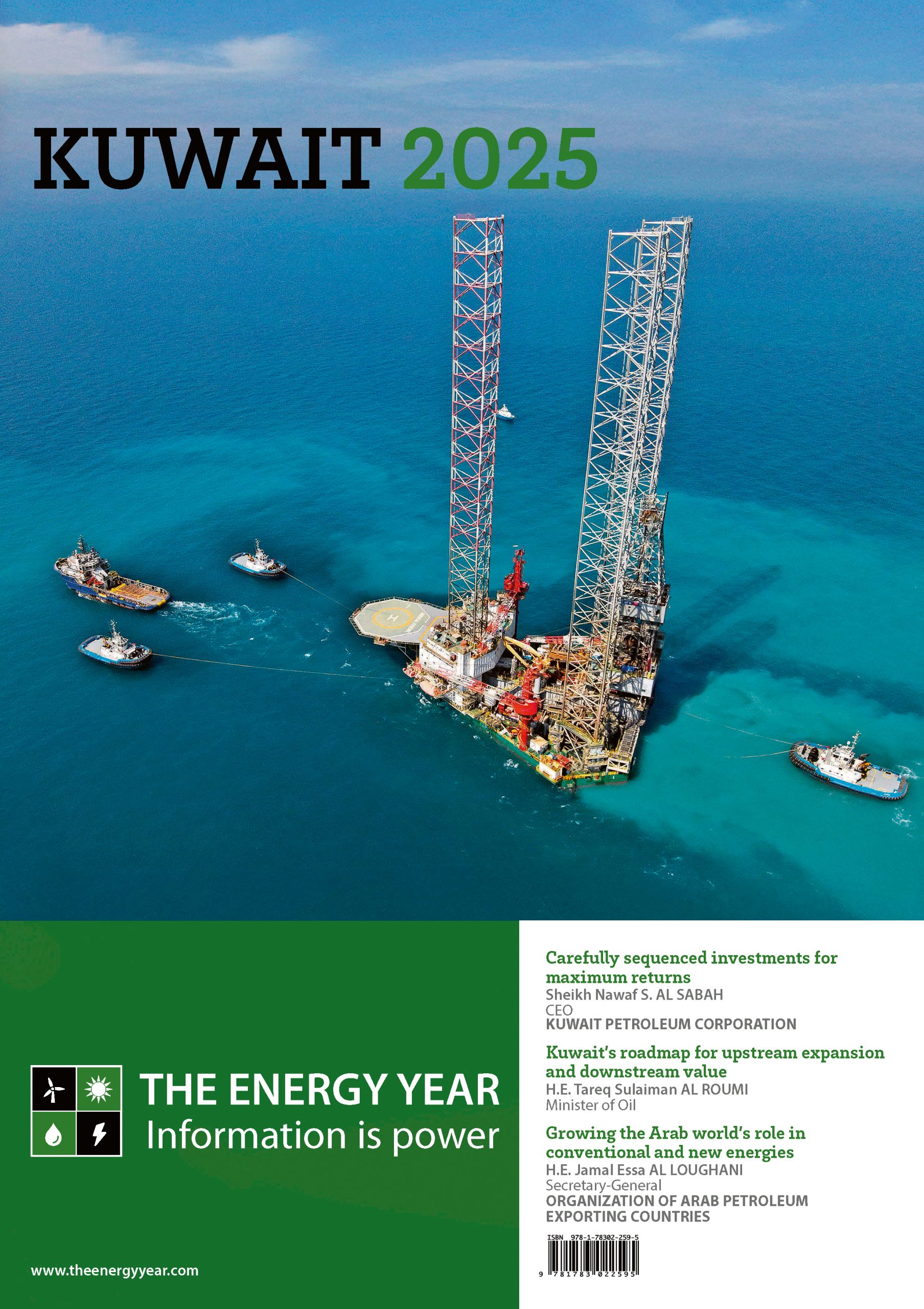
The Energy Year Kuwait 2025
The Energy Year Angola 2025
The Energy Year Nigeria 2025
The Energy Year Saudi Arabia 2025
The Energy Year UAE 2025

