
Kuwait’s roadmap for upstream expansion and downstream value
October 2, 2025 Kuwait


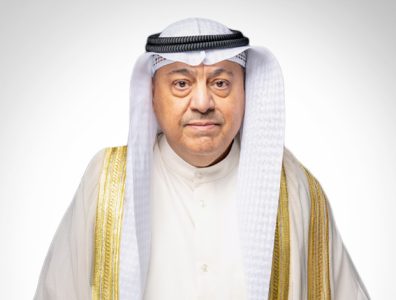
Minister of Oil H.E. Tareq Sulaiman Al Roumi talks to The Energy Year about the upcoming development of Kuwait’s recent offshore discoveries and attracting new investments by IOCs in Kuwait through updated contractual frameworks. The Ministry of Oil is the governmental body in Kuwait’s Cabinet that oversees the country’s petroleum resources and energy policy.
This interview is featured in The Energy Year Kuwait 2025
What are Kuwait’s priorities in its co-operation with neighbouring countries towards enhancing regional energy security and market resilience?
Kuwait is recognised globally as a reliable and trusted oil producer. Our primary priority is to ensure a stable and secure supply of hydrocarbons to our customers, while fostering economic co-operation both regionally and internationally. Kuwait remains steadfast in fulfilling its commitments to OPEC and adhering to its production quotas along with other OPEC and OPEC+ Member Countries.
We also remain committed to climate change agreements. As a nation with significant dependence on oil and gas, we work with our regional neighbours to advocate for a fair and balanced energy transition – one that honours our climate action commitments and ensures equitable consideration for developing countries whose economies are closely tied to oil and gas production.
In addition, we pride ourselves on encouraging collaboration between the members of the GCC and have prioritised economic co-operation among us as a means towards achieving excellence in the oil and gas industry.
Some of our regional partnerships in the GCC include the joint management of production in the Partitioned Zone between Kuwait and Saudi Arabia, our collaboration with OQ at the OQ8 (Duqm) refinery in Oman, our long-term contracts with QatarEnergy for the supply of LNG and collaborations with the Gulf Petrochemical Industries Company in Bahrain.
How is Kuwait working to attract more IOCs and service providers to the country, and what incentives or regulations are being introduced to make the domestic energy industry more competitive?
Kuwait currently provides significant opportunities for IOCs and energy services firms through the Enhanced Technical Service Agreement framework. We remain engaged with some IOCs to further optimise production plans across various oil fields.
Additionally, we are seeking to foster innovation and operational excellence within our industry with an updated contractual model that is both compliant with our constitution and is designed to strengthen collaboration with IOCs.
The model aims to enhance efficiency, reduce project timelines and accelerate production ramp-ups, as well as attract world-class technical expertise and investment through long-term partnerships. This aligns with global energy transition trends while optimising Kuwait’s competitive position in global markets.
What possibilities do the offshore discoveries at Al Nokatha and Al Julaia open for Kuwait’s energy future, and how does the ministry plan to overcome the inherent challenges in unlocking the full potential of these fields?
Developing the Al Nokatha and Al Julaia offshore fields will be a major step toward meeting Kuwait’s production goals. Kuwait’s offshore resources will help boost reserves, meet future oil demand and drive economic growth and job creation.
While our expertise lies in onshore operations, we are well aware of the technical and logistical challenges of offshore development. To address them, we will collaborate with experienced IOCs and service providers to leverage advanced technologies and invest in infrastructure that can ensure cost-effective development and maximise the value and potential of Kuwait’s offshore hydrocarbons.
Al Zour Refinery is positioning Kuwait among the largest downstream hubs in the region. How can the country enhance its downstream capabilities to extract greater value from hydrocarbons and diversify revenue streams?
Kuwait is enhancing its downstream oil and gas capabilities as part of a broader strategy to maximise the value of its resources. With Al Zour coming on stream last year, we have reached a domestic refining capacity of more than 1.4 million bpd.
At the same time, we are aligning with global energy trends by pursuing diversification in the petrochemical sector. We are investing in high-value petrochemical projects and exploring the integration of Kuwait’s refining and petrochemical operations to secure a stronger position in global markets.
In addition, we are strengthening our domestic industrial capabilities by encouraging local content and working with Kuwaiti companies and SMEs to increase opportunities for the private sector in our supply chain. Our endgame is to evolve from exporting raw materials to manufacturing high-value energy products.
AI and advanced analytics are transforming the oil and gas business. How is Kuwait driving digital transformation in its energy industry, and what areas are being prioritised?
We are implementing AI to improve operational efficiency and maintain our competitive edge as the energy industry evolves. We have allocated significant capital to supporting our digital transformation strategy, with initiatives under way to develop a comprehensive digitalisation framework across all operations.
These efforts have yielded substantial improvements in areas such as drilling, safety and supply chain optimisation, and we plan on gradually moving to other areas of the industry in time.
We are deploying AI to fundamentally reshape our oil and gas operations, a critical enabler of Strategy 2040. This technology will drive unprecedented efficiency gains in key areas, from drilling and safety to supply chain optimisation, resulting in significant cost reductions and maximised production.
Moreover, AI can predict issues, accelerate seismic analysis for faster data processing and improve rig scheduling to reduce idle time and costs. It can also enhance EOR for maximised recovery and optimise downstream refinery operations, while contributing to safety by monitoring pipelines and reducing hazards.
Through technology, we can design a comprehensive approach to identifying potential bottlenecks and optimisation scenarios, thereby enhancing operational efficiency for workovers as well as new drilling activities
Read our latest insights on:
More content from Kuwait





Quality seismic decisions for Angola
INTERVIEW
Latest news and features



Latest Reports


The Energy Year Oman 2026
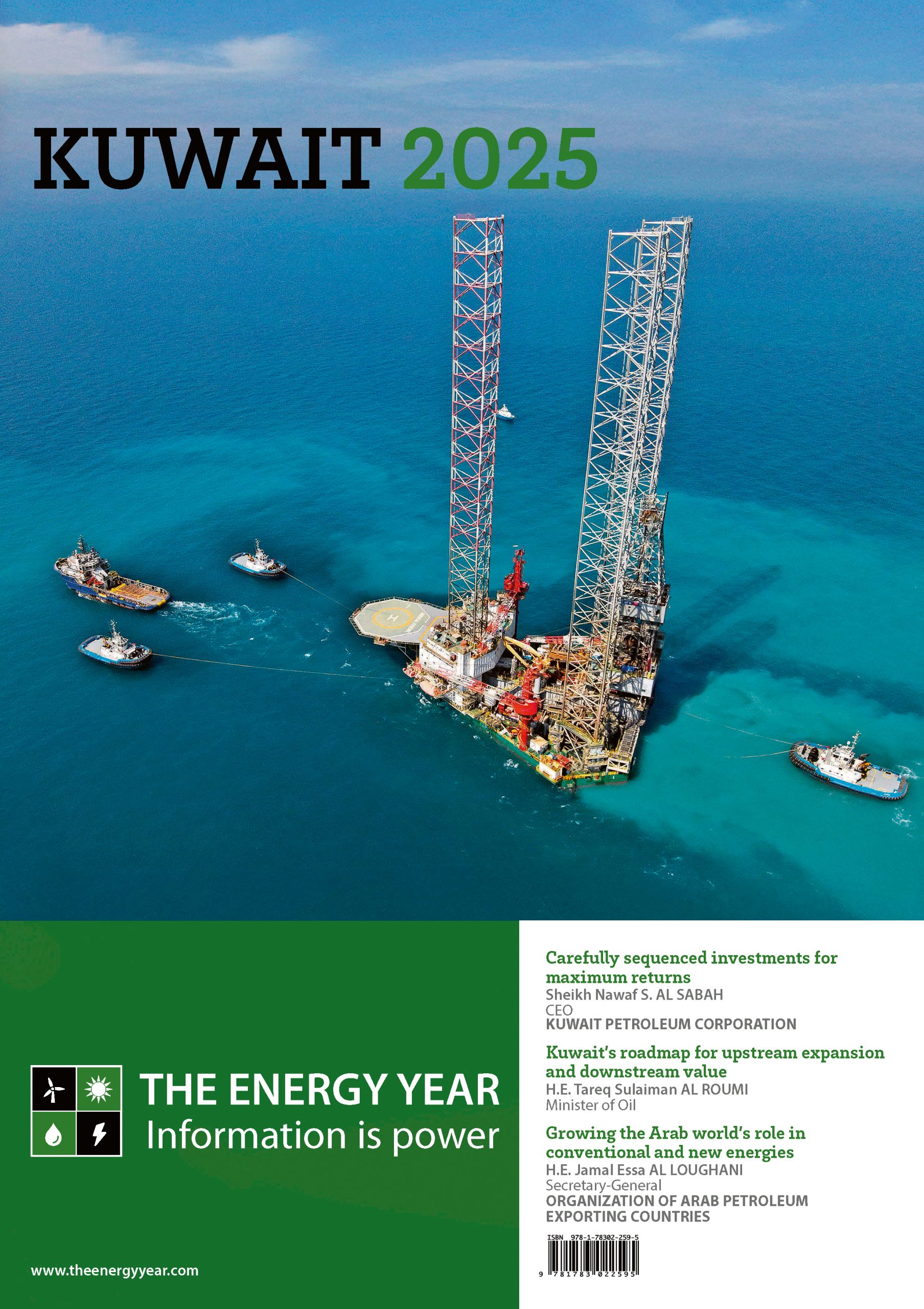
The Energy Year Kuwait 2025
The Energy Year Angola 2025
The Energy Year Nigeria 2025
The Energy Year Saudi Arabia 2025
The Energy Year UAE 2025

