
On track to grow in Kuwait and the GCC
September 1, 2024 Kuwait


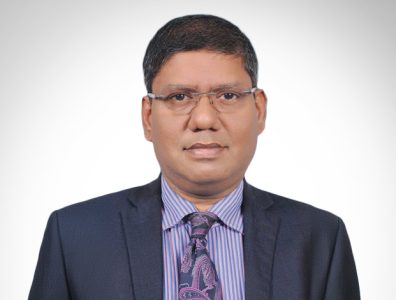
Stephen Anand, corporate director of business development for Heavy Engineering Industries & Shipbuilding (HEISCO), talks to The Energy Year about key undertakings in Kuwait’s oil and gas and power sectors and the company’s ongoing plans to expand in Saudi Arabia. HEISCO is an EPC company based in Kuwait that operates in the oil and gas, power, shipbuilding and construction sectors.
Can you walk us through HEISCO’s latest performance and the importance that the oil and gas sector has within the company’s business portfolio?
Oil and gas is a key segment for the company, representing around 50% of our revenues, and 80% if we include maintenance work as well.
HEISCO has been listed on the Kuwait stock exchange since 1984. Our revenues increased from KWD 123 million [USD 399.8 million] in 2022 to KWD 147 million [USD 477.8 million] in 2023, an increase of almost 20%, while net profit rose from KWD 5.6 million [USD 18.2 million] to KWD 7.1 million [USD 23.1 million].
Our financial performance came back in line with our standards in 2023 after suffering a hit during the pandemic. We are on track to keep growing and look forward to a positive close to 2024. We have taken a major step and expanded our activities outside of the country, since in Kuwait there has been a slowdown over the past couple of years. The oil and gas sector in particular has been sluggish across the region.
What is your assessment of Kuwait’s commitment towards energy transition and what are some of the main undertakings that HEISCO has been involved in to support it?
Kuwait is becoming greener. The EPA [Environment Public Authority] has amended its regulations and issued notices to various sectors for emissions control and other factors related to safeguarding the environment. Projects are springing up to cut CO2 emissions and make products compliant with EU standards, with KNPC’s Clean Fuel Project as one of the brightest examples.
From our side, we are involved in KOC’s soil remediation initiative, providing solar panels that power machinery and offices at the sites. We are operating in JV with Chinese contractor Hangzhou Zaopin ST, which specialises in soil remediation.
Our manufacturing and maintenance facilities use special fuels and have been fitted with emissions abatement and waste management systems, and our galvanising plant is also environmentally friendly. Of course, we support fossil fuel production, but we do so while trying to reduce our carbon footprint and enhancing our monitoring capabilities to keep hydrocarbon waste under control.
For instance, we built a sludge treatment plant inside a KPC facility and operated it for 15 years. Now the O&M contract is with a different contractor, but it is our plant, which we used to collect sludge from the refineries, treat it and separate oil for reuse in an environmentally friendly manner. We strive to keep waste down to a minimum.
Kuwait is taking gradual but decisive steps to promote sustainability and we are playing our role in supporting the country’s efforts. It would be easier for a large contractor like us to use diesel generators, but we are shifting to renewables wherever possible and increasingly including renewables in our offerings.
What are the main challenges and opportunities you see in Kuwait’s power sector?
Power is an important segment in our portfolio. We have partnerships with giants such as Mitsubishi Heavy Industries and IHI Power Systems, two Japanese companies based in Kuwait. In December 2023, the MEWRE awarded us a USD 450-million contract for the rehabilitation of the boilers at the Az Zour South Power and Water Distillation Station and the replacement of the control systems for the boilers and steam turbines.
We carried out the project with Mitsubishi and it is another example of our commitment to protecting the environment since we converted all the boilers to meet the EPA’s emissions requirements. Last year we also signed a USD 280-million contract together with Mitsubishi to rehabilitate the steam turbines at the Sabiya Power and Water Distillation Station, and we are awaiting the award of a contract for the boilers at the Doha West station.
Kuwait’s power sector is under stress because high consumption is straining supply and because planned projects suffer cancellations. The 900-MW Sabiya Gas Fired Power Plant project is a case in point.
Such setbacks need to be addressed by the government, and we are seeing that the MEWRE is taking concrete steps to alleviate power shortages by purchasing power from Saudi Arabia and other GCC countries. Better planning would generate opportunities for us to participate in new projects with our international EPC partners.
Which foreign markets are you currently looking at with the most interest and what is your strategy to penetrate them?
In 2022 we established a branch in Saudi Arabia and completed the registration and qualification process with Aramco, which took us only six months. The potential in Saudi Arabia is massive, as there are not enough construction companies for the projects that are planned.
We are currently bidding more in Saudi than in Kuwait and have already started doing business there. In August 2023 we signed a USD 133-million contract with Aramco for the Juaymah NGL fractionation plant in Ras Tanura. We are carrying out construction work for the refrigeration units and storage tanks. The tanks are being built by CB&I and we are responsible for the rest of the plant as subcontractors for the Egyptian EPC company ENPPI.
Other Aramco projects we are targeting for participation are the ACCS [accelerated carbon capture and sequestration] development, the Fadhili plant to treat non-associated gas and the Jafurah gas processing plant. We are confident that we can secure at least two or three upstream or midstream contracts in 2024.
Can you share your thoughts on the different contracting models currently in use in Kuwait and how they are evolving?
Kuwait is moving towards DBOOM [design-build-own-operate-maintain] schemes. Major water treatment projects are being planned under this model that should be tendered by Q3 or Q4 of 2024, and we are planning to participate.
Early production facilities such as JPF-4 [Jurassic Production Facility 4] and JPF-5 are being developed under BOT [build-operate-transfer] contracts. Instead of exiting the project when construction is complete, the contractors will operate the facilities for a period of time before they transfer the facility to KOC, the project owner.
This means that KOC’s involvement during the development and execution of the project is reduced, which streamlines the whole process. Conventional EPC projects can be lengthy, with a gathering centre capable of handling 50,000 bopd taking up to four years to complete.
What would you identify as HEISCO’s key advantages and what is the company planning for the future of its business?
HEISCO has an outstanding track record and we are consistently the first-choice partner for our clients. If you work with us once, you will want to keep doing it, particularly in the oil and gas field. To give you an example, Spanish company Técnicas Reunidas recently worked with us on a gas train project for KNPC and now they are calling us to partner with them in Saudi Arabia.
We are always open to expanding wherever we see potential. For the next step of our development, we want to go beyond being a construction company and become a full-spectrum EPC player.
In some segments, we already are. For example, we are the only company approved by KOC and KNPC for the construction of storage tanks up to a capacity of 500,000 barrels, and we are responsible for the largest tanks ever constructed by a Kuwaiti company. However, we are looking beyond tanks and construction and want to become strong in engineering. To this end, we have opened an engineering office in India that will start operations very soon.
Read our latest insights on:
More content from Kuwait





Quality seismic decisions for Angola
INTERVIEW
Latest news and features



Latest Reports


The Energy Year Oman 2026
The Energy Year Kuwait 2025
The Energy Year Angola 2025
The Energy Year Nigeria 2025
The Energy Year Saudi Arabia 2025
The Energy Year UAE 2025

