
Positioning Saudi Arabia at the forefront of low-carbon expertise
February 27, 2025 Saudi Arabia


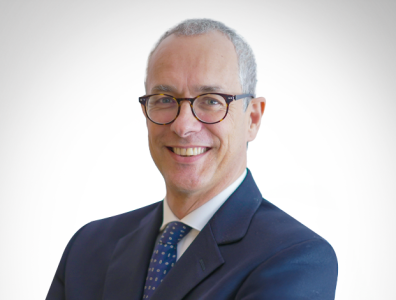
Marco Arcelli, CEO of ACWA Power, talks to The Energy Year about the company’s multi-gigawatt pipeline of renewable projects in the Middle East and Saudi Arabia’s growth potential beyond 2030. ACWA Power is a Saudi company that develops and operates power generation and desalination assets in 14 countries across the Middle East and Asia.
This interview is featured in The Energy Year Saudi Arabia 2025
How is ACWA Power progressing towards its 2030 goals, and what are some of your key projects in Saudi Arabia and internationally?
ACWA Power’s development has gone through several phases. Initially, we focused on domestic projects, especially independent water plants with some power generation. Our international expansion began in nearby markets such as Morocco, and around 2020, when Saudi Arabia’s Vision 2030 became more concrete, we entered a phase of accelerated growth.
Since I joined in 2023, we have seen the pace of our expansion increase dramatically. By the end of 2025, we are set to achieve as much as we did in the previous 19 years combined.
Our goal is to deliver 130 GW of renewable energy by 2030, and we’re on track to make that happen. In terms of renewables, in Saudi Arabia we currently have a total of 19.5 GW, of which 2.5 GW in operation and 17 GW under construction.
In our international expansion, we are leveraging our success in Saudi Arabia to scale abroad. We are seeing success in markets such as Uzbekistan, where the leadership is pushing decarbonisation at light speed. We’re also expanding into several regions in Africa, but our growth in those markets is slower due to the smaller scale of the projects.
We continue to build on our renewables portfolio and are also adding combined cycle projects. In 2024, we have secured two new projects and we are adding 5 GW to two existing plants in Marjan. Right now, we have 12 GW of combined cycle capacity under construction, bringing our total under construction to about 30 GW, of which 28 GW are in Saudi Arabia. The best part is that all of these projects are low-carbon and reinforce our commitment to a sustainable future.
Do you see Saudi Arabia achieving its renewable energy goals in the next five years, considering the current low share of renewables in the energy mix?
I believe 2024 marked a turning point, with substantial planning for new renewable capacity and a significant increase in awards under the PIF Program. In 2025, the pace of contract awards will accelerate. As things stand, ACWA Power alone is already working on approximately 20 GW of renewable energy capacity in Saudi Arabia, with projects under construction and in operation. Concerns about reaching targets are not as much about planning as about execution – from defining the projects to securing interconnections.
Additionally, energy storage is being addressed. There are a couple of pump storage projects in the country, and we are partnering with a French company and two Japanese firms to bring foreign investment. The combination of scaling renewable energy and integrating storage technologies will be key to achieving Saudi Arabia’s 50% renewable energy target by 2030.
Given your portfolio of renewable technologies, how do you see demand evolving for solar, wind and green hydrogen projects such as the one in NEOM?
Solar PV is the cornerstone of Saudi Arabia’s renewable energy strategy, as the country has three times the solar potential of Europe. We also have favourable wind conditions on the west coast to complement solar capacity. Together, solar, wind, combined cycle and battery storage are the backbone of decarbonisation in the region.
While solar and wind energy will be primarily for domestic use, green hydrogen offers export opportunities. Saudi Arabia’s relatively low cost of renewable energy production allows us to either export electricity directly or convert it into other forms, such as green ammonia, for shipping. This flexibility positions the country to offer both blue and green hydrogen, catering to varying market needs globally, and with the integration of these technologies, Saudi Arabia can balance domestic and international demand.
Why was ACWA Power selected as the strategic partner for Saudi Arabia’s renewable strategy in such a competitive international market?
I believe it comes down to two main factors. The first is the ingenuity of our team, which enables us to consistently achieve the lowest costs in critical areas such as concentrated solar power, photovoltaic and water desalination.
For example, we have reduced the energy consumption of desalination by 80%, lowering the amount of energy required to produce 1,000 litres of water from 15 kWh to just 2.7 kWh, and we aim to go even lower. This result has gotten attention worldwide and shown that we are not only cost-effective but also highly efficient and quick in implementation.
Second, ACWA Power’s status as a private company played a crucial role. Promoting private initiative is essential in a rapidly changing economy, as it drives growth and supports the entire ecosystem. Our ability to invest in training – we fund a private technical university – and work with suppliers and the broader supply chain allows us to help elevate standards and foster competition.
The ultimate vision is to transform Saudi Arabia from being the world’s largest exporter of oil to the largest exporter of low-carbon and desalination technology, which shows the profound changes happening in the country.
How does ACWA Power obtain fast implementation times in projects?
The speed of implementation in Saudi Arabia is truly remarkable and not something we typically see in other markets. To illustrate this, let me highlight our recent experience with the 5.5 GW of renewables we developed under the PIF Program. We signed the PPAs [power purchase agreements] in July 2024 and by the end of September, we had achieved financial closing. That means we went from signing the agreements to receiving full disbursement from both regional and international lenders in just three months.
This pace, driven by the country’s commitment to private investment and modernisation, is a testament to how quickly things are moving here. It’s not about government funding; it’s about attracting private-sector investment and making it happen.
Rapid implementation is also supporting our international expansion. For instance, we just completed a 1.5-GW project in Uzbekistan. We actively scout for opportunities in Africa, Southeast Asia and Central Asia, where there is significant potential to improve the efficiency of existing gas-fired plants. Many of them are running at around 38% efficiency, while modern plants operate at up to 65%. This represents huge potential for energy savings and modernisation, which we’re eager to tap into as we expand globally.
What is your assessment of hydrogen’s potential in Saudi Arabia and as part of ACWA Power’s strategy in international markets?
At ACWA Power, we are proud to be pioneers in the hydrogen industry, with our NEOM Green Hydrogen Project already 60% complete. We have invested nearly USD 5 billion with our partners, and the project is expected to begin production by the end of 2026. We have also started a hydrogen project in Uzbekistan to meet local demand, and we are actively developing more projects globally.
While the pace of development in the hydrogen sector may be slower than anticipated a few years ago, we want to remain at the forefront of the industry, as we have with other technologies. Our goal is to drive down the cost of hydrogen production while ensuring sustainability and speed.
We are advancing initiatives in Indonesia to produce hydrogen for domestic consumption and scouting opportunities in China to produce for domestic and export markets. As part of our strategy, we seek to expand hydrogen production in the regions where we have a strong presence.
Which international markets do you see as having the most potential for future expansion?
Our investment strategy focuses on a few key regions. Around 60% of our investment will continue to be concentrated in Saudi Arabia, due to the massive decarbonisation and energy transition opportunities here. Another 30% will be in China, which offers the largest opportunities for decarbonisation globally.
China’s speed and scale in renewables are unmatched. 50-65% of all global renewable construction happens there, and we have built strong relationships with Chinese companies to expand in the country. The trust and strategic alignment between our teams make this market a natural next step for us.
Over the years, we have given more than USD 50 billion in contracts to Chinese companies, and now that we want to invest in China, of course, the relationship is already great. We have done our first projects with Sungrow and Mingyang, companies with whom we have worked for years and with whom there is already a relationship and trust.
Outside of China, our attention is on Central Asia, particularly Uzbekistan, which is well connected to Turkey and Kazakhstan from an electrical and engineering standpoint. Countries in Central Asia are looking to export energy to Europe, which makes the region important for us. Africa is also a priority for ACWA Power, and we are already operating in four countries there.
What are the key challenges you face when building strong value chains domestically and abroad, and what do you need in a partner to work alongside you?
The biggest challenge right now in Saudi Arabia is the sheer volume of work. With projects such as Riyadh Expo 2030 and the FIFA World Cup 2034 on the horizon, the demand for resources has increased significantly.
There’s talk of needing 1 million workers, and the same applies to the entire supply chain, including EPC contractors and suppliers. The real challenge is mobilising these workforces and ensuring that everything is managed effectively, as pressure on resources can affect pricing and overall efficiency.
On the equipment side, the situation is better as China has excess capacity for wind turbines, solar panels and battery storage, resulting in decreased prices. However, careful management is still required.
To mitigate risks, we recently signed multi-year framework agreements to secure 60% of our volumes with clear delivery terms. This gives us visibility and stability, helping us stay ahead of potential supply chain issues. Our supply partners need to have the ability to scale with us, be flexible and work collaboratively to ensure that everything runs smoothly as demand grows.
How do you see ACWA Power’s business evolving after 2030?
We are aspiring to position Saudi Arabia as the largest exporter of low-carbon expertise in the world. I believe Saudi Arabia will continue to thrive after 2030. The economy will keep growing, with a strong focus on renewables and low-carbon energy, and demand for water will only rise.
2030 will mark the transition from the old system to the new; it is not an endpoint. Growth will continue for years afterwards. Many of the projects we are discussing, such as power and hydrogen export, will truly materialise in the 2030s. We are planting the seeds.
Internationally, China will be a major focus for us, and we are positioning ourselves for long-term growth there. We will monitor progress in other regions as well. However, given the scale of our current efforts, particularly in Saudi Arabia, expansion is not an immediate priority. We remain focused on executing the ambitious plans we have in place.
Read our latest insights on:
More content from Saudi Arabia





Quality seismic decisions for Angola
INTERVIEW
Latest news and features



Latest Reports


The Energy Year Oman 2026
The Energy Year Kuwait 2025
The Energy Year Angola 2025
The Energy Year Nigeria 2025
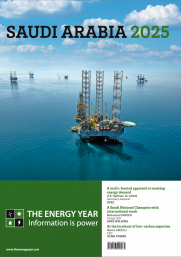
The Energy Year Saudi Arabia 2025
The Energy Year UAE 2025

