
in figures
Total length of network: About 1,200 kilometres
Projected cargo transportation by 2030: 60 million tpy
Top speed on freight routes: 120 kilometres per hour
Estimated total investment: USD 10.8 billion
Project highlight: The UAE’s National Rail Project
May 25, 2025 UAE
UAE 


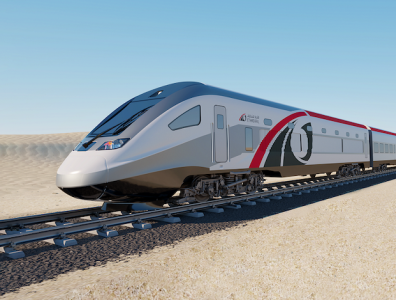
The UAE is ushering in a new era of connectivity with the National Rail Project, an ambitious programme to connect the country’s main centres of population and industry and transform freight and passenger transport. Spanning 1,200 kilometres from the border with Saudi Arabia to Oman, the Etihad Rail network is set to become a catalyst for economic growth and regional integration.
In 2020, in the context of the GCC Railway project, the UAE launched the UAE Railways Program to link the UAE to its neighbouring GCC countries and connect the main centres of population and industry in the seven emirates. Through Etihad Rail, the developer and operator of the national rail network, the UAE has been building a modern system for the movement of raw materials, manufactured goods and passengers that will facilitate trade and industrial activity, reduce traffic congestion and help reduce emissions.
TIMELINE:
2009: Etihad Rail is established under Federal Law No. 2 to design, construct and operate the UAE’s national freight and passenger railway network
2016: Commercial operations begin with the completion of the network’s first phase linking Shah and the gasfields of Habshan to the Port of Ruwais
2020: Construction begins on the second phase of expansion
2021: Completion of the 139-kilometre link between Ghuwaifat and the Port of Ruwais; construction begins on the connection to Tarif, the 94-kilometre Jebel Ali-Sharjah link and the 145-kilometre section between Dubai and Sharjah
2022: Completion of the 256-kilometre connection between Abu Dhabi and Dubai
2022: Etihad Rail, Oman Rail and Mubadala Investment Company establish Hafeet Rail to connect Sohar Port in Oman to Abu Dhabi
2023: Official inauguration of the expanded network and launch of freight operations
2024: Launch of the UAE Railway Programme under the Projects of the 50 development plan to enhance freight and passenger services
2030: Projected utilisation: More than 36.5 million passengers and 60 million tonnes of cargo per year
SPECIFICATIONS: The Etihad Rail Network consists of approximately 1,200 kilometres of rail connections that link the main centres of population and industry in the UAE’s seven emirates. Completion of the system required the construction of 593 bridges and crossings and the drilling of nine tunnels with a total length of 6.5 kilometres.
Rolling stock includes EMD SD70 locomotives capable of pulling up to 5,000 tonnes. Passenger trains are designed to travel at speeds up to 200 kilometres per hour; top speed on freight lines is 120 kilometres per hour.
KEY PLAYERS: Etihad Rail is owned by the government of Abu Dhabi (70%) and the UAE federal government (30%). Among the domestic and international companies that participated in the project are China Railway Construction Corporation, China State Construction Engineering Corporation, SK Engineering, National Projects & Construction, Ghantoot Transport & General Contracting, the Egis Group and Hitachi Rail.
INVESTMENT: Total investment towards the construction of the network is estimated at USD 10.8 billion. The National Bank of Abu Dhabi, MUFG, Abu Dhabi Commercial Bank and HSBC Middle East jointly provided USD 1.3 billion at the outset of the project, and in 2022 First Abu Dhabi Bank issued a USD 541-million loan for the development of passenger transport services.
BENEFITS: By shifting passenger and freight transportation to rail, the network can reduce road transportation emissions by 21% and remove 8.2 million tonnes per year of carbon dioxide emissions. The project and its subsequent operation are expected to generate economic activity worth USD 54 billion, including USD 6.2 billion in tourism alone. In line with national Emiratisation programmes, Etihad Rail is staffed primarily by nationals and is expected to create more than 9,000 jobs by 2030.
Read our latest insights on:
-

How the UAE is building its future
INTERVIEW -

-

More content from UAE


Quality seismic decisions for Angola
INTERVIEW
Latest news and features



Latest Reports


The Energy Year Oman 2026
The Energy Year Kuwait 2025
The Energy Year Angola 2025
The Energy Year Nigeria 2025
The Energy Year Saudi Arabia 2025
The Energy Year UAE 2025

