
Skills for Saudi Arabia’s next wave of oilfield experts
December 17, 2024 Saudi Arabia


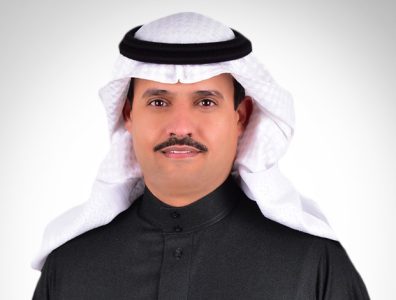
Faisal Al Daihani, managing director of the Saudi Arabian Drilling Academy (SADA), talks to The Energy Year about preparing new generations of Saudis for rigorous oilfield work and collaborating with stakeholders to meet the evolving workforce demands of the oil and gas sector. The SADA is a nonprofit technical and academic institution that offers apprenticeship programmes in drilling and exploration disciplines.
How is your training academy supporting localisation efforts and incorporating women trainees into the oil and gas workforce?
We started the academy in 2016 with two majors – drilling operator and well service operator – and over the past two years, we’ve expanded to five majors. The new majors include HSE, which is in high demand due to government and Saudi Aramco regulations, and drilling fluids, an area dominated by expats but now being localised to support a national workforce.
Companies are being required to employ more Saudi nationals, so the sector needs an institute to develop these skills. That’s where we come in. Localisation is a key part of Vision 2030, and our role is to train a competent workforce to support the industry.
Recently, we’ve also worked with the board to provide opportunities for women in the field. We identified drilling chemicals labs as an area where they could integrate smoothly, and we now have two classes exclusively for women trainees who joined six months ago.
How have your training facilities evolved to meet the demands of the oil and gas industry?
Our facility has also grown significantly. In the 2018/19 academic year, we had an average of 250 trainees. Currently, we train roughly 900 and have more than 100 instructors, administrative staff and counsellors. We push for diversity, as it fosters the exchange of knowledge and perspectives from different regions. We have added eight new classrooms in the academic building and six in the technical school, and we have opened additional labs and an auditorium in the drilling school.
We also opened 17 classrooms at West Park, all of which are now full, and eight at West Park 2, which are also fully utilised. By the end of 2024, we hope to open the job skills building, a two-story facility with 23 classrooms. We also have the option to introduce night shifts if demand continues to grow.
Does the SADA collaborate with sector companies to develop specialised programmes for the energy industry’s evolving workforce needs?
We have successfully brought on three new stakeholders this year, each one supporting a different speciality. For instance, with one of them, we are in the final stages of developing a programme called Wellsite that we expect to launch in 2025. It will address the needs of numerous companies in the market.
Another example is the HSE programme, which applies to drilling operations and numerous other services, and is essential for all stakeholders. As we continue to introduce more majors, the academy will attract more stakeholders and become even more appealing to the industry.
What inspired the development of your globally recognised drilling fluids diploma?
The story behind the drilling fluids course starts in 2022. We decided to develop a unique new major, a globally recognised diploma for drilling roles, that didn’t exist anywhere else. We began working with Aramco because drilling fluids is a highly demanded area of specialisation in which Saudi Arabia needs to build a competent workforce.
Globally, drilling fluids programmes usually last anywhere from five to around 20 weeks. People enrol from different backgrounds – drillers, assistant drillers, foremen – and gain skills to transition into roles as drilling fluid or mud engineers. Right now, I don’t see any institute offering a diploma like ours, which takes high school graduates through a two-year programme. And that is just the beginning. Aramco requires that trainees undergo an additional two years of on-the-job training after graduation to master their skills.
Drilling fluids are critical to operations, and Aramco is cautious about entrusting the job to anyone without first ensuring they have fully mastered the role. It’s a highly demanding job, and that is why Aramco is so deeply involved in the programme’s development. Our first batch of trainees started this year, and we aim to graduate many skilled drilling fluids and mud engineers starting in 2026.
What other skills does the SADA provide to its students?
Our vision is to become a world-class teaching institution. We are dedicated to preparing a well-rounded workforce. We have an actual rig and rigless well on campus for hands-on learning, as well as other equipment such as CTS, WirelineSIM and MultiSIM simulators, but we decided from the beginning not to focus solely on practical training.
We emphasise academic education to ensure our graduates are fully equipped for work in the industry. Our graduates are well-rounded and can read manuals, write reports, communicate effectively and execute their jobs professionally. We provide a complete skill set to empower them in the workforce.
What role do AI and other technologies play in your training programmes?
At SADA, we are aggressive about driving technological adoption. Drilling is rapidly incorporating new technologies and automation, and we aim to prepare our trainees to adapt to advancements and ensure they can operate different technology dashboards or automation systems. Our goal is to develop a generation ready to embrace technology and drive it forward.
We follow a structured teaching framework that brings trainees to a required competency level before deployment to the rig or field, and technology has undoubtedly transformed our training methods. Earlier this year, we began incorporating AI into our curriculum development, and it has streamlined our workflow by reducing the time required for analysis and review. Tasks that previously took weeks can now be completed within a few seconds, and they deliver accurate recommendations and insights.
Although our AI initiatives within training programmes are currently limited, we are working on custom applications for our academy. One of our goals is to integrate policy and procedural knowledge into the system and to have AI respond to trainee queries with guidelines for specific scenarios, ensuring they have the support they need to succeed.
How does the SADA balance in-house development with outsourcing for applications based on advanced technologies such as AI and VR [virtual reality]?
We prioritise developing solutions in-house whenever possible. However, for areas requiring advanced capabilities, such as AI or VR, we form partnerships with third parties. For example, we sourced the simulator from UK company 3t, because such applications require programming expertise that we do not have in-house. We currently have eight or nine large-scale simulators, each with intricate wiring and data flow systems, and we rely on our partners to manage the technical aspects.
Meanwhile, interactive learning content based on images, animations and videos is handled internally. We have the expertise and resources to produce high-quality materials, and in-house development is more efficient.
Do you have plans to expand the academy in the GCC and internationally?
Expanding to the GCC and beyond is a goal we are actively pursuing, and we participate in conferences to build awareness and make our academy attractive to a wider audience. Government regulations now allow us to admit 100% of applicants from the GCC, compared to just 15% before.
We are in discussions with our stakeholders regarding expansion, as the academy is only open to employees of our stakeholder companies. Candidates from GCC countries such as Bahrain, Oman or the UAE would need to be employed by one of our stakeholder companies to join.
Nonetheless, we are fully prepared to host and train them, and our long-term goal is to open the academy to international students. We provide unique training that is unmatched globally, and we aspire to support the industry on a global scale. Hopefully, one day we will celebrate together with students from all over the world.
Read our latest insights on:
More content from Saudi Arabia




Quality seismic decisions for Angola
INTERVIEW
Latest news and features



Latest Reports


The Energy Year Oman 2026
The Energy Year Kuwait 2025
The Energy Year Angola 2025
The Energy Year Nigeria 2025
The Energy Year Saudi Arabia 2025
The Energy Year UAE 2025

